The Ultimate Guide to Ceramic Braces: Modern Orthodontic Solutions for a Discreet Smile


When it comes to achieving a straighter smile and correcting bite alignments, patients today have more choices than ever before. While traditional stainless steel brackets have long been the standard in orthodontic care, aesthetic advancements have introduced several alternatives designed to minimize the visual impact of treatment. Among these, ceramic braces have emerged as a premier option for individuals seeking the structural reliability of fixed hardware combined with a more discreet appearance. By utilizing clear or tooth-colored brackets, ceramic braces bridge the gap between traditional metal braces and completely removable aligners, offering a balanced solution for adults and teenagers alike.
Understanding how ceramic braces function requires looking at the broader landscape of modern orthodontics. Fixed appliances have been utilized for over a century to apply continuous, gentle pressure on teeth, systematically guiding them into proper alignment. Traditional metal braces remain the most ubiquitous form of this treatment due to their exceptional durability and cost-effectiveness. However, aesthetic concerns often lead older teens and adults to explore less conspicuous alternatives. Ceramic systems were developed to meet this demand, utilizing high-grade composite or polycrystalline alumina materials that mimic the natural shade of human enamel.
To fully grasp the implications of choosing ceramic braces over other orthodontic modalities, patients must examine several key factors, including mechanics, durability, lifestyle adjustments, and financial considerations. While they function identically to metal brackets—utilizing a system of arches, wires, and sometimes elastic ties to shift tooth positioning—the physical properties of the materials involved introduce distinct operational nuances.
Mechanics and Material Composition of Ceramic Braces
At their core, ceramic braces operate on the same mechanical principles as traditional metal systems. An orthodontist bonds individual brackets to the front surface of each tooth and threads a specialized archwire through them. This wire exerts constant, calibrated tension, prompting bone remodeling around the tooth roots and allowing them to migrate into ideal alignment over months or years.
The fundamental departure lies in the composition of the brackets themselves. Instead of medical-grade stainless steel, ceramic braces are fabricated from translucent or tooth-colored ceramic materials. To further enhance discretion, many manufacturers and practitioners offer frosted or tooth-colored wires, as well as clear or white ligature ties that hold the wire to the bracket.
Despite their aesthetic advantages, the structural differences between ceramic and metal require careful clinical management. Ceramic materials are inherently more brittle than stainless steel. Consequently, ceramic brackets possess a higher susceptibility to fracturing or chipping under high-impact forces, such as biting into hard or crunchy foods. Orthodontists frequently advise patients with ceramic systems to exercise heightened dietary caution, steering clear of items like raw carrots, nuts, hard candies, and sticky caramels that could compromise the hardware. Furthermore, while the brackets themselves are stain-resistant, the clear elastic ties used to secure the archwire can easily absorb pigments from foods and beverages such as coffee, tea, red wine, and tomato-based sauces, requiring regular adjustments and meticulous oral hygiene.
Comparative Analysis: Ceramic Braces Versus Traditional Metal Systems
When patients sit down with an orthodontic specialist for an initial consultation, the conversation frequently centers on choosing between traditional metal and ceramic brackets. Both categories fall under the umbrella of fixed orthodontic treatments, meaning they cannot be removed by the patient and provide continuous, 24/7 correction. However, distinct trade-offs exist across several operational categories.
Appearance and Social Perception
The primary driving force behind the selection of ceramic braces is visual discretion. Metal brackets are highly visible during everyday conversation, smiling, and professional interactions. For working professionals, college students, and image-conscious teenagers, this visibility can sometimes cause self-consciousness. Ceramic brackets virtually disappear against the natural shade of the teeth from a conversational distance, allowing patients to undergo comprehensive orthodontic correction without drawing undue attention to their dental hardware.
Durability and Treatment Efficiency
In terms of structural resilience, traditional metal braces maintain a distinct advantage. Stainless steel can withstand significant torsional and shear stress, making it exceptionally rare for a metal bracket to break off during routine use. This durability allows metal systems to be deployed effectively in complex malocclusions involving severe bite discrepancies or heavy jaw mechanics. Ceramic brackets, while vastly improved through modern manufacturing techniques, still demand a more conservative approach. In certain complex cases, an orthodontist may determine that the brittle nature of ceramic compromises treatment efficiency, opting instead for metal brackets on the lower arch or for the entirety of the treatment duration.
Comfort Profile
Patient comfort is heavily influenced by the smoothness of the appliance and how the lips and inner cheeks adapt to foreign materials. Modern brackets of all types are engineered to be low-profile and smooth, minimizing irritation to the soft tissues of the mouth. Some patients report that ceramic brackets feel slightly bulkier than their ultra-slim metal counterparts, though manufacturing advancements have significantly narrowed this gap. Normal soreness following initial placement and routine wire tightenings is expected regardless of the bracket material utilized.
Financial Investment
Economic factors frequently play a definitive role in healthcare decisions. Because the materials used to manufacture ceramic brackets are more specialized and costly to produce, orthodontic practices typically price ceramic treatments higher than traditional metal braces. Additionally, the extra care required during debonding—the process of removing the brackets at the end of treatment to prevent enamel damage—can factor into the overall cost structure. Patients must consult with their insurance providers, as coverage caps and orthodontic riders often apply uniformly to all bracket types regardless of material aesthetics.
Ceramic Braces Versus Clear Aligners
Another critical comparison in contemporary orthodontics involves ceramic braces versus clear aligner therapy, such as Invisalign. While both options target patients desiring a subtle treatment experience, their underlying mechanisms and daily management requirements differ fundamentally.
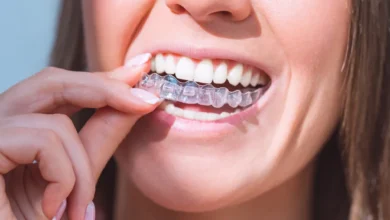
Clear aligners utilize a series of custom-molded, removable plastic trays that fit snugly over the dental arches. Patients swap out these trays every one to two weeks to incrementally shift their teeth. Because aligners are transparent, they offer a level of invisibility that surpasses even ceramic braces. Furthermore, their complete removability allows for unhindered eating and simplified oral hygiene routines, as patients simply take the trays out during meals and brushing.
However, clear aligners demand a high degree of patient compliance. To achieve the predicted tooth movements, aligners must be worn for 20 to 22 hours per day. Failure to wear them consistently can stall progress, leading to extended treatment timelines or ill-fitting trays. In contrast, ceramic braces are fixed appliances. Because they remain bonded to the teeth around the clock, they eliminate the risk of patient forgetfulness or non-compliance. Additionally, fixed appliances possess three-dimensional control capabilities that make them vastly superior for complex root movements, severe rotations, and intricate bite realignments that removable trays may struggle to resolve efficiently.
Economic Considerations and Cost Factors
Evaluating the financial commitment associated with ceramic braces involves examining several variables unique to each patient’s clinical profile. Industry data indicates that ceramic braces generally command a premium over standard metal hardware, often reflecting an increase in material acquisition costs and specialized clinical time.
Several core elements dictate the final out-of-pocket expense for orthodontic care:
- Case Complexity: Mild crowding requires less intervention and shorter treatment windows than severe skeletal bite misalignments, directly influencing the overall cost.
- Geographic Location: Practice overhead and regional economic factors mean that orthodontic fees vary significantly from one city or state to another.
- Insurance Benefits: Many private dental and medical insurance policies feature a lifetime orthodontic maximum. Patients must verify whether their plan covers ceramic braces at the same percentage as metal alternatives.
- Payment Structures: To accommodate patients, the vast majority of orthodontic practices offer in-house financing programs, breaking the total cost down into manageable monthly installments over the duration of active treatment.
Strategic Questions for Your Orthodontic Consultation
Deciding on the optimal orthodontic pathway requires personalized professional evaluation. Before committing to a specific treatment plan, patients should schedule a comprehensive consultation with a qualified orthodontist—such as a specialist recognized by the American Association of Orthodontists (AAO). Coming prepared with targeted questions can streamline this decision-making process:
- Am I an eligible candidate for ceramic braces based on the specific complexity of my bite and tooth alignment?
- How do the projected treatment timelines compare between ceramic braces, metal braces, and clear aligners in my specific case?
- What strict dietary and oral hygiene restrictions will I need to follow to prevent bracket breakage or staining?
- What is the comprehensive cost breakdown of ceramic braces, and what portion is absorbed by my current dental insurance policy?
- Do you offer flexible financing or payment plans to help manage the out-of-pocket investment?
Broader Implications and Future Outlook
The evolution of orthodontic materials highlights a broader shift in modern healthcare: the convergence of clinical efficacy with patient-centric aesthetics. As society places a higher premium on personal presentation, the demand for discreet medical and dental interventions continues to climb. Innovations in polycrystalline ceramics, advanced bonding adhesives, and computer-aided treatment planning have transformed ceramic braces from a fragile novelty into a robust, reliable clinical modality.
Ultimately, while aesthetic considerations are paramount for many individuals seeking orthodontic care, they must remain secondary to functional health outcomes. A beautifully aligned smile is fundamentally tied to proper jaw function, TMJ health, periodontal stability, and long-term airway wellness. Orthodontists evaluate these physiological parameters comprehensively before recommending a specific appliance. By weighing the visual benefits of ceramic brackets against their structural limitations and financial realities, patients can partner effectively with their orthodontic specialists to achieve a healthier, more confident smile that stands the test of time.
Related posts: