
4 Week Foam Rolling Program
Unlock Your Mobility: A Comprehensive 4-Week Foam Rolling Program for Enhanced Performance and Recovery
This 4-week foam rolling program is meticulously designed to systematically improve your flexibility, reduce muscle soreness, and enhance overall physical performance through targeted self-myofascial release. Each week builds upon the previous, introducing new muscle groups and increasing the duration of rolling sessions. Consistency is paramount for reaping the full benefits, so aim to complete each session as outlined. Before commencing, consult with a healthcare professional if you have any pre-existing injuries or medical conditions. Proper form is crucial to avoid overexertion or injury. Listen to your body; if a particular stretch causes sharp pain, ease off or skip it.
Week 1: Foundational Mobility – Targeting Major Muscle Groups
The objective of Week 1 is to introduce your body to foam rolling and address the most commonly tight muscle groups that impact daily movement and exercise. Focus on developing a consistent routine and understanding the sensation of myofascial release. Perform these sessions 3-5 times per week, ideally on rest days or after lighter workouts. Each session should last approximately 15-20 minutes.
Lower Body Focus:
- Calves (Gastrocnemius & Soleus): Sit on the floor with your legs extended. Place the foam roller under your calves. Lift your hips off the ground, supporting your weight with your hands. Roll slowly from your ankle to just below your knee. To increase intensity, cross one leg over the other, placing more weight on the rolling leg. Hold on tender spots for 20-30 seconds. Perform for 2 minutes per calf.
- Hamstrings: Sit on the floor with the foam roller positioned under your thighs. Support your weight with your hands behind you. Roll from just above your knee to your glutes. You can roll both legs simultaneously or one at a time for more targeted pressure. Rotate your legs inward and outward to target different parts of the hamstrings. Hold on tender spots for 20-30 seconds. Perform for 2 minutes per leg.
- Quadriceps: Lie face down on the floor with the foam roller under your thighs. Support your weight with your forearms. Roll from just above your knee to your hip. Similar to hamstrings, you can roll one leg at a time for increased pressure and rotate your legs. Hold on tender spots for 20-30 seconds. Perform for 2 minutes per leg.
- Glutes (Gluteus Maximus, Medius, Minimus): Sit on top of the foam roller with one leg crossed over the opposite knee, creating a figure-four position. Lean into the side of the crossed leg, using your hands to support yourself. Roll over your gluteal muscles. You’ll likely find several trigger points here. Hold on tender spots for 20-30 seconds. Perform for 2 minutes per glute.
- IT Band (Iliotibial Band): Lie on your side with the foam roller positioned beneath your outer thigh. Support your body with your forearm and opposite hand placed on the floor in front of you. Roll from just above your knee to your hip. This area can be particularly sensitive. Modify pressure by uncrossing your top leg and placing it on the floor for support if needed. Hold on tender spots for 20-30 seconds. Perform for 2 minutes per leg.
Upper Body Introduction:
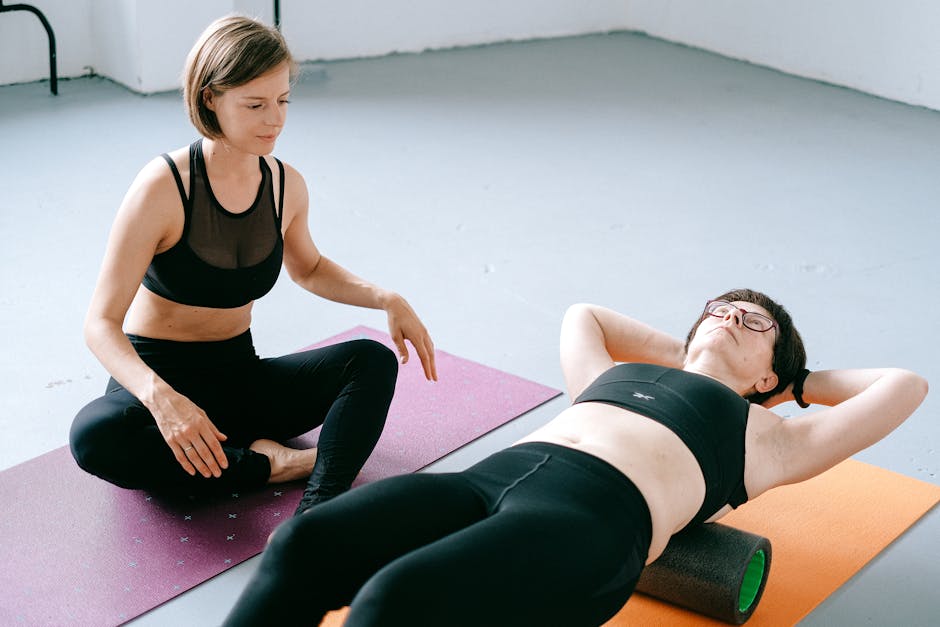
- Thoracic Spine (Upper Back): Lie on your back with the foam roller placed horizontally across your upper back, just below your shoulder blades. Support your head with your hands, interlacing fingers behind your neck. Lift your hips off the ground and gently roll up and down your thoracic spine, from your mid-back to your neck. Avoid rolling directly on your lower back or neck. Hold on areas of tightness for 20-30 seconds. Perform for 2 minutes.
Key Focus for Week 1: Develop comfort with the pressure, identify areas of tightness, and establish the habit of foam rolling.
Week 2: Expanding Range and Addressing Deeper Musculature
This week introduces more targeted rolling techniques and incorporates muscles that contribute to posture and more complex movements. The duration of each rolling session increases to 20-25 minutes, and the frequency remains 3-5 times per week.
Lower Body Refinement:
- Adductors (Inner Thighs): Lie face down and extend one leg out to the side, creating a straddle position. Place the foam roller under the extended thigh. Support yourself with your forearms. Roll from just above the knee to your inner hip. This area can be quite sensitive. Hold on tender spots for 20-30 seconds. Perform for 2 minutes per leg.
- Hip Flexors (Psoas & Iliacus): Lie face down with the foam roller placed just below your hip bone on one side. Support yourself on your forearms. You’ll be rolling a small, sensitive area. Gently explore this region, focusing on any tightness. Hold on tender spots for 20-30 seconds. Perform for 1 minute per side. Caution: This area can be intensely tender. If you experience significant pain, reduce pressure or skip.
- Piriformis: Sit on the foam roller with one leg crossed over the opposite knee, similar to the glute stretch. Shift your weight forward and slightly to the side of the crossed leg. You should feel the pressure targeting a deeper muscle within the gluteal region. Hold on tender spots for 20-30 seconds. Perform for 2 minutes per side.
Upper Body Expansion:
- Lats (Latissimus Dorsi): Lie on your side with the foam roller positioned under your armpit, extending down your side. Extend your top arm overhead. Roll slowly down your latissimus dorsi, from your armpit towards your lower ribs. Hold on tender spots for 20-30 seconds. Perform for 2 minutes per side.
- Rhomboids and Traps (Mid and Upper Back): Lie on your back with the foam roller positioned horizontally across your upper back. You can perform the same thoracic spine roll from Week 1, but now with a slightly longer duration and a conscious effort to breathe into the areas of tightness. Focus on finding the muscles between your shoulder blades. Hold on tender spots for 20-30 seconds. Perform for 2 minutes.
- Chest (Pectorals): Lie on your side with the foam roller positioned beneath your chest, along the pectoral muscle. Extend your arm overhead. Gently roll the foam roller back and forth across your chest. You may need to adjust your position to find the most effective spot. Hold on tender spots for 20-30 seconds. Perform for 2 minutes per side.
Key Focus for Week 2: Increase the intensity by exploring more tender spots and incorporating muscles that influence hip and shoulder mobility, crucial for athletic performance.
Week 3: Integrating Dynamic Movements and Full-Body Integration
Week 3 aims to integrate the mobility gained and prepare for more dynamic applications of foam rolling. The session duration extends to 25-30 minutes, and maintaining 3-5 sessions per week is recommended. This week also introduces some dynamic components where appropriate.
Dynamic Lower Body:
- Calves, Hamstrings, Quads, Glutes, IT Band: Continue with the static rolling techniques from Week 1 and 2. However, incorporate brief periods of dynamic movement. For example, while rolling your hamstrings, gently bend and straighten your knee. While rolling your quads, try small hip extensions. This helps to mobilize the fascia as you roll. Hold static positions on tender spots for 20-30 seconds, then perform dynamic movements for 30 seconds before returning to static holds.
- Adductors and Hip Flexors: Continue with static rolling. Consider adding a gentle pelvic tilt while rolling your hip flexors to explore different fascial planes.
Advanced Upper Body and Core:
- Shoulder Rotator Cuff: Sit on the floor with the foam roller placed behind your shoulder blade. Lean into the foam roller and gently move your arm in small circles, both internally and externally rotated. This targets the deeper muscles of the shoulder. Hold on tender spots for 20-30 seconds. Perform for 2 minutes per side.
- Forearms: Sit on the floor with your forearm resting on the foam roller. Extend your arm and roll from your wrist to your elbow. You can pronate and supinate your forearm to hit different muscle fibers. Hold on tender spots for 20-30 seconds. Perform for 2 minutes per forearm.
- Obliques: Lie on your side with the foam roller positioned along your obliques, from your ribs to your hip. Support yourself on your forearm. Gently roll along this area. Hold on tender spots for 20-30 seconds. Perform for 2 minutes per side.
Full Body Integration:
- Perform a brief, integrated flow. Start with the calves and roll upwards through the hamstrings, glutes, quads, and adductors. Then move to your thoracic spine, lats, rhomboids, and chest. Finish with the obliques and forearms. This helps to connect the movements and improve overall body awareness. Spend approximately 30 seconds to 1 minute per major muscle group in a continuous flow, pausing on tender spots for 20-30 seconds.
Key Focus for Week 3: Introduce dynamic movements to enhance fascial pliability and integrate rolling into a more fluid, full-body sequence. This prepares you for the final week’s focus on maintenance and peak performance.
Week 4: Maintenance, Performance Enhancement, and Habit Formation
Week 4 solidifies the gains made and establishes a sustainable foam rolling habit for long-term benefits. The session duration remains 25-30 minutes, with a frequency of 3-5 times per week. This week emphasizes self-assessment and tailoring the program to individual needs.
Personalized Rolling:
- Self-Assessment: Throughout the week, pay close attention to your body. Identify any muscle groups that still feel particularly tight or restricted. These will be your priority areas for focused rolling.
- Targeted Sessions: Instead of a rigid sequence, you can dedicate more time to the muscle groups that you feel require the most attention. For example, if your hamstrings are consistently tight, spend an extra 5 minutes on them.
- Pre- and Post-Workout Application: Experiment with foam rolling before workouts to prepare muscles for movement (lighter pressure, shorter duration) and after workouts for recovery (deeper pressure, longer holds on tender spots).
- Breathing Techniques: Continue to focus on deep, diaphragmatic breathing during your rolling sessions. This enhances the relaxation response and aids in muscle recovery.
- Active Recovery Integration: Combine your foam rolling sessions with light active recovery activities like walking, swimming, or yoga to maximize the benefits of your myofascial release.
Advanced Techniques for Performance:
- Trigger Point Therapy: If you encounter very specific, localized knots (trigger points), experiment with holding sustained pressure for up to 60 seconds, focusing on slowly releasing the tension.
- Ischemic Compression: Apply direct, sustained pressure to a trigger point until you feel the discomfort subside significantly. Then, slowly release the pressure and reassess.
- Interval Rolling: For particularly stubborn areas, try rolling back and forth for 30 seconds, then holding for 15 seconds, repeating this cycle for 2-3 minutes.
Long-Term Habit Formation:
- Schedule It: Treat your foam rolling sessions like any other important appointment. Block out time in your calendar.
- Listen to Your Body: This is the most crucial aspect. Some days you may need more rolling, other days less. Adapt the program to your current physical state.
- Vary Your Roller: If possible, experiment with different densities and textures of foam rollers. A firmer roller may be beneficial for deeper tissue work, while a softer one can be more comfortable for initial sessions.
- Progressive Overload: Just like training, you can progressively increase the intensity, duration, or frequency of your foam rolling as your body adapts.
Key Focus for Week 4: Solidify foam rolling as a consistent part of your fitness routine, personalize the practice based on individual needs, and understand how to leverage it for ongoing performance enhancement and injury prevention. This comprehensive program, when followed diligently, will lead to significant improvements in flexibility, muscle recovery, and overall physical well-being.
