
What Is Vo2 Max And How Can You Improve It
What is VO2 Max and How Can You Improve It?
VO2 max, or maximal oxygen uptake, represents the maximum rate at which your body can consume oxygen during intense, maximal exercise. It is a crucial physiological metric that quantifies your aerobic fitness level, directly correlating to your endurance capacity. Think of it as the upper limit of your cardiovascular system’s ability to deliver oxygen to your working muscles and your muscles’ efficiency in utilizing that oxygen for energy production. A higher VO2 max signifies a more efficient and powerful aerobic system, enabling you to sustain higher intensities of exercise for longer durations and recover more rapidly. It’s a fundamental determinant of performance in endurance sports like running, cycling, swimming, and cross-country skiing, but its benefits extend to all physical activities and overall health. Understanding and improving your VO2 max can significantly enhance your athletic potential and contribute to a healthier, more energetic lifestyle.
Understanding the Physiology of VO2 Max
The determination of VO2 max is a complex interplay of several physiological systems, primarily the cardiovascular and respiratory systems, alongside the muscular system. Oxygen, inhaled from the atmosphere, must first be efficiently transferred from the lungs into the bloodstream. This involves the lungs’ ability to take in a sufficient volume of air (ventilation) and the alveoli’s capacity to facilitate gas exchange, moving oxygen from the air into the pulmonary capillaries and carbon dioxide out. The pulmonary diffusion is therefore a key component. Once in the bloodstream, oxygen is bound to hemoglobin within red blood cells and transported throughout the body. The heart’s role in pumping oxygenated blood to the working muscles is paramount. This is governed by cardiac output, which is the product of heart rate (the number of times the heart beats per minute) and stroke volume (the amount of blood the heart pumps with each beat). During maximal exercise, both heart rate and stroke volume increase, leading to a significantly elevated cardiac output. This increased blood flow ensures that a larger supply of oxygen reaches the muscles. Finally, the muscles themselves must be capable of extracting and utilizing the delivered oxygen. This involves the density of mitochondria (the powerhouses of the cell where aerobic respiration occurs), the activity of aerobic enzymes, and the efficiency of the electron transport chain. The capacity of the muscles to efficiently utilize oxygen for ATP (adenosine triphosphate) production determines the a-v O2 difference, which is the difference in oxygen content between arterial and venous blood. A higher a-v O2 difference indicates greater oxygen extraction by the muscles. VO2 max is, therefore, a product of the integrated function of these systems: VO2 max = Cardiac Output x (a-v O2 difference). Factors influencing each of these components, from lung capacity and red blood cell count to heart size and muscle fiber type composition, all contribute to an individual’s baseline VO2 max. Genetics plays a significant role in determining an individual’s potential VO2 max, but environmental factors, particularly training, can substantially influence its expression.
Measuring VO2 Max
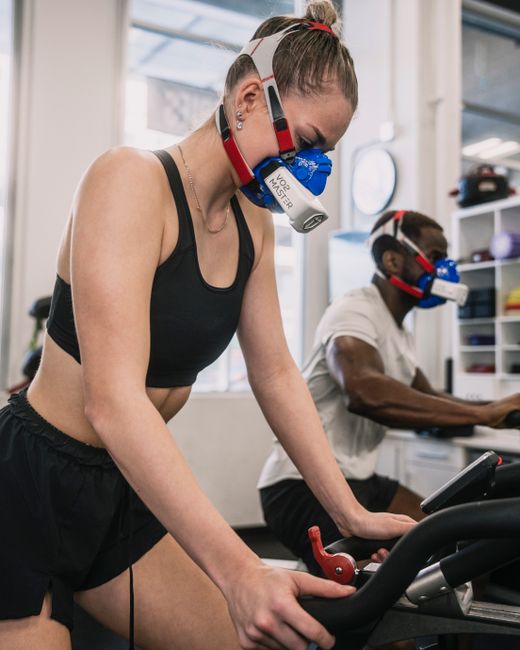
The gold standard for measuring VO2 max is through a laboratory-based maximal graded exercise test. This typically involves performing incremental exercise on a treadmill or cycle ergometer while connected to a metabolic cart. The metabolic cart analyzes the concentration of oxygen and carbon dioxide in the exhaled breath. The exercise intensity is progressively increased until the individual can no longer maintain the required effort, usually indicated by the inability to reach a predetermined heart rate or a plateau in oxygen consumption. During the test, heart rate, blood pressure, and perceived exertion are also monitored. A true VO2 max is achieved when oxygen consumption plateaus despite increasing exercise intensity, meaning the body has reached its maximal capacity to take up and utilize oxygen. While laboratory testing provides the most accurate measurement, field tests can offer estimations. The Cooper test, for example, involves running as far as possible in 12 minutes, and various formulas can estimate VO2 max based on the distance covered. Similarly, cycling tests can estimate VO2 max based on power output. However, it’s important to acknowledge that these field tests are less precise and can be influenced by factors like pacing and environmental conditions. Wearable devices with advanced heart rate monitoring and accelerometers are also increasingly offering VO2 max estimations, but their accuracy can vary considerably compared to laboratory assessments.
Factors Influencing VO2 Max
Several factors dictate an individual’s VO2 max. Genetics plays a substantial role, influencing everything from lung capacity and heart size to the number of mitochondria and muscle fiber composition. Some individuals are predisposed to higher aerobic capacities due to their inherited traits. Age is another significant factor; VO2 max generally peaks in young adulthood (early to mid-20s) and gradually declines with age, typically by about 1% per year after the age of 30, if not actively maintained through training. This decline is attributed to various physiological changes, including a reduction in maximal heart rate, decreased stroke volume, and a potential decline in muscle mass and mitochondrial function. Sex also influences VO2 max, with men generally possessing higher VO2 max values than women, primarily due to differences in body composition (men tend to have more muscle mass and less body fat) and higher hemoglobin levels, which facilitate greater oxygen transport. Body composition, specifically the percentage of lean muscle mass versus body fat, is critical. More lean muscle mass supports a higher metabolic rate and a greater capacity for oxygen utilization, while excess body fat can hinder performance and oxygen delivery. Training status is perhaps the most modifiable and impactful factor. Individuals who engage in regular aerobic exercise, particularly high-intensity training, will possess significantly higher VO2 max values than sedentary individuals. The type, intensity, duration, and frequency of training all contribute to adaptations that enhance oxygen uptake and utilization. Finally, environmental factors such as altitude can also temporarily affect VO2 max. At higher altitudes, the lower partial pressure of oxygen in the air reduces the amount of oxygen available for uptake, leading to a lower VO2 max. Acclimatization to altitude can lead to adaptations that improve oxygen transport and utilization, partially offsetting this effect.
How to Improve VO2 Max: The Principles of Training
Improving VO2 max requires a targeted and progressive approach to exercise training. The fundamental principle underpinning VO2 max improvement is progressive overload, which means gradually increasing the demands placed on the body over time. This forces the physiological systems responsible for oxygen transport and utilization to adapt and become more efficient. The key training modalities for enhancing VO2 max are aerobic endurance training and high-intensity interval training (HIIT). Aerobic endurance training, characterized by sustained exercise at a moderate intensity (typically 60-80% of heart rate max or RPE 4-6 on a 1-10 scale) for longer durations, improves the efficiency of the cardiovascular system, increases capillary density in muscles, and enhances mitochondrial function. This type of training builds a strong aerobic base, which is essential for any VO2 max improvement program. HIIT, on the other hand, involves short bursts of very high-intensity exercise (90-100% of heart rate max or RPE 8-10) interspersed with periods of rest or low-intensity recovery. The intense work intervals push the body to its aerobic limits, stimulating significant adaptations in cardiac output, stroke volume, and the muscles’ ability to extract and utilize oxygen. The principle of specificity also applies; training should mimic the demands of the activity for which you are trying to improve VO2 max. For example, a runner will focus on running-based interval training, while a cyclist will incorporate cycling intervals. Consistency is paramount. Regular training sessions, rather than sporadic bursts of activity, are necessary to elicit and maintain physiological adaptations. Recovery is equally important; adequate rest allows the body to repair and rebuild, making it stronger for subsequent training sessions. Overtraining can lead to fatigue, injury, and a plateau or even decline in performance.
Specific Training Strategies for VO2 Max Improvement
Several specific training strategies can be employed to effectively improve VO2 max. High-Intensity Interval Training (HIIT) is a cornerstone for significant VO2 max gains. Protocols such as the Tabata protocol (20 seconds of maximal effort followed by 10 seconds of rest, repeated for 8 rounds) or longer intervals (e.g., 4 minutes of high-intensity work with 3 minutes of recovery) are highly effective. The key is to work at an intensity that is challenging enough to elicit a strong physiological response. Threshold Training, also known as tempo runs or sustained high-intensity exercise, involves working at an intensity that you can sustain for a prolonged period, typically 20-60 minutes, which is just below your lactate threshold. This type of training improves the body’s ability to clear lactate and sustain higher aerobic efforts. Fartlek training, meaning "speed play" in Swedish, is a less structured form of interval training that involves alternating between periods of faster running and slower recovery jogs, often incorporating natural variations in terrain and pace. This can be a more enjoyable and less mentally demanding way to introduce intensity into a training program. Long, slow distance (LSD) runs, while primarily focused on building aerobic endurance and fat metabolism, also contribute to VO2 max improvement by increasing capillary density and mitochondrial biogenesis over time. These longer, lower-intensity sessions build the foundational aerobic capacity that supports higher-intensity work. Incorporating strength training can also indirectly benefit VO2 max by improving muscle efficiency, power, and reducing the metabolic cost of movement. Focusing on compound exercises like squats, deadlifts, and lunges can enhance leg strength and power, which are crucial for activities like running and cycling.
Progression and Periodization
To continually improve VO2 max and avoid plateaus, progressive overload must be applied consistently. This can be achieved by gradually increasing the duration or intensity of your training sessions, reducing rest periods between intervals, or increasing the number of intervals performed. For example, if you start with 6 x 1-minute intervals at a certain intensity, you might progress to 8 x 1-minute intervals, then to 6 x 1.5-minute intervals, and so on. Periodization is a crucial concept for long-term improvement and injury prevention. It involves systematically varying training intensity, volume, and type over time to optimize performance and recovery. A common periodization model includes phases like: a base-building phase focused on aerobic endurance, an intensification phase that incorporates more HIIT and threshold training to specifically target VO2 max, and a tapering phase before a major competition to allow the body to fully recover and supercompensate. Within a microcycle (e.g., a week), you might have one or two high-intensity VO2 max focused sessions, interspersed with moderate-intensity endurance work and recovery days. The FITT principle (Frequency, Intensity, Time, Type) should guide your training program. Frequency refers to how often you train; for VO2 max improvement, aiming for 3-5 aerobic training sessions per week, with at least one or two being high-intensity, is recommended. Intensity is crucial; for VO2 max, workouts should generally be in the high-intensity zone (85-95% of HRmax). Time refers to the duration of your workouts; high-intensity intervals are typically shorter (30 seconds to 5 minutes), while longer endurance sessions can last from 30 minutes to several hours. Type refers to the mode of exercise, which should be specific to your goals. Monitoring your progress through regular (but not excessive) re-testing of VO2 max or by tracking performance metrics in your sport can help you adjust your training program and ensure continued improvement.
Beyond Exercise: Supporting VO2 Max Development
While targeted exercise is the primary driver of VO2 max improvement, several other lifestyle factors can significantly support and enhance these adaptations. Nutrition plays a vital role in providing the body with the fuel and building blocks necessary for training and recovery. Adequate carbohydrate intake is essential to replenish glycogen stores, which are the primary source of energy during high-intensity exercise. Sufficient protein intake is crucial for muscle repair and adaptation. Consuming a balanced diet rich in fruits, vegetables, and whole grains will provide essential vitamins and minerals that support overall physiological function. Hydration is critical for optimal performance. Dehydration can significantly impair cardiovascular function and lead to a premature onset of fatigue, negatively impacting training intensity and VO2 max potential. Ensuring adequate fluid intake before, during, and after exercise is paramount. Sleep is arguably one of the most underappreciated yet powerful tools for recovery and physiological adaptation. During deep sleep, the body releases growth hormone, which is essential for muscle repair and tissue regeneration. Chronic sleep deprivation can hinder recovery, increase the risk of injury, and negatively impact hormonal balance, all of which can impede VO2 max development. Aiming for 7-9 hours of quality sleep per night is crucial for athletes. Stress management is also important. Chronic psychological stress can lead to elevated cortisol levels, which can interfere with recovery and muscle adaptation. Incorporating stress-reducing activities such as meditation, yoga, or spending time in nature can complement your training efforts. Finally, avoiding smoking and excessive alcohol consumption is essential. Smoking impairs oxygen transport and lung function, directly impacting VO2 max. Excessive alcohol intake can disrupt sleep, impair recovery, and negatively affect hormone levels.
Maintaining and Enhancing VO2 Max Over Time
Once you have improved your VO2 max, consistent training is necessary to maintain these gains. The principle of reversibility dictates that if training stimulus is removed, the adaptations will be lost. Therefore, maintaining a regular training schedule, even if it’s at a slightly reduced volume or intensity compared to peak training periods, is crucial. To continue improving VO2 max beyond your initial gains, you will need to progressively increase the training stimulus. This might involve incorporating new training modalities, increasing the intensity or duration of existing workouts, or adding more challenging interval sessions. Listening to your body is paramount. As you push your limits, it’s essential to pay attention to signs of fatigue, overtraining, or potential injury. Adjusting your training plan based on how you feel can prevent setbacks and ensure sustainable progress. Regularly reassessing your VO2 max, either through laboratory tests or reliable field estimations, can provide valuable feedback on your progress and help you identify areas where your training might need adjustment. The journey of improving and maintaining VO2 max is an ongoing process that requires dedication, smart training, and a holistic approach to your health and well-being.
