
This Or That Is Kale Healthier Than Broccoli
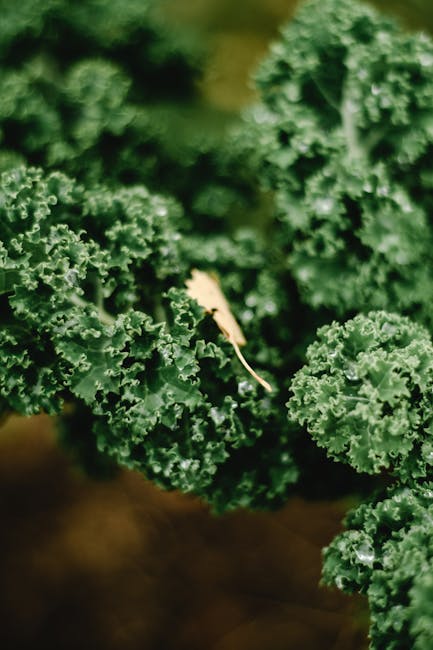
Kale vs. Broccoli: A Comprehensive Nutritional Showdown for Optimal Health
The age-old question for health-conscious individuals and culinary adventurers alike often boils down to a choice between two of nature’s green powerhouses: kale and broccoli. Both are lauded for their impressive nutrient profiles and are frequently championed as essential components of a healthy diet. However, when scrutinized closely, subtle but significant differences emerge that might sway your preference depending on your specific health goals. This article embarks on a comprehensive nutritional showdown, dissecting the merits of kale versus broccoli, offering a data-driven comparison to help you make informed dietary decisions. We will delve into their vitamin and mineral content, antioxidant profiles, fiber benefits, and specific phytochemical compounds, ultimately aiming to answer the question: Is kale healthier than broccoli?
To begin, let’s establish a baseline by examining the macronutrient profiles of raw kale and raw broccoli, typically measured per 100-gram serving. Both vegetables are remarkably low in calories, making them excellent choices for weight management. Kale generally contains around 49 calories per 100 grams, while broccoli clocks in slightly lower at approximately 34 calories. This slight calorie advantage for broccoli is often attributed to its higher water content. In terms of carbohydrates, both are relatively low, with kale offering around 8.8 grams and broccoli around 6.6 grams. The majority of these carbohydrates are complex, with a significant portion being dietary fiber, a crucial component for digestive health and satiety. Protein content is also comparable, with kale providing about 4.3 grams and broccoli around 2.8 grams per 100 grams. While neither is a primary protein source, the protein in kale is slightly higher, offering a minor edge for those looking to boost their intake from plant-based sources. Fat content is negligible in both raw vegetables, typically less than 1 gram per 100 grams, further reinforcing their status as low-calorie, nutrient-dense foods.
Moving onto micronutrients, the landscape becomes more nuanced, with distinct advantages for each vegetable. Vitamin C is a powerhouse antioxidant essential for immune function, collagen synthesis, and iron absorption. Here, broccoli takes a clear lead. A 100-gram serving of raw broccoli provides approximately 89.2 milligrams of Vitamin C, which is well over 100% of the recommended daily intake for most adults. Kale, while still a good source, offers around 120 milligrams per 100 grams in some varieties, but often it is comparable to or slightly lower than broccoli depending on the specific type and freshness, with some sources placing it closer to 90-100mg. This means that while kale is an excellent source of Vitamin C, broccoli typically outpaces it in this crucial nutrient.
Vitamin K is another vital nutrient, playing a critical role in blood clotting and bone health. Kale is an undisputed champion in this category. A 100-gram serving of raw kale can contain an astonishing 705 micrograms of Vitamin K, far exceeding the daily requirements and significantly higher than broccoli, which offers around 101.6 micrograms per 100 grams. This massive difference makes kale an exceptional choice for individuals concerned about bone density and those seeking to optimize their blood clotting mechanisms.
The B vitamins are essential for energy metabolism, nerve function, and DNA synthesis. Kale generally exhibits higher levels of several B vitamins, including folate (Vitamin B9), thiamin (B1), riboflavin (B2), and pyridoxine (B6), compared to broccoli. For instance, kale typically contains about 140-150 micrograms of folate per 100 grams, compared to broccoli’s approximately 63 micrograms. Folate is particularly important for cell division and growth, making kale a valuable food for pregnant women and those looking to support DNA repair.
Vitamin A, crucial for vision, immune function, and cell growth, is present in both vegetables, primarily in the form of beta-carotene, which the body converts to Vitamin A. Kale shines in this regard, boasting an exceptionally high concentration of beta-carotene. A 100-gram serving of kale can provide over 6,800 micrograms of beta-carotene, translating to a substantial amount of Vitamin A. Broccoli also provides beta-carotene, with approximately 310 micrograms per 100 grams, but it pales in comparison to kale’s impressive output. This makes kale a standout choice for supporting eye health and immune defenses.
When it comes to minerals, both kale and broccoli offer a spectrum of essential nutrients. Calcium, vital for bone health and muscle function, is present in both. Kale typically contains more calcium than broccoli, with around 150 milligrams per 100 grams compared to broccoli’s roughly 47 milligrams. While broccoli still contributes, kale offers a more significant contribution to daily calcium intake, making it a valuable addition for those seeking to reduce their reliance on dairy or to enhance their bone health strategy.
Potassium, important for blood pressure regulation and fluid balance, is found in both. Broccoli generally contains slightly more potassium, with around 316 milligrams per 100 grams, compared to kale’s approximately 491 milligrams per 100 grams in some sources, though variations exist. Both are good sources, and incorporating either into your diet contributes to maintaining healthy potassium levels.
Iron, essential for oxygen transport in the blood, is present in both, with kale often containing slightly more. A 100-gram serving of raw kale can provide about 1.5 milligrams of iron, while broccoli offers around 0.7 milligrams. While plant-based iron (non-heme) is not as readily absorbed as heme iron from animal sources, consuming iron-rich plant foods like kale, especially alongside Vitamin C-rich foods, can significantly improve absorption.
Magnesium, involved in over 300 biochemical reactions in the body, is also found in both. Kale typically contains around 47 milligrams of magnesium per 100 grams, while broccoli offers about 21 milligrams. This means kale provides a more substantial magnesium boost, supporting nerve function, muscle relaxation, and energy production.
Beyond vitamins and minerals, the antioxidant profiles of kale and broccoli are a major reason for their health-promoting reputations. Both are rich in various antioxidants that combat oxidative stress, a key contributor to chronic diseases and aging. Kale is particularly renowned for its high concentration of two powerful antioxidant families: carotenoids and flavonoids. The carotenoids, such as beta-carotene, lutein, and zeaxanthin, are crucial for eye health and have been linked to a reduced risk of macular degeneration and cataracts. Kale is exceptionally rich in lutein and zeaxanthin, often surpassing broccoli in these specific compounds.
The flavonoids present in kale include quercetin and kaempferol. Quercetin possesses anti-inflammatory, antiviral, and antioxidant properties, while kaempferol also exhibits potent antioxidant and anti-inflammatory effects, and has been studied for its potential role in cancer prevention. Broccoli also contains these flavonoids, but often in lower concentrations compared to kale.
Broccoli’s antioxidant prowess is significantly amplified by its unique compound, sulforaphane. Sulforaphane is a potent isothiocyanate derived from glucosinolates, which are abundant in cruciferous vegetables. Upon chewing or chopping broccoli, the enzyme myrosinase is released, converting glucoraphanin into sulforaphane. Sulforaphane has been extensively researched for its remarkable health benefits, including its potent antioxidant and anti-inflammatory actions, its ability to detoxify carcinogens, and its potential role in cancer prevention and treatment. Studies have shown sulforaphane’s ability to activate the Nrf2 pathway, a master regulator of the body’s antioxidant defenses. While kale does contain glucosinolates and can produce isothiocyanates, broccoli is generally considered a superior source of sulforaphane.
Fiber is another critical component of a healthy diet, and both kale and broccoli are excellent sources. Fiber promotes digestive regularity, aids in weight management by increasing satiety, and helps regulate blood sugar levels. A 100-gram serving of raw kale typically contains around 3.6 grams of fiber, while broccoli offers approximately 2.4 grams. Kale’s slightly higher fiber content can contribute to a greater feeling of fullness and support a healthier gut microbiome.
The question of "healthier" is often subjective and depends on individual needs and priorities. If your primary focus is on maximizing Vitamin A, Vitamin K, calcium, and certain antioxidants like lutein and zeaxanthin, then kale arguably holds the edge. Its dense nutrient profile, particularly in these areas, makes it a nutritional powerhouse.
However, if your priority is a robust sulforaphane intake, a powerful compound with extensive anti-cancer and detoxification properties, then broccoli is likely the superior choice. The specific way the body processes glucosinolates in broccoli, leading to higher sulforaphane production, gives it a unique advantage in this regard. Furthermore, broccoli’s higher Vitamin C content provides a more immediate antioxidant boost.
It is also important to consider the bioavailability of nutrients. For instance, the oxalates present in kale can slightly inhibit calcium absorption. While kale is still a good source of calcium, the calcium in broccoli may be more readily absorbed due to its lower oxalate content. Conversely, Vitamin K is highly bioavailable in kale.
Cooking methods also play a role in nutrient retention. Steaming is often considered the best method for preserving nutrients in both vegetables. Overcooking, especially boiling, can lead to significant losses of water-soluble vitamins like Vitamin C and some B vitamins. Some cooking methods, like stir-frying or roasting, can even enhance the bioavailability of certain nutrients by breaking down cell walls. For sulforaphane production in broccoli, light steaming or eating it raw can be more effective than overcooking, as excessive heat can deactivate the myrosinase enzyme.
In conclusion, declaring one definitively "healthier" than the other is an oversimplification. Both kale and broccoli are nutritional superstars, offering a wealth of vitamins, minerals, fiber, and antioxidants. Kale excels in Vitamin A, Vitamin K, calcium, magnesium, and certain carotenoids, making it an exceptional choice for bone health, vision, and overall cellular protection. Broccoli stands out for its superior Vitamin C content and, most notably, its potent sulforaphane, offering significant benefits for detoxification, inflammation reduction, and cancer prevention.
The most prudent approach for optimal health is to incorporate both kale and broccoli into your regular diet, varying your intake to reap the diverse benefits each offers. Rather than focusing on which is "healthier," consider them as complementary powerhouses that, together, contribute to a comprehensive and robust nutritional strategy for long-term well-being. The choice between kale and broccoli is not an either/or proposition; it is an opportunity to embrace the extraordinary nutritional diversity that nature provides.
