
5 Day Core Workout Guide
The Ultimate 5-Day Core Workout Guide for Maximum Strength and Definition
Building a strong, defined core is paramount for overall physical health, athletic performance, and injury prevention. A robust core acts as the body’s powerhouse, stabilizing the spine, facilitating efficient movement, and transferring force between the upper and lower body. This comprehensive 5-day core workout guide provides a structured and progressive approach to target all major abdominal and back muscles, promoting strength, endurance, and aesthetic development. Each day focuses on specific muscle groups and movement patterns, ensuring a balanced and effective routine that can be adapted to various fitness levels. Consistency is key to unlocking the transformative benefits of a dedicated core program. This guide is designed to be followed sequentially, allowing for progressive overload and adaptation. Prior to commencing any new exercise program, it is advisable to consult with a healthcare professional, especially if you have pre-existing medical conditions or injuries. Proper form is non-negotiable to maximize efficacy and minimize the risk of strain or injury. Focus on controlled movements, engaging the target muscles throughout the entire range of motion, and breathing deliberately. Rest periods between sets will generally range from 30-60 seconds, depending on your current fitness level and the intensity of the exercise. Advanced practitioners may opt for shorter rest periods to increase metabolic demand.
Day 1: Foundational Core Stability and Endurance
The first day of this 5-day core workout guide is dedicated to establishing a solid foundation of core stability and muscular endurance. This approach focuses on isometric holds and controlled movements that engage the deep stabilizing muscles of the trunk. These muscles are crucial for maintaining posture and preventing lower back pain. The exercises are designed to be challenging but achievable for most fitness levels, with modifications available for beginners and progressions for the more advanced.
1. Plank: This fundamental exercise is a cornerstone of core training. Begin in a push-up position, then lower your forearms to the ground, ensuring your elbows are directly beneath your shoulders and your body forms a straight line from head to heels. Engage your abdominal muscles, glutes, and quads to maintain rigidity. Avoid letting your hips sag or rise too high. Hold for 30-60 seconds, aiming for three sets. For an increased challenge, extend the duration of your holds or elevate your feet on a stable surface. Beginners can perform the plank on their knees.
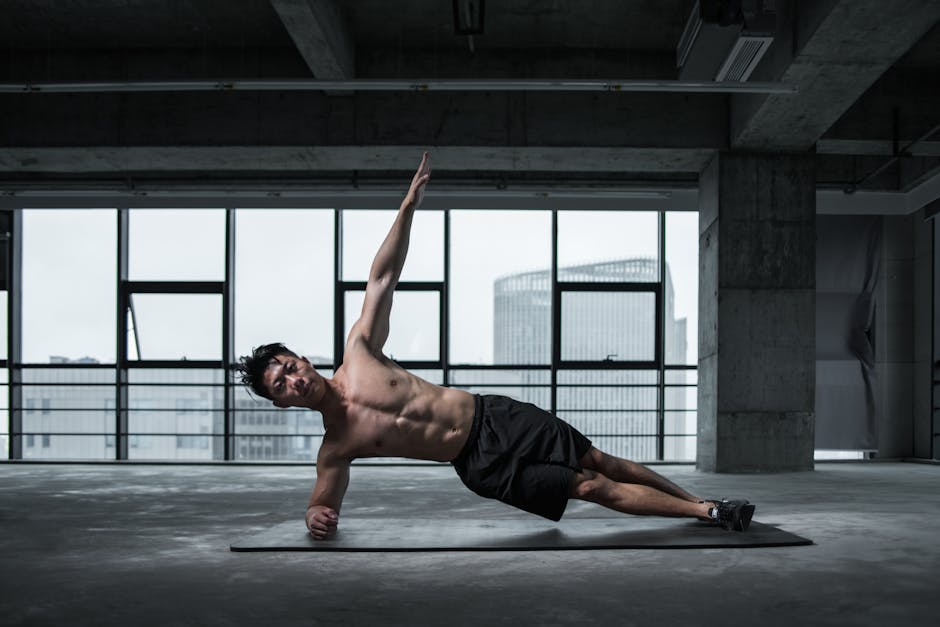
2. Side Plank: Targeting the obliques and other lateral stabilizing muscles, the side plank is essential for rotational strength and injury prevention. Lie on your side with your legs stacked. Prop yourself up on your forearm, ensuring your elbow is directly beneath your shoulder. Lift your hips off the ground, creating a straight line from head to heels. Engage your obliques to prevent your hips from dropping. Hold for 30-45 seconds per side, completing three sets. Modifications include bending the bottom knee for support. Advanced variations can involve leg lifts or arm reaches.
3. Bird Dog: This exercise improves balance, coordination, and engages the erector spinae muscles of the back, along with the glutes and abdominals. Start on all fours, with your hands directly beneath your shoulders and your knees beneath your hips. Simultaneously extend your right arm forward and your left leg backward, keeping your back straight and your core engaged. Avoid arching or rounding your back. Return to the starting position with control and repeat on the opposite side. Perform 10-12 repetitions per side for three sets. Focus on a slow, deliberate movement.
4. Dead Bug: The dead bug is an excellent exercise for developing reciprocal inhibition and controlled core engagement without stressing the lower back. Lie on your back with your knees bent at a 90-degree angle, shins parallel to the floor, and arms extended towards the ceiling. Slowly lower your right arm behind your head while simultaneously extending your left leg straight out, keeping your lower back pressed into the floor. Engage your core to prevent your back from arching. Return to the starting position with control and repeat on the opposite side. Perform 10-12 repetitions per side for three sets.
Day 2: Dynamic Core Strength and Power Development
Day two shifts focus to dynamic movements that build explosive core strength and power. These exercises involve controlled, rapid contractions of the abdominal and back muscles, essential for athletic performance and everyday functional movements. This day will challenge your ability to generate and control force.
1. Russian Twists: This exercise primarily targets the obliques and rectus abdominis, promoting rotational strength. Sit on the floor with your knees bent and feet flat on the ground, or slightly elevated for an increased challenge. Lean back slightly, maintaining a straight back, and engage your core. Clasp your hands together or hold a weight (dumbbell, kettlebell, medicine ball). Twist your torso to one side, then to the other, touching your hands to the floor beside your hips. Perform 15-20 repetitions per side for three sets.
2. Bicycle Crunches: This effective exercise works the rectus abdominis and obliques in a dynamic, controlled manner. Lie on your back with your knees bent and hands lightly behind your head. Bring your right elbow towards your left knee while simultaneously extending your right leg straight. Alternate sides, mimicking a pedaling motion. Focus on squeezing your obliques with each twist. Perform 15-20 repetitions per side for three sets.
3. Hanging Leg Raises: This advanced exercise targets the lower abdominal muscles and hip flexors. Hang from a pull-up bar with your legs extended. Engage your core and glutes to lift your legs towards your chest, keeping them as straight as possible. Lower your legs with control, avoiding momentum. Perform 10-15 repetitions for three sets. Beginners can opt for knee raises.
4. Mountain Climbers: A high-intensity cardio and core exercise that builds endurance and engages multiple muscle groups. Start in a high plank position. Drive your right knee towards your chest, then quickly switch, bringing your left knee towards your chest. Continue this rapid alternation, maintaining a stable core and a brisk pace. Perform for 45-60 seconds for three sets.
Day 3: Posterior Chain Strength and Spinal Integrity
This day is dedicated to strengthening the posterior chain – the muscles of the back, glutes, and hamstrings. A strong posterior chain is crucial for spinal support, preventing imbalances, and improving overall posture. This day’s exercises will focus on building resilience and strength in these often-neglected muscle groups.
1. Supermans: This exercise effectively targets the erector spinae muscles, glutes, and hamstrings. Lie face down on the floor with your arms extended overhead and legs straight. Simultaneously lift your arms, chest, and legs off the ground, squeezing your glutes and engaging your back muscles. Hold for a second at the top, then slowly lower. Perform 12-15 repetitions for three sets.
2. Glute Bridges: A foundational exercise for glute activation and strength, which directly supports the lower back. Lie on your back with your knees bent and feet flat on the floor hip-width apart. Engage your glutes and lift your hips off the ground, creating a straight line from your shoulders to your knees. Hold for a second at the top, then slowly lower. Perform 15-20 repetitions for three sets. For an increased challenge, perform single-leg glute bridges.
3. Kettlebell Swings: A powerful compound exercise that engages the posterior chain, including the glutes, hamstrings, and erector spinae, while also developing explosive hip power. Stand with your feet shoulder-width apart, holding a kettlebell with both hands. Hinge at your hips, allowing the kettlebell to swing back between your legs. Explosively extend your hips forward, driving the kettlebell up to chest or eye level. Maintain a rigid core throughout the movement. Perform 10-12 repetitions for three sets. Focus on hip hinge mechanics, not arm swing.
4. Back Extensions (Hyperextensions): This exercise directly strengthens the erector spinae muscles, crucial for spinal stability. Use a Roman chair or a GHD machine. Secure your ankles and position yourself so your hips are on the pad. Slowly lower your torso, keeping your back straight, until you feel a stretch in your lower back. Engage your back muscles to extend your torso back up to a neutral position. Perform 12-15 repetitions for three sets. Avoid hyperextending beyond a neutral spine.
Day 4: Rotational Strength and Anti-Rotation Control
Day four focuses on developing rotational strength and the ability to resist unwanted rotation, critical for preventing injuries during dynamic movements and improving athletic performance. This day will challenge your core’s ability to control and generate torque.
1. Pallof Press: This anti-rotation exercise is excellent for building isometric core strength and preventing unwanted trunk rotation. Stand with your side facing a cable machine or resistance band anchored at chest height. Grab the handle or band with both hands, bringing it to your chest. Step away from the anchor point to create tension. Press your hands straight out in front of your chest, resisting the pull to rotate your body. Hold for a second, then slowly return to your chest. Perform 10-12 repetitions per side for three sets.
2. Medicine Ball Rotational Throws: This dynamic exercise builds explosive rotational power. Stand with your feet shoulder-width apart, holding a medicine ball. Rotate your torso and powerfully throw the medicine ball against a solid wall or partner to your side. Catch the ball as it rebounds and repeat on the opposite side. Perform 10-12 repetitions per side for three sets. Focus on generating power from your hips and core.
3. Wood Chops (Cable or Band): This exercise mimics the natural rotational movements used in sports and daily activities. Set a cable machine or resistance band at a high or low position. Stand with your feet shoulder-width apart, holding the handle or band with both hands. Imagine you are chopping wood, diagonally bringing the weight from the high or low anchor point down across your body. Engage your obliques and core throughout the movement. Perform 10-12 repetitions per side for three sets.
4. Renegade Rows: This challenging exercise combines a plank with a dumbbell row, requiring significant core stability to resist rotation. Start in a high plank position with a dumbbell in each hand, positioned beneath your shoulders. Maintain a stable plank, then row one dumbbell towards your chest, keeping your core engaged and hips level. Lower the dumbbell with control and repeat on the other side. Perform 8-10 repetitions per side for three sets. Use lighter dumbbells to maintain proper form.
Day 5: Core Endurance and Active Recovery
The final day of this 5-day core workout guide is dedicated to building core endurance and incorporating active recovery. This allows for increased time under tension and promotes blood flow to aid in muscle repair and recovery. This day is about sustained effort and rejuvenation.
1. Plank Variations Circuit: Perform a circuit of different plank variations with minimal rest between exercises.
- Standard Plank: 60 seconds
- Forearm Side Plank (Right): 45 seconds
- Forearm Side Plank (Left): 45 seconds
- Plank with Shoulder Taps: 30 seconds (alternating sides)
- High Plank: 60 seconds
Rest for 90-120 seconds between circuits and complete 2-3 rounds.
2. Leg Raises with Hip Thrust: Lie on your back with your legs extended. Place your hands beneath your glutes for support. Engage your core and lift your legs towards the ceiling, then lower them slightly without touching the floor. As you lower your legs, engage your glutes to lift your hips off the ground in a controlled hip thrust. Lower your hips with control and repeat. Perform 15-20 repetitions for three sets.
3. Ab Wheel Rollouts: This advanced exercise targets the rectus abdominis and requires significant core strength and control. Kneel on the floor with an ab wheel positioned in front of you. Grip the handles firmly and slowly roll the wheel forward, extending your body and engaging your core to prevent your lower back from arching. Roll back to the starting position with control. Perform 8-12 repetitions for three sets. Modifications include performing the rollout from a standing position with a lighter ab wheel or limiting the range of motion.
4. Cobra Pose (Yoga): This gentle yoga pose promotes spinal extension and stretches the abdominal muscles, aiding in recovery. Lie face down on the floor with your hands beneath your shoulders. Press into your hands and lift your chest off the ground, keeping your hips on the floor. Engage your back muscles gently. Hold for 30-45 seconds, breathing deeply. Repeat 2-3 times.
Progression and Adaptation:
This 5-day core workout guide is a template. To continue making progress, gradually increase the difficulty of your workouts. This can be achieved by:
- Increasing repetitions or hold times: For exercises like planks or leg raises.
- Adding more sets: Increase the overall volume of your workout.
- Decreasing rest periods: Make your workouts more metabolically demanding.
- Increasing resistance: Utilize heavier weights for exercises like kettlebell swings or medicine ball throws.
- Incorporating more challenging variations: Progress from knee planks to full planks, or from knee raises to straight leg raises.
- Introducing tempo variations: Slowing down the eccentric (lowering) phase of an exercise can increase muscle activation.
Nutrition and Recovery:
Optimal nutrition and adequate recovery are as crucial as the workouts themselves for achieving a strong and defined core.
- Protein Intake: Ensure sufficient protein intake to support muscle repair and growth. Aim for lean protein sources such as chicken, fish, lean beef, eggs, dairy, and plant-based alternatives.
- Balanced Diet: Consume a balanced diet rich in whole foods, including fruits, vegetables, and complex carbohydrates, to provide sustained energy and essential nutrients.
- Hydration: Stay well-hydrated throughout the day, as water is vital for numerous bodily functions, including muscle performance and recovery.
- Sleep: Prioritize 7-9 hours of quality sleep per night. Sleep is when the body repairs and rebuilds muscle tissue.
- Active Recovery: Beyond the specific exercises on Day 5, consider light activities like walking, swimming, or gentle stretching on rest days to promote blood flow and aid recovery.
By adhering to this 5-day core workout guide, focusing on proper form, and prioritizing nutrition and recovery, you will significantly enhance your core strength, stability, and aesthetics, leading to improved overall health and performance. Consistency and dedication are the cornerstones of success in any fitness endeavor.
