August 2026 E-News: Global Developments and Preparations for the 4th IAPD Summit in Barcelona

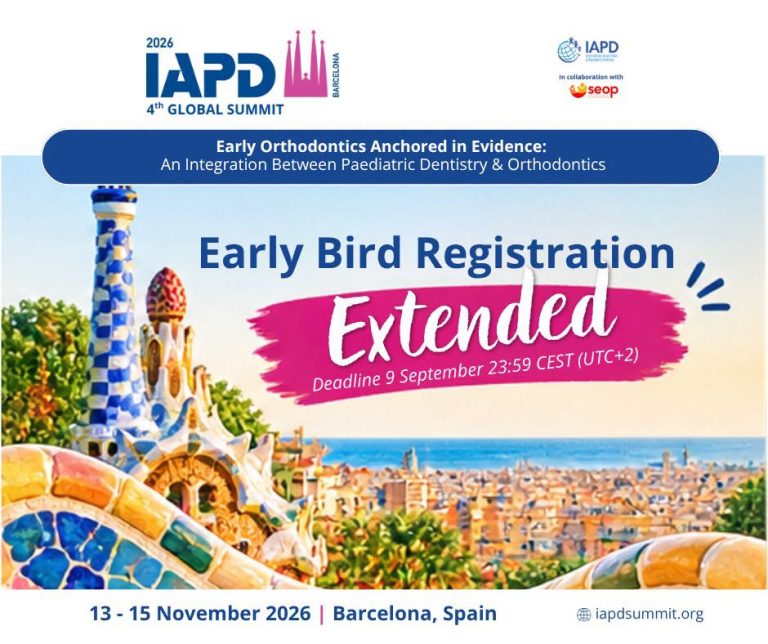
The international paediatric dentistry community is entering a period of significant activity as the International Association of Paediatric Dentistry (IAPD) ramps up preparations for the 4th Global IAPD Summit, scheduled to take place in Barcelona, Spain. With the deadline for early-bird registration extended to September 9, 2026, practitioners from around the globe are finalizing their travel plans and academic commitments to participate in what is widely regarded as one of the field’s most influential gatherings. The summit, a cornerstone of the IAPD’s biennial agenda, aims to foster international collaboration, address emerging challenges in oral healthcare for children, and promote evidence-based clinical practices.
The Road to Barcelona: Strategic Preparations and Registration
The decision to extend the early-bird registration period reflects the organization’s commitment to ensuring broad accessibility for dental professionals across varying economic regions. The summit is designed to serve as a hub for clinical education, featuring a multidisciplinary approach that combines cutting-edge scientific research with practical, hands-on clinical strategies.

Barcelona, a city recognized for its historical significance and modern infrastructure, provides the backdrop for this assembly. For delegates, the logistical requirements—including visa processing—have become a priority. The IAPD Congress Team has established a dedicated support channel for registered attendees who require official invitation letters for visa applications, a necessary step for international travel in the current global climate. The administrative push to streamline these processes underscores the IAPD’s desire to maximize attendance and cross-cultural exchange.
Scientific Foundations and Clinical Recommendations
Central to the IAPD’s mission is the standardization of care through evidence-based consensus. A key highlight of the August updates is the renewed focus on the IAPD Consensus Recommendation on Restorative Dentistry in Children. As dental science evolves, the transition from traditional, highly invasive restoration methods toward more conservative, biologically driven approaches has become a central tenet of the profession.
The current recommendations emphasize the critical nature of individual caries risk assessment. By tailoring treatment plans to the specific needs of a child, clinicians can move beyond reactive "drill and fill" models to more proactive, preventative frameworks. The guidelines explicitly promote the use of techniques such as Atraumatic Restorative Treatment (ART), the application of glass ionomer materials, and the use of zirconia and preformed metal crowns. These options are presented not as one-size-fits-all solutions, but as tools that require refined clinical judgment. This shift represents a broader movement within the pediatric dental community toward prioritizing the long-term oral health trajectory of the patient over immediate, isolated mechanical interventions.

The Role of Advocacy and Public Health: The Fluoriders Initiative
While the academic side of the summit focuses on clinical precision, the social outreach of the organization continues to grow through the "Fluoriders" movement. This public health initiative is designed to bridge the gap between clinical research and community awareness. The campaign utilizes digital engagement, including the "Happy Teeth Song" and the "Fluoriders Dance Challenge," to normalize dental hygiene practices among children.
The climax of this year’s public health outreach will occur on November 13, 2026, with a synchronized event titled "Barcelona Brushes Together." This initiative serves as a symbolic demonstration of global unity in the fight against dental caries. By engaging families, schools, and dental practices, the IAPD intends to highlight the importance of consistent brushing and the use of fluoride, which remain the most cost-effective interventions in preventing childhood tooth decay. Analysis suggests that such high-visibility campaigns are essential in the post-pandemic era, where access to routine dental care has seen fluctuations in various parts of the world.
Continuous Professional Development and Educational Milestones
Beyond the summit, the IAPD continues to provide year-round education through its webinar series. The upcoming session on September 27, 2026, led by Dr. Teresa Giral, will address the complexities of color changes in primary teeth following traumatic injuries. Such sessions are critical for practitioners in emergency settings, where differential diagnosis is essential for avoiding unnecessary interventions.
The IAPD’s emphasis on digital infrastructure—specifically the transition of the International Journal of Paediatric Dentistry (IJPD) to a digital-first model—highlights the organization’s focus on information accessibility. By providing members with immediate access to peer-reviewed research, the IAPD ensures that clinicians in geographically isolated areas remain connected to the latest academic advancements. The September issue of the IJPD is particularly notable for its focus on evolving technologies in diagnostics and restorative materials, providing a roadmap for the future of the discipline.
Celebrating Excellence: The Fellowship Program
The organization also recognizes the importance of formal accreditation through its Fellowship program. The successful completion of the 2025 examinations represents a significant milestone for the participating practitioners, demonstrating a mastery of pediatric dentistry standards that transcend national borders. The opening of applications for the 2027 examination cycle signals the organization’s ongoing commitment to cultivating a new generation of leaders.
The Fellowship is more than an academic title; it serves as a mark of rigorous training and dedication. In an era of increasing specialization, these fellows represent the standard-bearers for pediatric oral health, tasked with implementing the consensus recommendations and research findings into daily practice across diverse cultural and socio-economic environments.

Analysis: Implications for Global Pediatric Oral Health
The convergence of clinical guidelines, public health advocacy, and international networking at the 4th Global IAPD Summit serves a critical purpose. Globally, early childhood caries remain one of the most prevalent chronic conditions, yet it is often preventable. The strategic focus of the IAPD—shifting from purely surgical intervention to a holistic, preventative approach—aligns with broader public health objectives established by international health bodies.
The "Barcelona Brushes Together" initiative, while seemingly simple, addresses the behavioral component of oral health. Public health data consistently shows that education and habit formation are as vital as clinical treatment. By leveraging the summit as a platform for these initiatives, the IAPD is effectively bridging the divide between academic dentistry and community-level application.
Furthermore, the emphasis on digital accessibility for the IJPD and the webinar series indicates an organizational strategy aimed at inclusivity. By removing physical barriers to entry, the IAPD is empowering practitioners in developing nations to access the same high-level educational resources as their counterparts in well-funded urban clinics. This democratization of knowledge is perhaps the most significant implication of the IAPD’s current operational direction.
Looking Ahead
As the countdown to November 2026 continues, the IAPD remains a focal point for the evolution of pediatric dentistry. The combination of high-level scientific inquiry and the pragmatic, community-centered approach of the Fluoriders movement provides a comprehensive strategy for addressing the oral health needs of children.
For the individual practitioner, the value of the upcoming summit lies in the synthesis of these elements. It offers an opportunity to engage with peers, refine clinical techniques through the latest consensus recommendations, and contribute to a global narrative that prioritizes the health and wellbeing of the next generation. As the registration window narrows, the expectation is that the 4th Global IAPD Summit will set a new benchmark for international collaboration in the field of pediatric oral healthcare.
Those interested in participating are encouraged to verify their membership status to ensure eligibility for registration rates and to stay informed through the official IAPD channels. With the research in the September IJPD issue serving as a foundation, the stage is set for a significant exchange of knowledge that will undoubtedly influence clinical practices for years to come.
Related posts: