The company will introduce a 3D printed attachment system, integrated buttons, and palatal expander updates for mid-2026 release.


Align Technology, a global leader in medical devices, has announced plans to unveil three significant Invisalign innovations designed to elevate the precision and efficiency of orthodontic treatment. These advancements, slated for a mid-2026 release, are expected to be previewed at the prestigious American Association of Orthodontists (AAO) 2026 Annual Session in Orlando, Florida. The forthcoming updates aim to bring unparalleled digital accuracy to procedures that have traditionally relied on manual execution at the chairside, signaling a continued paradigm shift towards fully integrated digital workflows in orthodontics.
Frank Quinn, Executive Vice President and Managing Director, Americas, for Align Technology, underscored the company’s commitment, stating in a release, "Supporting the orthodontic specialty with tools that work better together is what drives us, and we’re excited to connect with the orthodontic community at AAO as we continue partnering to shape the future of orthodontic care." This statement highlights Align’s strategic focus on collaboration and innovation, reinforcing its position at the forefront of the clear aligner industry. The AAO Annual Session, a seminal event in the orthodontic calendar, serves as a crucial platform for showcasing cutting-edge research, clinical techniques, and technological advancements, making it an ideal venue for such a significant announcement. Orthodontists, researchers, and industry professionals from around the globe converge at this session to learn about the latest developments that can transform patient care and practice management.
The Digital Leap: Addressing Manual Challenges in Orthodontics
For decades, orthodontic practices have integrated digital tools, from intraoral scanners to sophisticated treatment planning software. However, certain aspects of treatment, particularly the application and removal of auxiliary components like attachments and buttons, have often remained manual, introducing potential variability. Align Technology’s new suite of innovations directly targets these areas, aiming to standardize and digitalize these processes, thereby enhancing predictability and streamlining clinical workflows. This move aligns with a broader industry trend towards end-to-end digital solutions, seeking to minimize human error and optimize patient outcomes. The integration of 3D printing technology and advanced digital planning into these traditionally manual steps represents a significant stride in the ongoing digital transformation of orthodontics.
Spotlight on Innovation 1: Invisalign Specifix Attachment System
At the core of the announced innovations is the Invisalign Specifix Attachment System, a groundbreaking 3D printed solution. This system represents a significant evolution in attachment delivery, combining custom-designed attachments precisely matched to the doctor’s ClinCheck treatment plan with a specialized bonding accessory. The primary objective of Specifix is to mitigate the variability often associated with manual attachment sizing and placement. By pre-determining the exact size, shape, and position of each attachment digitally and then producing them with 3D printing, the system promises a level of precision previously unattainable. This digital blueprint ensures that each attachment serves its intended biomechanical purpose with optimal efficacy.
Dr. Marta Baird, of Baird Orthodontics in Pleasanton, CA, lauded the system’s potential impact, commenting, "The 3D printed Specifix attachment system represents an exciting step forward in making attachment delivery more predictable, efficient, and team-friendly." Her observation points to not only improved clinical predictability but also enhanced practice efficiency, allowing orthodontic teams to perform these procedures more smoothly. The benefits extend beyond application; the system also aims to significantly improve the patient experience during the removal stage. Dr. Manal Ibrahim, of Innovative Orthodontic Center in Naperville, IL, highlighted this aspect, stating, "Attachment removal does not require a high-speed handpiece, which makes the process simple, efficient, and much more comfortable." This eliminates a common source of patient anxiety and discomfort, potentially leading to a more positive overall treatment journey. The reduction in chair time for both application and removal, coupled with enhanced accuracy, translates into a more streamlined and patient-centric approach to clear aligner therapy.
Spotlight on Innovation 2: Integrated Buttons for Enhanced Elastic Use
Another pivotal development previewed by Align is the introduction of Invisalign integrated buttons. This innovation marks a departure from traditional manual button placement, incorporating the planning and positioning of buttons directly into the sophisticated ClinCheck treatment planning workflow. Historically, buttons for elastic wear have been bonded chairside, a process susceptible to variations in placement and bond strength. By integrating button planning into the digital realm, Align enables orthodontists to determine the precise button type and optimal position during the initial planning phase. This digital approach is designed to significantly improve accuracy in bite correction and ensure that elastics are applied with maximum biomechanical effectiveness.
The implications for clinical practice are substantial. Precise digital planning for integrated buttons means that the forces applied by elastics are more consistent and predictable, which is crucial for achieving desired tooth movements and occlusal relationships. Dr. Don Spillers, of Spillers Orthodontics in Warner Robins, GA, enthusiastically remarked, "It is a game changer for our patients and gives us another option for our patients wearing elastics." This sentiment underscores the potential for integrated buttons to simplify complex cases requiring elastics, offering orthodontists a more robust and digitally controlled toolset. The integration streamlines the entire process, from planning to execution, and potentially reduces the need for chairside adjustments, thereby optimizing both clinical time and patient comfort.
Spotlight on Innovation 3: Palatal Expander with Integrated Hooks
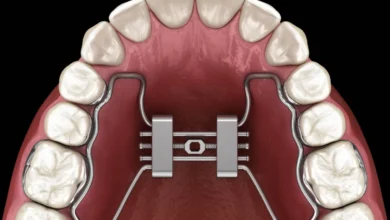
The Invisalign Palatal Expander, a non-removable appliance designed for maxillary expansion, is set to receive a significant enhancement with the addition of integrated hooks. These new hooks, positioned both forward and backward-facing, will be compatible with elastics, offering orthodontists greater flexibility in treating a broader spectrum of complex cases. This update is particularly relevant for managing challenging conditions such as skeletal Class III malocclusions, where traditional palatal expansion often requires auxiliary appliances for orthopedic force application.
The integrated hooks provide a direct and stable anchorage for elastics, enabling more effective skeletal growth modification. Dr. Sandra Khong Tai, of Astra Orthodontics in British Columbia, Canada, praised the design, noting, "The device is retentive and stable even when hooked up with elastics to a protraction facemask. The backward-facing hooks are discreet, extremely comfortable, yet robust enough to engage an orthopedic elastic for skeletal growth modification." This feedback highlights the device’s enhanced functionality, patient comfort, and aesthetic considerations, which are increasingly important in modern orthodontics.
This innovation builds upon solid clinical evidence supporting the efficacy of the Invisalign Palatal Expander. A recent clinical study conducted by researchers at the University of Insubria provided compelling data. The study found that the Invisalign Palatal Expander effectively widens the upper jaw, delivering controlled and predictable results comparable to, and in some aspects, superior to, a traditional metal Hyrax expander. The study’s findings, often published in peer-reviewed journals, typically involve rigorous methodologies, including comparative analyses of treatment outcomes, patient comfort levels, and potential side effects. Such research provides a crucial scientific foundation for the adoption of new technologies and validates their clinical utility. The ability to integrate orthopedic forces directly into the expander, guided by precise digital planning, represents a significant advancement in managing transverse discrepancies and complex skeletal issues.
Immediate Advances: The Custom Trimline Option
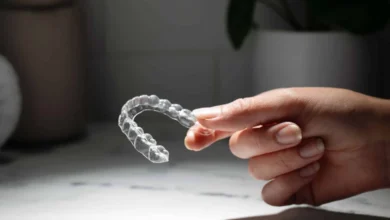
Independent of the AAO showcase but equally indicative of Align Technology’s commitment to customization, the company has initiated a limited-market-release of a custom trimline option for its aligners. This feature, seamlessly integrated into the ClinCheck digital workflow, empowers doctors to personalize aligner design based on specific patient anatomy and clinical requirements. The custom trimline offers an extended scalloped design, providing additional retention where needed. This is particularly beneficial in cases characterized by short clinical crowns, erupting dentition (such as in adolescents or pre-teens), or instances of gingival recession, where conventional aligner trimlines might not provide optimal grip and force transmission.
The ability to customize the trimline addresses a long-standing clinical need for enhanced adaptability in aligner therapy. It ensures that the aligner fits snugly and securely, even in challenging anatomical situations, thereby maximizing the predictability of tooth movement and minimizing the risk of aligner dislodgement. This tailored approach underscores Align’s understanding that "one size fits all" does not apply to every patient, particularly in complex or atypical cases. The limited release strategy allows for real-world testing and feedback from a select group of orthodontists, ensuring that the feature is refined before a broader market introduction.
The AAO Annual Session: A Platform for Progress
The American Association of Orthodontists (AAO) Annual Session is the premier gathering for the orthodontic community in North America, attracting thousands of orthodontists, residents, and allied professionals. It serves as a vital forum for education, networking, and the exchange of scientific and clinical advancements. For companies like Align Technology, the AAO provides an unparalleled opportunity to introduce new products, showcase research, and engage directly with key opinion leaders and end-users. The decision to preview these innovations at the 2026 session, well in advance of their mid-2026 release, builds anticipation and allows the orthodontic community to prepare for the integration of these tools into their practices. It also allows Align to gather preliminary feedback and fine-tune its offerings.
Align Technology’s Vision and Market Leadership
Align Technology has historically been a disruptive force in orthodontics, having revolutionized the industry with the introduction of Invisalign clear aligners in the late 1990s. Its journey from a startup challenging traditional braces to a global leader in digital orthodontics is a testament to its continuous investment in research and development. The company’s consistent release of innovations, from iterative aligner improvements to advanced scanning technology (iTero) and now to highly integrated auxiliaries, reinforces its market leadership. The focus on digital precision, streamlined workflows, and enhanced patient experience reflects a deep understanding of the evolving needs of both orthodontists and their patients.
The global clear aligner market has seen robust growth over the past decade, driven by increasing aesthetic demands, technological advancements, and a growing acceptance of invisible orthodontic solutions. Align Technology, with its dominant market share and extensive patent portfolio, has been a primary beneficiary and driver of this growth. These new innovations are poised to further solidify its position by expanding the range of cases treatable with Invisalign and by enhancing the efficiency and predictability of existing treatments. The company’s strategy appears to be one of continuous innovation, not just in the aligners themselves, but in the entire ecosystem of digital tools and auxiliary appliances that support comprehensive orthodontic care.
Implications for Orthodontic Practice and Patient Care
The introduction of the Specifix Attachment System, integrated buttons, and enhanced palatal expander, alongside the custom trimline, carries profound implications for the orthodontic specialty. For orthodontists, these tools promise:
- Increased Predictability: Digital planning and 3D printing reduce variability, leading to more consistent and predictable treatment outcomes.
- Enhanced Efficiency: Streamlined workflows for attachment delivery and button placement can significantly reduce chair time and improve practice productivity.
- Broader Case Applicability: The updated palatal expander and integrated buttons expand the range of complex cases that can be effectively treated with Invisalign.
- Improved Team Collaboration: Easier, more standardized procedures can empower orthodontic staff, fostering a more cohesive and efficient practice environment.
- Reduced Training Burden: While new technologies require initial training, their integrated and intuitive design aims to simplify complex tasks over time.
For patients, the benefits are equally compelling:
- Greater Comfort: The non-handpiece attachment removal and discreet palatal expander hooks enhance the overall patient experience.
- Shorter Treatment Times: Increased precision and efficiency can potentially lead to more predictable tooth movements and, in some cases, shorter treatment durations.
- Superior Aesthetic Outcomes: More precise control over tooth movement and auxiliary placement contributes to achieving optimal aesthetic and functional results.
- Reduced Anxiety: Simplified procedures and less invasive techniques can alleviate patient apprehension associated with orthodontic treatment.
From an industry perspective, these innovations reinforce the trend towards comprehensive digital orthodontics. They challenge manufacturers of traditional orthodontic appliances to integrate more digital elements into their offerings and underscore the importance of an integrated platform approach to treatment. Align Technology’s continued investment in these areas suggests a future where digital solutions will increasingly govern every aspect of orthodontic diagnosis, planning, and execution.
The Future of Digital Orthodontics
The mid-2026 release of these innovations signifies Align Technology’s ongoing commitment to pushing the boundaries of digital orthodontics. By addressing traditionally manual and variable aspects of treatment, the company is moving closer to a fully integrated, highly predictable, and patient-centric digital workflow. As the orthodontic landscape continues to evolve, driven by technological advancements and patient demand for aesthetic and efficient solutions, Align’s strategic focus on precision, comfort, and expanded treatment capabilities positions it to remain a pivotal force in shaping the future of smile correction. These advancements are not merely product updates; they represent a holistic vision for an orthodontic future where digital intelligence and human expertise converge to deliver optimal outcomes for every patient.