The Crucial Role of Early Orthodontic Intervention: A Comprehensive Guide to Childhood Dental Development and Timely Care

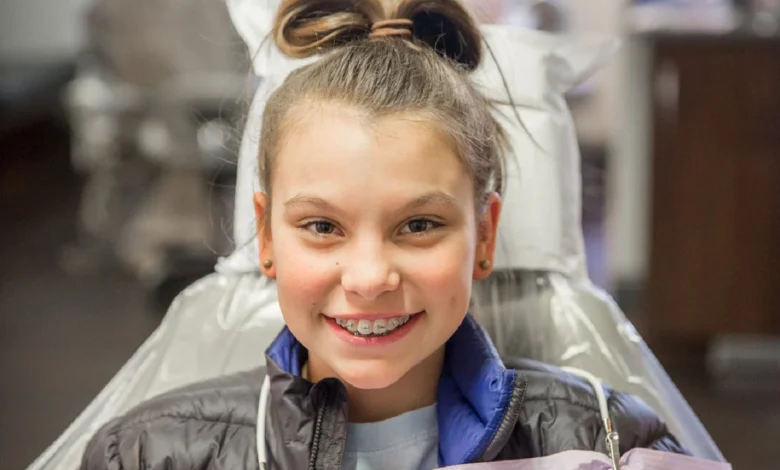
Early orthodontic treatment, often referred to as interceptive treatment, signifies the strategic initiation of orthodontic care while a child still possesses a mix of primary (baby) and permanent teeth. This approach is not designed to rush every child into comprehensive orthodontic solutions like braces prematurely. Instead, it serves as a proactive measure, enabling a qualified orthodontist to meticulously identify nascent developmental issues and, crucially, guide the growth of facial and jaw structures in a manner that can profoundly enhance a child’s long-term oral health, optimize bite function, and potentially mitigate the complexity and duration of future treatments. The philosophy underpinning interceptive treatment is rooted in the understanding that certain dental and skeletal discrepancies are more amenable to correction during periods of active growth and development.
The Rationale Behind Early Orthodontic Evaluation: The AAO’s Age 7 Recommendation
The American Association of Orthodontists (AAO) issues a definitive recommendation for a child’s inaugural orthodontic check-up to occur either at the first recognition of a potential orthodontic problem or, unequivocally, no later than age 7. This specific age benchmark is not arbitrary; by the seventh year, most children have typically erupted their first permanent molars and incisors, providing the orthodontist with sufficient permanent dentition to comprehensively assess the developing occlusion and jaw relationship. This critical window allows for the detection of subtle, yet potentially significant, issues that might elude an untrained eye at home.
Prior to this age, a child’s oral cavity is in a state of dynamic transition. Primary teeth serve vital roles in speech development, chewing, and maintaining space for their permanent successors. However, issues like premature loss of primary teeth, prolonged thumb-sucking habits, or inherent genetic predispositions can subtly alter the natural developmental trajectory. An early evaluation allows the orthodontist to gauge these factors and project potential future challenges. This proactive stance contrasts with historical approaches that often waited until all permanent teeth had erupted, by which time some skeletal issues might have become more entrenched and complex to correct without more invasive interventions. Data from the AAO indicates that early detection can reduce the severity of malocclusions in a significant percentage of children, often making full treatment simpler and more efficient later on.
The Initial Orthodontic Visit: Beyond Immediate Treatment
A child’s first orthodontic consultation is fundamentally an information-gathering and assessment session, rather than an immediate prelude to treatment. It is a diagnostic phase where the orthodontist evaluates the child’s dental and skeletal development. Typically, following a thorough examination, which may include digital X-rays and photographs, one of three primary outcomes is presented to the parents:
- No Treatment Needed (Currently): The child’s dental and jaw development is proceeding normally, and no intervention is required at this time.
- Monitoring and Observation: The orthodontist identifies minor issues or potential concerns that do not necessitate immediate intervention. In these cases, the child enters a "follow and monitor" program, involving periodic check-ups (e.g., every 6-12 months). This allows the orthodontist to track growth patterns, observe the eruption timing of permanent teeth, and recommend treatment only if and when it becomes genuinely beneficial or necessary. This approach capitalizes on the child’s natural growth.
- Early (Interceptive) Treatment Recommended: The orthodontist identifies a developing problem that would significantly benefit from early intervention to prevent it from worsening or to simplify future treatment.
The "follow and monitor" category, often misinterpreted as a lack of concern, is in fact a highly valuable outcome. It signifies that the orthodontist is actively engaged in overseeing the child’s dental development, ready to intervene precisely when the timing is most opportune. This watchful waiting strategy ensures that treatments are initiated only when they offer the most significant advantages, avoiding unnecessary procedures.
The Strategic Value of Early Orthodontic Intervention
While a substantial number of orthodontic problems are indeed best addressed once all permanent teeth have fully emerged, early treatment can be profoundly advantageous in specific circumstances, particularly when a developing issue carries the potential to escalate in severity over time. The fundamental purpose of interceptive orthodontic treatment in these cases is multi-faceted:
- Intercepting Developing Issues: To halt the progression of a problem before it becomes more complex.
- Eliminating Causative Factors: Where possible, to remove the source of the problem (e.g., addressing persistent oral habits).
- Guiding Facial and Jaw Bone Growth: To subtly direct the growth of the maxilla (upper jaw) and mandible (lower jaw) to achieve a more harmonious relationship.
- Creating Adequate Space: To ensure sufficient room for the eruption of incoming permanent teeth, thereby reducing future crowding.
It is crucial to understand that in some instances, even after successful early treatment, a second phase of orthodontic care may still be recommended later. This "two-phase treatment" approach is common, with the first phase (interceptive) focusing on skeletal and space issues, and the second phase (comprehensive) typically involving braces or aligners to precisely position all permanent teeth into their optimal alignment and bite. The early phase often significantly reduces the complexity, duration, and even the need for extractions in the second phase.
Specific Orthodontic Challenges Benefiting from Early Intervention
Each child’s developmental trajectory is unique, yet orthodontists frequently recommend interceptive treatment for a range of specific concerns while some primary teeth are still present. These conditions often have significant functional, aesthetic, and long-term health implications if left unaddressed. Common problems include:
- Underbites (Class III Malocclusion): Where the lower front teeth bite in front of the upper front teeth. This is often a skeletal issue involving an underdeveloped upper jaw or an overdeveloped lower jaw. Early intervention can guide upper jaw growth forward or restrain lower jaw growth.
- Crossbites: Occur when upper teeth bite inside the lower teeth. This can affect a single tooth (anterior or posterior crossbite) or a segment of teeth. Posterior crossbites, especially unilateral ones, can lead to functional shifts of the jaw, potentially causing asymmetrical jaw growth and temporomandibular joint (TMJ) issues. Palatal expanders are frequently used here.
- Significant Crowding: When there isn’t enough space for permanent teeth to erupt properly, leading to rotated, misaligned, or impacted teeth. Early intervention can involve space creation or guiding eruption.
- Excessive Spacing: While less common for early treatment, significant gaps can sometimes indicate underlying issues like missing teeth or disproportionate jaw size.
- Extra or Missing Teeth: Supernumerary (extra) teeth can block eruption paths, while congenitally missing teeth require careful space management.
- Abnormal Tooth Eruption: Teeth that erupt in unusual positions, are impacted, or are significantly delayed.
- Open Bites: Where the front teeth do not meet when the back teeth are closed. This can be caused by oral habits (thumb-sucking) or skeletal imbalances.
- Deep Bites (Excessive Overbite): When the upper front teeth excessively overlap the lower front teeth, potentially causing wear, gum irritation, or functional issues.
- Harmful Oral Habits: Persistent thumb-sucking, finger-sucking, or pacifier use beyond age 4-5 can significantly impact jaw growth and tooth position, leading to open bites or flaring of upper incisors. Interceptive appliances can help break these habits.
- Protruding Front Teeth (Excessive Overjet): Often leading to a higher risk of dental trauma. Early treatment can reduce this protrusion.
These problems can stem from a combination of inherited genetic factors, environmental influences such as accidents, dental disease leading to premature tooth loss, or abnormal swallowing patterns. According to the American Dental Association, malocclusion affects between 60-75% of children, highlighting the widespread need for potential orthodontic evaluation.
Diverse Modalities of Early Orthodontic Treatment
Early orthodontic treatment is highly individualized, meticulously tailored to address the unique needs and developmental stage of each child. The orthodontist may prescribe a variety of fixed or removable devices, each designed to achieve specific objectives:
- Palatal Expanders: These fixed or removable appliances are used to widen the upper jaw, correcting crossbites and creating space for crowded teeth. Expansion is most effective during periods of active growth when the palatal suture is still cartilaginous.
- Space Maintainers: If a primary tooth is lost prematurely due to decay or trauma, a space maintainer (fixed or removable) can prevent adjacent teeth from drifting into the vacant space, thereby preserving room for the permanent tooth to erupt.
- Habit Appliances: Fixed or removable devices designed to discourage detrimental oral habits like thumb-sucking or tongue thrusting, helping to normalize jaw development and tooth position.
- Partial Braces or Limited Appliances: In some cases, a small number of braces may be applied to a few teeth to correct specific issues, such as aligning erupting permanent incisors or correcting a crossbite involving only a few teeth.
- Removable Appliances: Plates with springs or screws can be used to achieve minor tooth movements or to hold space.
- Facemasks or Headgear: While less common and often requiring high patient compliance, these external appliances can be used to guide jaw growth in more severe skeletal discrepancies.
- Selective Extraction of Primary Teeth: In certain situations, the strategic and timely removal of specific primary teeth can facilitate the eruption of permanent teeth into a more favorable position, leveraging the child’s natural growth processes. This is a carefully planned procedure, not a random extraction.
The overarching principle guiding these interventions is that the treatment plan is meticulously coordinated around the child’s individual timing of growth and dental development, ensuring a personalized approach rather than a rigid, one-size-fits-all methodology. Advances in orthodontic materials and diagnostic imaging, such as 3D cone-beam computed tomography (CBCT), provide orthodontists with unprecedented insight into a child’s craniofacial structures, allowing for more precise and effective treatment planning.
The Imperative of Early Detection: Preventing Greater Complexities
The fundamental takeaway is that numerous orthodontic problems are significantly more manageable and amenable to correction when identified and treated during their incipient stages. Procrastinating until all permanent teeth have fully erupted or until facial growth is largely complete can inadvertently transform relatively straightforward issues into more formidable challenges. Such delays can necessitate more invasive procedures, potentially involve extractions that could have been avoided, prolong treatment duration, and increase overall costs.
Early evaluation serves as a crucial foresight mechanism for families. It provides a clear understanding of the child’s current oral health status, offers projections of potential future developments, and, most importantly, illuminates whether early action can pre-empt a more intricate and demanding situation down the line. For instance, correcting a crossbite in a 7-year-old with a palatal expander might take 6-9 months, compared to potentially requiring jaw surgery in adulthood if left untreated. This preventive paradigm not only safeguards physical health but also contributes significantly to a child’s psychological well-being by addressing issues that might impact self-esteem or social interactions.
The Role of an AAO Orthodontist and the Path Forward
To ensure a child receives the most appropriate and effective care, consulting an AAO orthodontist is paramount. AAO members are specialists who have completed not only dental school but also an additional 2-3 years of specialized postgraduate training in orthodontics and dentofacial orthopedics. This rigorous education equips them with the expert knowledge and skills to diagnose and treat a wide array of orthodontic conditions, from the simplest to the most complex, across all age groups.
Crucially, a referral from a general dentist is not a prerequisite to schedule an appointment with an orthodontist. Many AAO orthodontists extend the courtesy of an initial consultation at no cost and without any obligation, making expert assessment highly accessible. This initial visit offers parents an invaluable opportunity to gain professional insights into their child’s dental development and to discuss potential treatment pathways. An orthodontist possesses the expertise to discern potential problems, advise on the most opportune timing for intervention, and craft a treatment plan that is precisely calibrated to the child’s individual needs. In the realm of orthodontics, the adage "timing is everything" holds profound truth.
For parents seeking to provide their child with the optimal foundation for a healthy, functional, and aesthetically pleasing smile, leveraging the AAO’s Locator Tool is the most direct route to finding a qualified orthodontist. By scheduling an appointment today, families can take a proactive step towards securing their child’s long-term oral health, confident in the knowledge that they are consulting with specialists who possess the dedicated training and experience to deliver exceptional care.