From Hardware to Workflow: SprintRay’s Vision for the Future of Orthodontic 3D Printing


When evaluating the role of 3D printing in the modern orthodontic practice, the conversation has evolved significantly beyond the mere capabilities of the printing hardware itself. According to Amir Mansouri, PhD, co-founder and CEO of SprintRay, the prevailing focus has unequivocally shifted to the comprehensive workflow that this advanced hardware enables. As chairside 3D printing gains wider adoption across orthodontics, the technology is no longer viewed as a supplementary tool but as an indispensable, streamlined system designed to deliver immediate solutions, maximize practice efficiency, and ultimately accelerate clinical outcomes for patients.
The Genesis of Digital Orthodontics: Mansouri’s Vision and SprintRay’s Roots
Amir Mansouri’s deep engagement with the dental industry commenced in 2012, during his PhD studies in 3D printing. His formative experiences included writing an algorithm for indirect bonding (IDB) trays, an early venture that provided him with unique insights into the nascent digital orthodontic space. This foundational exposure proved pivotal, shaping the strategic direction of SprintRay, a company that initially positioned itself to cater to the burgeoning and forward-thinking orthodontic market. From these early days, Mansouri envisioned 3D printing not as a novelty but as an essential instrument within the contemporary practice’s arsenal, particularly for managing specific, time-sensitive tasks rather than serving as a mere mass-production facility. This initial focus underscored a prescient understanding of the unique demands and opportunities within orthodontics for rapid, custom fabrication.
The broader dental industry has witnessed a dramatic transformation with the advent of digital technologies. Historically, orthodontic appliances were almost exclusively fabricated through traditional analog methods, involving physical impressions, plaster models, and manual laboratory processes. This often entailed significant lead times, potential for error, and high lab fees. The introduction of 3D printing into dentistry promised to revolutionize these workflows, initially by allowing dental laboratories to produce models, surgical guides, and various prosthetics with greater precision and speed. However, the true disruptive potential, as Mansouri articulates, lies in bringing this capability directly into the clinic, empowering orthodontists to control more aspects of their production chain.
Beyond the Hype: Re-evaluating In-Office Production
The initial fervor surrounding orthodontic 3D printing, particularly between 2016 and 2017, was characterized by what Mansouri aptly describes as a "gold rush" mentality. During this period, a pervasive message encouraged orthodontic practices to undertake the in-office printing of every clear aligner to substantially reduce reliance on external lab services and associated costs. On paper, the economic rationale appeared compelling. Producing aligners in-house offered the theoretical advantage of cutting down per-unit costs and eliminating shipping delays.
However, the practical application of this strategy quickly revealed significant operational challenges. "Everyone quickly figured out that doing your aligners in the office essentially turned the practice into a production facility, which is just not efficient," Mansouri explains. The sheer volume of printing required for even a moderate or complex aligner case proved an unsustainable burden for both the 3D printers and, crucially, the practice staff. An average aligner treatment, spanning 12-18 months, could involve dozens of individual aligner trays, each requiring precise printing, washing, and curing. This level of continuous manufacturing demanded a dedicated fleet of printers, specialized staff, and a substantial commitment of resources, effectively transforming a clinical environment into a miniature factory. For the vast majority of practices, which are primarily focused on patient care and clinical excellence, this model proved untenable and inefficient for the early majority of users.
This critical realization prompted a strategic re-evaluation within the industry and at SprintRay. While the company continues to support aligner and IDB tray workflows for specific applications, its current orthodontic focus has profoundly shifted towards optimizing the workflow as a holistic entity. This strategic pivot is most clearly exemplified by their innovative new retainer workflow, which addresses the lessons learned from the "gold rush" era.
The Strategic Pivot: Focus on High-Value, Immediate Solutions
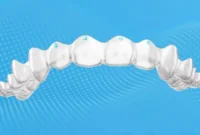
Retainers represent a distinct and significantly more manageable production volume compared to the continuous demands of aligner therapy, typically requiring only two prints per patient (one upper, one lower). This lower volume, coupled with the critical importance of immediate post-treatment retention, makes retainers an ideal application for chairside 3D printing. SprintRay has recently launched an integrated, direct-print retainer workflow that allows practices to transition seamlessly from a digital impression to a finished, biocompatible appliance. This end-to-end solution is designed to remove friction at every step.
The workflow begins with one-click scanner integration and leverages Cloud AI, which can automatically generate precise upper and lower retainer designs in as little as five minutes. This automation significantly reduces the time and expertise required for design, a common bottleneck in digital workflows. Following design, the comprehensive printing process utilizes SprintRay’s specialized resins, the high-performance Pro 2 3D printer, and automated wash and post-curing stations. The result is a final retainer specifically formulated for high impact strength and translucency, ensuring both durability and aesthetic appeal for the patient.
A key innovation in this workflow is the direct printing of the appliance, rather than the traditional method of thermoforming over a printed model. This direct-print approach offers multiple advantages:
- Reduced Material Waste: Eliminating the need for a disposable printed model significantly cuts down on resin consumption and associated waste, contributing to a more sustainable practice.
- Enhanced Accuracy: Direct printing can potentially offer superior accuracy by removing an intermediate step in the fabrication process, leading to a better fit.
- Improved Efficiency: The entire process, from scan to final retainer, is streamlined, allowing for same-appointment delivery in many cases.
This refined and streamlined approach represents a deliberate move toward procedures that offer high value and immediate clinical utility, such as same-appointment delivery, without overwhelming the clinical team with excessive manufacturing tasks. The focus is on targeted, high-impact applications that genuinely enhance practice efficiency and patient satisfaction. The global market for retainers alone is substantial, estimated to be worth several billion dollars annually, highlighting the significant commercial and clinical impact of optimizing their production.
The "DoorDash Model": Meeting Patient Expectations for Immediacy
For Mansouri, the profound value proposition of a chairside 3D printer lies in its unparalleled ability to deliver immediacy. He advocates for orthodontists to perceive the printer not as a mandatory step for every single patient, but rather as a specialized, on-demand tool invaluable when speed and rapid turnaround are non-negotiable. This perspective aligns with the growing consumer expectation for instant gratification across various services.

Mansouri articulates this concept using a compelling analogy: equipping an orthodontic practice with a 3D printer is akin to having both a well-equipped kitchen and access to a food delivery app. A practice might continue to utilize traditional lab services for routine, bulk manufacturing of appliances, much like cooking a standard meal at home for regular needs. However, when an unforeseen emergency arises—a lost or broken retainer—or when a patient expresses a willingness to pay a premium for a same-day replacement, the practice needs the equivalent of a "DoorDash" service: a system capable of delivering immediate, on-the-spot results.
This capability is rapidly transitioning from a mere luxury to an essential competitive differentiator, becoming "table stakes" in a consumer-driven healthcare market where patients increasingly expect rapid, responsive solutions. "You really can’t afford to not have the option to create an appliance on the spot in under an hour," Mansouri asserts. The ability to fabricate a custom retainer, a replacement aligner, or even a diagnostic model on-demand provides a significant competitive advantage. This immediate service facilitates same-day treatment starts, prevents prospective patients from shopping around for other quotes due to waiting times, and enhances patient loyalty. Ultimately, it functions as a powerful practice builder, enabling the office to maintain greater control over its schedule, reduce patient anxiety, and offer a premium, "white-glove" service precisely when it matters most to the patient experience. The growing demand for personalized and immediate healthcare services, reflected in trends across various medical fields, underscores the strategic importance of this operational model.
The Integrated Ecosystem: Software, Hardware, and Materials Synergy
To effectively deliver this level of immediacy without introducing additional complexity or friction into the staff’s daily routine, the underlying workflow must be inherently seamless. Any new technology that mandates extensive additional steps or requires prolonged, specialized training is likely to face resistance and fail to gain widespread traction in a clinical environment where efficiency is paramount. The average orthodontic practice already operates under tight schedules, and staff are cross-trained across numerous functions; adding a cumbersome manufacturing process is counterproductive.
Achieving this frictionless experience necessitates a highly integrated ecosystem, where every component works in concert. "Our philosophy is that we need to deliver a workflow; we’re not just selling you a printer," Mansouri states emphatically. "To be successful with that mission, you have to control your own software, hardware, and materials." This commitment to a complete, end-to-end solution is what allows SprintRay to ensure that every step of the process is optimized and fully integrated, effectively removing the implementation burden from the practice. The retainer workflow serves as a prime example of this integrated philosophy.
By developing and integrating AI-driven design software that automates the creation of retainers, alongside specialized curing and washing stations, and proprietary biocompatible resins, SprintRay ensures that the final result is both predictable and efficient. This closed-loop approach eliminates much of the guesswork for practice staff, enabling them to initiate a print with minimal intervention. This allows the clinical team to redirect their focus and valuable time back to direct patient care, rather than managing a complex manufacturing process. Such integration is critical for adoption, as it lowers the barrier to entry for practices unfamiliar with advanced digital fabrication and minimizes the learning curve for existing staff.
The Horizon: Chairside Bracket Production and Future Disruptions
While direct-print retainers and the advent of next-generation direct-print aligner materials represent the current frontier, Mansouri’s vision for the near future extends to a potentially even more disruptive workflow: the chairside 3D printing of custom orthodontic brackets. The digitization of traditional bracket and wire therapy has historically lagged behind the rapid advancements seen in clear aligner technology. Although some specialized companies currently offer custom 3D-printed brackets, the capability to manufacture these highly precise components directly within the practice remains an unsolved, yet tantalizing, challenge. Mansouri is confident that this capability is only one to three years away, signaling what could be the ultimate convergence of efficiency and clinical customization in fixed appliance therapy.
From an operational standpoint, the efficiency gains from printing a single set of custom brackets for a patient are exponentially greater than printing dozens of individual aligner trays over the course of treatment. Once the custom brackets are printed and bonded, the primary manufacturing burden for that specific patient is complete for the duration of their fixed appliance treatment, which can span 18-24 months. This contrasts sharply with aligner therapy, where new aligners are required every few weeks.
The technological bridge to this future is currently being constructed and refined within the restorative dentistry sector. SprintRay has made significant breakthroughs in printing highly filled, high-viscosity composite materials engineered for permanent crowns and full-arch prostheses. These materials are designed to withstand years of intense chewing forces, thermal variations, and constant moisture within the oral environment. "If we didn’t have the chemistry currently being used for restorative dentistry, I would be much less confident," Mansouri states, underscoring the foundational importance of these material science advancements for his one-to-three-year timeline. He logically points out that if the industry can successfully print a permanent crown that is expected to last for many years, applying that same advanced chemistry to print an orthodontic bracket chairside—an appliance that needs to hold up for a comparatively shorter six to eighteen months—is well within technological reach.
The implications of chairside bracket production are vast. It would allow for unprecedented levels of customization, potentially leading to more efficient tooth movement, reduced treatment times, and fewer in-office adjustments. Orthodontists could design brackets precisely tailored to each tooth’s morphology and the patient’s specific treatment plan, optimizing biomechanics. The ability to offer same-day custom bracket starts would revolutionize patient onboarding, eliminate waiting periods for lab-fabricated custom brackets, and significantly enhance the patient experience. This innovation would also enable practices to offer highly personalized care, further differentiating them in a competitive market.
Broader Market Context and Industry Implications
The advancements championed by SprintRay and visionaries like Mansouri are part of a broader trend towards digital integration and personalization in healthcare. The global dental 3D printing market, valued at approximately $2.7 billion in 2022, is projected to reach over $11 billion by 2032, with a compound annual growth rate (CAGR) exceeding 15%. This growth is largely driven by the increasing adoption of chairside CAD/CAM systems, the demand for custom dental solutions, and the economic benefits of in-house production for specific applications.
The shift from hardware-centric thinking to workflow optimization is a critical maturation point for the industry. Early adopters often focused on the novelty of the technology, but sustained adoption hinges on its seamless integration into daily practice operations. The "DoorDash model" directly addresses patient expectations that are increasingly shaped by on-demand services in other sectors of their lives. A 2023 survey indicated that patient satisfaction significantly increases when practices offer same-day or accelerated treatment options.
Furthermore, the environmental implications of direct printing should not be overlooked. Reducing the need for printed models and minimizing material waste aligns with growing demands for more sustainable healthcare practices. As regulatory bodies and consumers increasingly prioritize eco-friendly operations, practices that adopt such workflows stand to gain a positive public image.
By connecting the dots between restorative material advancements and sophisticated orthodontic treatment planning, the possibility of fully customized, same-day bracket starts becomes a tangible reality. For the orthodontic practice, this means faster treatments, increased same-day billing potential, and a highly personalized patient experience—all driven by a single, efficient chairside workflow. This transformative approach promises to redefine the operational landscape of orthodontics, moving practices closer to a future where immediate, customized, and efficient patient care is the standard, not the exception. The journey from a hardware focus to an integrated workflow philosophy marks a pivotal moment in the evolution of digital orthodontics, promising profound benefits for both clinicians and patients alike.