Groundbreaking Independent Study Highlights OrthoFX FXClear’s Significant Advancements in Clear Aligner Therapy Efficiency and Clinical Outcomes

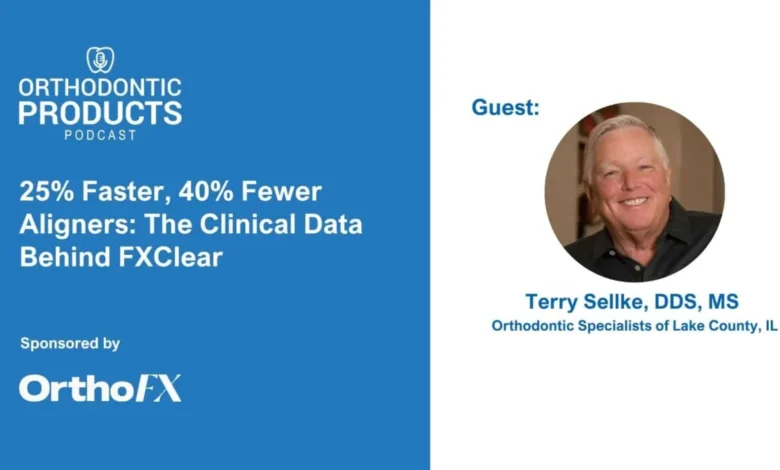
Preliminary findings from a recent independent retrospective study conducted by the University of Illinois Chicago (UIC) reveal that the OrthoFX FXClear aligner system significantly outperforms traditional clear aligner treatments, including a head-to-head comparison with Invisalign. The study indicates a remarkable 25% reduction in overall treatment times and a 40% decrease in the number of aligners required per case when utilizing the FXClear system. Beyond these efficiency gains, the research also points to highly predictable clinical results, particularly in mitigating common challenges such as posterior open bites. The foundational data for this pivotal study was provided by the extensive clinical cases of Dr. Terry Sellke, a distinguished orthodontist with over five decades of experience in both private practice and academia, whose insights into the material science and practice management implications offer a profound perspective on these advancements.
A Deep Dive into the UIC Study’s Findings
The independent retrospective study out of the University of Illinois Chicago offers compelling evidence of a paradigm shift in clear aligner therapy. By meticulously comparing the OrthoFX FXClear system against the widely used Invisalign platform, researchers uncovered significant improvements across key performance indicators. The reported 25% reduction in treatment duration means patients can achieve their desired orthodontic outcomes in a substantially shorter timeframe, enhancing convenience and potentially reducing overall patient compliance fatigue, a common factor in prolonged treatments. Furthermore, the 40% reduction in aligner usage per case not only translates to potential cost efficiencies for providers and patients but also minimizes the environmental footprint associated with aligner production and disposal, aligning with broader sustainability trends in healthcare.
One of the study’s most critical revelations concerns clinical predictability. Clear aligner therapy, while highly effective, has historically presented challenges, particularly in achieving precise posterior occlusion and avoiding posterior open bites – a common issue that often necessitates mid-course corrections, additional aligners, and extended treatment periods. The UIC analysis highlighted "tighter posterior agreement" within the FXClear dataset, suggesting a superior ability of the system to maintain occlusal integrity throughout treatment. This enhanced predictability is a testament to the underlying material science and digital treatment planning capabilities of the OrthoFX system, enabling orthodontists to approach cases with greater confidence in the projected outcomes. The independent nature of the study, relying on real-world clinical data from a high-volume, experienced practice, lends substantial credibility to these preliminary results, signaling a potential shift in best practices for clear aligner treatment. These findings are particularly noteworthy given the clear aligner market’s significant growth, projected to exceed $10 billion globally by the end of the decade, making efficiency and predictability critical differentiators.
Dr. Terry Sellke: A Pioneer’s Endorsement and Data Source
The clinical backbone of the UIC study stems from the extensive patient records of Dr. Terry Sellke, a figure often described as a "dinosaur" in orthodontics due to his impressive career spanning more than 50 years. Graduating from orthodontic school in 1972, Dr. Sellke’s career is a unique blend of high-volume private practice and profound academic contribution, including 36 years as a co-director of clinics at the University of Illinois. His long-standing involvement in research at the university, where his practice has served as a data source for dozens of master’s theses and studies over four decades, underscores his unwavering commitment to advancing the field through evidence-based practice and continuous innovation.
Dr. Sellke’s motivation to submit his clinical data for this independent review was rooted in his own chairside observations. Having treated approximately 5,000 patients with Invisalign’s SmartTrack material over the years, and subsequently accumulating around 500 cases with OrthoFX’s FXClear plastic since his transition in 2019-2020, he consistently noticed "a materially different outcome" in terms of quality and treatment time. His proactive suggestion to the University of Illinois to conduct a comparative study, leveraging his comprehensive patient database, highlights his dedication to rigorous scientific validation of clinical improvements. Despite providing the raw data, Dr. Sellke maintained strict independence from the final analysis and conclusions of the UIC team, ensuring objective findings and unbiased reporting. His decision to transition to OrthoFX was, in his words, "very simple," driven by his recognition that FXClear utilized a "totally different polymer" – a critical distinction he credits to the genius of Loc Phan, the developer behind OrthoFX’s advanced material science. This chronological adoption of leading aligner technologies positions Dr. Sellke’s practice as a unique longitudinal case study in orthodontic evolution.
The Material Science Advantage: FXClear’s Polymer Innovation
At the core of OrthoFX FXClear’s documented superiority, according to Dr. Sellke, lies its innovative polymer. Unlike previous generations of clear aligner materials, which often necessitated elaborate compensatory measures in treatment planning, the FXClear system utilizes a unique polymer developed by Loc Phan. Dr. Sellke emphasizes that this advanced material fundamentally alters the mechanics of tooth movement, leading to more predictable and efficient outcomes. His extensive experience with various aligner systems, including a long tenure with Invisalign’s SmartTrack material that began in the mid-2000s, provides a credible basis for this assertion, highlighting the evolution of material science in the field.
Historically, orthodontists using earlier clear aligner systems often had to "build in so much overcorrection" into their digital treatment plans to ensure teeth would reach their intended final positions. This was particularly true for achieving precise tip, torque, and angulation, which frequently resulted in posterior teeth being "out of occlusion" by the end of the initial treatment phase. Such discrepancies invariably led to the need for "refinements," involving additional sets of aligners, prolonged treatment times, and increased chairside appointments. Dr. Sellke’s observation is that the FXClear plastic "didn’t get unseats like we did with SmartTrack," drastically reducing the incidence of teeth losing their programmed tracking, particularly for challenging movements like upper lateral incisors. This inherent stability and efficacy of the FXClear polymer mean that the "magic potent" of the aligner itself more effectively guides teeth, translating directly into fewer refinements, shorter treatment durations, and ultimately, a "far superior clinical result." The material’s ability to precisely deliver the programmed tip, torque, and angulation without the need for significant over-engineering marks a significant leap in aligner technology, offering a more direct and reliable path to orthodontic success.
Clinical Predictability and Workflow Evolution
The enhanced predictability observed with the FXClear system has profoundly reshaped Dr. Sellke’s approach to digital treatment planning. Where once "heavy overcorrections" were a standard, almost necessary, component of his digital blueprints to account for material limitations, these are now largely obsolete with FXClear. Dr. Sellke states unequivocally, "We don’t build the overcorrection into our digital treatment plan that we used to. We just don’t do it. We don’t need to do it to get to the end of the rainbow." This fundamental shift allows the digital setup to truly function as a "blueprint," accurately reflecting the expected final outcome, thereby simplifying the planning process and significantly reducing the margin for error. This trust in the digital plan streamlines the entire clinical workflow, from initial consultation to retention.
Initially, like with any new technology, Dr. Sellke adopted a cautious approach, applying FXClear to "easy cases" by choice when he first transitioned to the system in 2019-2020. This mirrored his early experiences with SmartTrack in the mid-2000s, which was initially limited to less complex scenarios. However, as confidence in the FXClear material and its consistent results grew, his practice expanded its application. Today, FXClear is utilized across "any case," including complex extraction cases and even borderline surgical cases, yielding "very nice results." The improved posterior occlusion, a critical measure of treatment success, is particularly notable, with Dr. Sellke asserting "no comparison in the fit of the teeth at the end of treatment between the two products." This expanded applicability underscores the versatility and robustness of the FXClear system, enabling orthodontists to confidently address a broader spectrum of malocclusions with a single, highly effective aligner platform. The implication is a streamlined clinical workflow, as practitioners can rely more heavily on the initial treatment plan, reducing the need for costly and time-consuming mid-course adjustments and fostering greater efficiency within the practice.
The Business Imperative: Doubling ROI and Patient Satisfaction
Beyond clinical superiority, the advancements embodied by OrthoFX FXClear, particularly when combined with remote monitoring, present a compelling business case for orthodontic practices. Dr. Sellke, having earned a master’s degree in business to better understand the operational aspects of orthodontics, highlights a key metric: "value per visit." This metric, championed by industry analytics firms like Gaidge (which monitors approximately 1,800 orthodontic practices in the U.S.), calculates the treatment fee divided by the number of in-office visits. According to Dr. Sellke’s analysis, if a practice can consistently treat a patient in half as many visits, it effectively "doubles its profit, its return on investment for that patient." This translates directly into enhanced profitability per case and the capacity to treat more patients efficiently within the same operational framework.
This doubling of ROI is not merely theoretical. By reducing the number of refinements and the overall treatment duration, the FXClear system naturally leads to fewer in-office appointments. When this is synergistically combined with effective remote monitoring, the practice workflow undergoes a "paradigm shift." Dr. Sellke’s office, for instance, no longer pre-schedules follow-up appointments weeks in advance. Instead, patients are informed, "we’ll let you know when you need to come in next time," relying on remote scans to monitor progress. This allows patients to go "20 weeks before I see you" in some instances, a stark contrast to the traditional four or six-week interval. The advent and refinement of remote monitoring technologies, significantly accelerated by the global pandemic, have paved the way for this operational model, enabling secure and effective patient oversight outside the traditional clinic setting.
The benefits extend beyond financial gains for the practice. Patients, who often juggle busy lives and work commitments, significantly benefit from reduced disruption to their schedules. As Dr. Sellke points out, "Mom doesn’t want to take off work to bring them to your office for what is an appointment that says, ‘Yep, everything looks okay.’ Why not do that remotely?" This patient-centric approach improves satisfaction and loyalty, crucial factors in a competitive market where patient experience is increasingly valued. Ultimately, the combination of predictable aligner technology and remote monitoring enables practices to increase productivity, deliver superior clinical results in less time, and enhance the overall patient experience – a true "everyone wins" scenario that positions practices for sustainable growth.
Adapting to the Future of Orthodontics
With over 50 years at the forefront of orthodontics, Dr. Terry Sellke offers a stark warning and an optimistic vision for the profession. He asserts that the innovations represented by advanced aligner polymers and remote monitoring are not merely incremental improvements but "the future" of orthodontics. To orthodontists hesitant about adopting these changes, particularly those "mid-career," he candidly suggests they must "choose to join it or be among the dinosaurs. You will become extinct because this is what consumers want." This sentiment underscores the evolving demands of patients for efficiency, convenience, and high-quality outcomes, pressures that practices must address to remain relevant and competitive in a rapidly changing healthcare landscape.
The economic realities of modern healthcare further amplify this imperative. In an environment where "third parties are controlling what we can charge" and fees may not keep pace with inflation, while staff and material costs continue to rise, "any business can’t survive that way." Dr. Sellke emphasizes that the core business principle for survival is to "increase productivity." The combination of highly predictable aligners, which minimize rework and refinements, and remote monitoring, which optimizes chair time, directly addresses this need. It allows practices to manage higher caseloads more efficiently, thereby safeguarding profitability without compromising care quality. Indeed, Dr. Sellke regards these developments as "the most exciting thing that’s occurred in my 50-year career," reflecting the profound potential they hold for the profession. He advises doctors to shed the old habit of building in excessive overcorrection and instead trust the new polymers to perform as designed, a learning curve he believes is essential for future success and for maintaining a competitive edge.
Broader Implications for the Orthodontic Industry
The findings from the UIC study, coupled with Dr. Sellke’s extensive clinical and business insights, carry significant implications for the broader orthodontic industry. For clear aligner manufacturers, the demonstrated superiority of OrthoFX FXClear in efficiency and predictability could intensify competition within a market traditionally dominated by a few major players. This pressure may spur further innovation in material science and digital planning across the industry, ultimately benefiting both practitioners and patients with even more advanced solutions. OrthoFX’s strategic decision to sponsor such an independent study, using data from a respected long-term practitioner, is a powerful move to validate its technology and challenge established norms, potentially influencing market share and investment in R&D.
Moreover, the emphasis on remote monitoring as a complementary tool to advanced aligner systems highlights a shift towards a more digitally integrated and patient-centric care model. The COVID-19 pandemic accelerated the adoption of telehealth solutions, and orthodontics is now leveraging this momentum to redefine patient engagement. The ability to reduce in-office visits without compromising clinical oversight or outcomes directly addresses patient desires for convenience and accessibility, which will likely become a new standard of care. This trend may also influence the design of future orthodontic practices, potentially leading to more efficient clinic layouts, reduced overhead, and optimized staffing models, fostering a more agile and responsive healthcare delivery system.
From a regulatory and educational standpoint, such studies provide crucial data for developing new guidelines and incorporating advanced material science into orthodontic curricula. As the evidence base for technologies like FXClear grows, it will inform the training of future orthodontists, preparing them for a landscape where precision, efficiency, and integrated digital workflows are paramount. The long-term impact could be a more productive, profitable, and patient-friendly orthodontic ecosystem, where technological innovation and sound business practices converge to elevate the standard of care for millions worldwide, ensuring that the profession continues to evolve in response to both clinical advancements and consumer expectations.