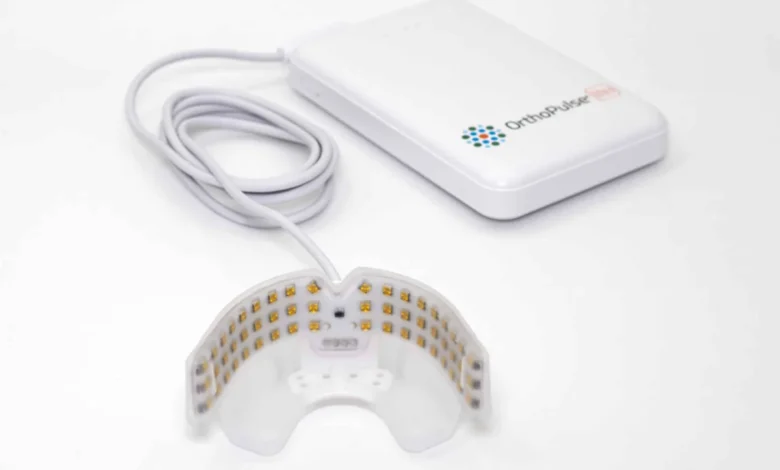
Biolux Technology, a leader in photobiomodulation (PBM) solutions for orthodontics, has unveiled compelling preliminary data from an ongoing clinical evaluation that suggests a significant paradigm shift in how clear aligner therapy is managed. The study, conducted within the clinical environment of Dr. Todd Dickerson at Dickerson Orthodontics, focused on the efficacy of the OrthoPulse near-infrared light therapy system. By integrating this non-invasive technology into standard Invisalign treatment protocols, the practice reported substantial improvements in both the temporal efficiency of tooth movement and the overall logistical burden on patients.
Clinical Evaluation Methodology and Comparative Analysis
The study was structured as a retrospective comparative analysis, evaluating 45 total patient cases within the same clinical setting. To ensure a degree of parity in the assessment, the researchers compared 23 consecutive Invisalign patients who utilized the OrthoPulse device against a control group of 22 consecutive patients who underwent conventional Invisalign treatment without the adjunct technology.
The findings indicate a marked divergence in outcomes between the two cohorts. The most striking metric was the reduction in total treatment duration. Patients utilizing OrthoPulse completed their orthodontic journey in an average of 13 months, while the benchmark group required an average of 28 months. This represents a 55% reduction in treatment time, a statistic that, if replicated across broader clinical trials, could fundamentally alter the patient experience and the economic model of orthodontic practices.
Furthermore, the study examined the frequency of clinical oversight required. OrthoPulse users attended an average of nine office visits, compared to 12 for the control group—a 21% reduction in clinical chair time. For the modern orthodontic practice, where throughput and operational efficiency are paramount, such a reduction suggests that patients can achieve their desired aesthetic and functional outcomes with significantly less disruption to their daily lives and fewer in-person appointments.
Deep Dive into Treatment Complexity and Refinements
Orthodontic treatment is rarely a linear process; it involves a sequence of aligner stages and frequent "refinements"—secondary sets of aligners designed to address minor residual tooth positioning issues. The data provided by the Dickerson study offers a granular look at how light therapy influences these phases of care.
Initially, both the study and benchmark groups began with similar orthodontic profiles, starting with 28 and 30 initial aligner stages, respectively. However, the requirement for additional intervention varied significantly. The OrthoPulse group required an average of 24 finishing aligners, whereas the benchmark group required 33. When accounting for refinements, the total volume of aligner stages for the OrthoPulse group totaled 52, compared to 62 for the benchmark group.
This reduction in the number of refinements implies that the biological response to the light therapy—specifically the acceleration of bone remodeling—may lead to more predictable tooth movement. By enhancing the biological rate at which the periodontal ligament reacts to the mechanical force of aligners, the technology appears to minimize the "lag" often associated with traditional clear aligner protocols.
The Science Behind the Light: Photobiomodulation
To understand why such results are being observed, it is necessary to examine the underlying mechanism of the OrthoPulse device. The system utilizes 850 nm near-infrared light, a process known as photobiomodulation. When applied for 10 minutes daily, this low-level light energy penetrates the soft and hard tissues of the mouth to stimulate the mitochondria within the cells.
This stimulation increases the production of adenosine triphosphate (ATP), the primary energy carrier in cells, which in turn accelerates the cellular metabolic processes involved in bone remodeling. In the context of orthodontics, this means the alveolar bone—the bone that supports the teeth—undergoes the resorption and deposition phases of movement more efficiently. This is not a new concept in medicine; PBM has been utilized for decades in wound healing and pain management, but its application in accelerating orthodontic tooth movement (ATM) has been a primary focus of innovators like Biolux Technology over the last several years.
Chronology of Development and Clinical Validation
The adoption of PBM in orthodontics has moved from theoretical research to clinical standard-of-care over the past decade. Biolux Technology received FDA clearance for the OrthoPulse device, marking a critical milestone in its transition from a specialized research tool to a commercially viable medical device.
The study at Dickerson Orthodontics is part of a broader, ongoing effort to gather longitudinal data across diverse patient demographics. While the preliminary results are derived from a single practice, they serve as a crucial "real-world" validation of previous controlled clinical trials. The evolution of this technology follows a standard medical device trajectory:
- Early Phase: Laboratory studies identifying the optimal wavelengths for bone remodeling.
- Mid-Phase: Small-scale human clinical trials to establish safety and efficacy parameters.
- Regulatory Milestone: FDA clearance and CE marking, allowing for widespread clinical distribution.
- Current Phase: Post-market clinical evaluations focusing on practice-wide efficiency and patient-reported outcomes.
Professional Perspectives and Clinical Integration
Reflecting on the findings, Dr. Todd Dickerson emphasized that the data aligns with the anecdotal success he has witnessed in his daily practice. "These preliminary results are consistent with what we’ve observed clinically and reinforce why OrthoPulse has become part of our standard of care for aligner therapy," Dr. Dickerson noted.
For the orthodontic community, the integration of such devices represents a shift toward "biologically-assisted orthodontics." Practitioners are increasingly looking for ways to reduce the duration of treatment, as long-term compliance with clear aligners remains a significant challenge. By potentially shortening the treatment timeline by more than half, orthodontists can improve patient compliance, reduce the incidence of white-spot lesions and periodontal issues associated with prolonged treatment, and increase the capacity of their offices to accept new patients.
Broader Implications for the Orthodontic Industry
The implications of this study extend beyond individual patient convenience. In the competitive landscape of cosmetic dentistry, where clear aligners have become the dominant modality, the ability to offer a "faster" treatment path is a significant market differentiator.
- Economic Impact: A reduction in office visits allows practices to optimize their scheduling and overhead. If an orthodontist can treat a case in 13 months instead of 28, the "cost-per-case" in terms of staff time and clinical resources drops significantly.
- Patient Retention: The primary deterrent for many adult patients considering orthodontics is the perceived duration of treatment. Data suggesting that treatment can be completed significantly faster may lower the barrier to entry for prospective patients.
- Clinical Outcomes: Beyond speed, the reduction in refinement aligners suggests a higher degree of precision. If the teeth move more predictably according to the digital treatment plan, the final results may theoretically be more consistent with the doctor’s initial vision.
Limitations and Future Directions
While the preliminary results are promising, the orthodontic community maintains a rigorous standard for evidence-based medicine. Experts note that single-practice analyses, while excellent for demonstrating clinical feasibility, do not replace the need for multi-center, randomized controlled trials (RCTs). Factors such as patient selection, adherence to the 10-minute daily protocol, and variations in mechanical force application between different aligner brands could influence results.
Biolux Technology has stated that additional cases are currently being collected and analyzed. This ongoing expansion of the dataset will be vital in determining whether these results hold true across a larger, more heterogeneous patient population. Future reports will likely focus on long-term stability—ensuring that the speed of the movement does not negatively impact the long-term retention of the tooth position.
Conclusion
The data provided by the evaluation of the OrthoPulse system offers a compelling glimpse into the future of orthodontics. By merging advanced light-based biology with established mechanical tooth movement, practitioners are successfully compressing the traditional orthodontic timeline. As the industry continues to gather data, the focus will likely shift from merely asking if these devices work, to understanding how to best integrate them into the standard of care to maximize benefits for both the practitioner and the patient. As it stands, the OrthoPulse system appears to be at the forefront of a technological transition that prioritizes both the efficiency of the clinical process and the quality of the patient experience.
Related posts: