The Architect of Your Smile: Unpacking the Rigorous Path and Profound Impact of Orthodontics and Dentofacial Orthopedics

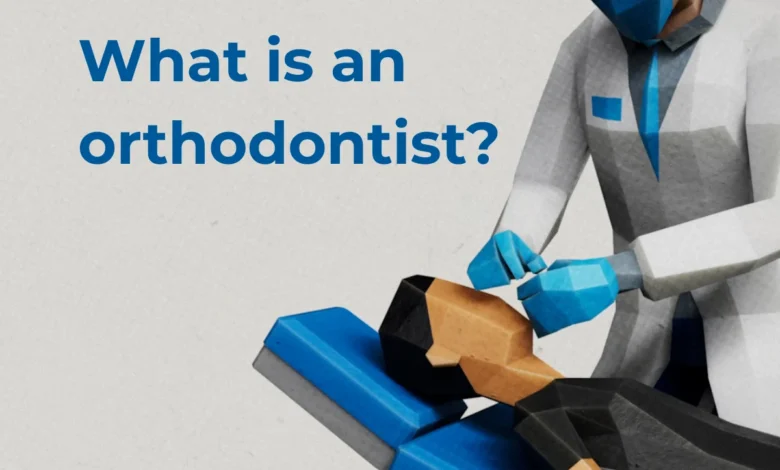
A visit to an orthodontist represents a pivotal step for countless individuals seeking not merely a cosmetic enhancement, but a foundation for lifelong oral health and functional well-being. These highly specialized dental professionals play an indispensable role in diagnosing, preventing, and treating irregularities of the teeth and jaws, guiding patients towards the perfect smile and healthy, functional bite they desire. Understanding the depth of their expertise, the arduous journey to becoming an orthodontist, and the comprehensive scope of their services reveals the true value they bring to modern healthcare.
The Specialized Realm of Orthodontics and Dentofacial Orthopedics
At its core, orthodontics is a distinct branch of dentistry that focuses on correcting malocclusions—improper bites—and misaligned teeth. However, the title "orthodontist" often comes with the additional designation "dentofacial orthopedist," a crucial distinction that underscores the breadth of their training. While orthodontics primarily deals with the movement of teeth, dentofacial orthopedics is concerned with guiding the growth and development of the facial bones, particularly the jaws, in children and adolescents. This dual specialization means that an orthodontist is uniquely equipped to address both dental and skeletal discrepancies, often intervening during critical growth periods to achieve optimal results that might be impossible or require more invasive procedures later in life.
The collaborative relationship between orthodontists and general dentists is fundamental to comprehensive oral healthcare. General dentists serve as primary care providers, focusing on preventive care, routine examinations, cleanings, and restorative treatments like fillings and crowns. They are often the first to identify potential orthodontic issues and refer patients to a specialist. Orthodontists, on the other hand, undertake extensive postgraduate education specifically in the mechanics of tooth movement, jaw growth modification, and the intricate biology behind these processes. This specialized knowledge allows them to design and implement highly customized treatment plans using a diverse array of tools and appliances, from traditional metal and ceramic braces to innovative clear aligners and functional orthopedic devices. Their expertise ensures that treatments are not only effective but also safe, taking into account the patient’s overall oral health, skeletal structure, and long-term stability of the results.
A Decade of Dedication: The Orthodontist’s Educational Journey
Becoming an orthodontist is a testament to unwavering commitment and academic rigor, a journey that typically spans over a decade of higher education and specialized clinical training. This demanding path ensures that only the most dedicated and skilled individuals are entrusted with the complex task of reshaping smiles and correcting jaw structures.
The initial phase begins with a four-year undergraduate degree. Aspiring orthodontists typically pursue studies in demanding science-related fields such as biology, chemistry, physics, or pre-dental programs, building a robust foundation in the biological sciences essential for understanding human anatomy and physiology. Success in these programs, often marked by competitive GPAs, is crucial for admission to the next stage.
Following undergraduate studies, candidates must gain acceptance into an accredited dental school, a highly competitive process often requiring strong performance on the Dental Admission Test (DAT). Dental school itself is a rigorous four-year program, culminating in either a Doctor of Dental Surgery (DDS) or Doctor of Dental Medicine (DMD) degree. During these four years, students receive comprehensive training in all aspects of general dentistry, including oral anatomy, pathology, pharmacology, restorative dentistry, periodontics, endodontics, and oral surgery. This foundational knowledge is critical, as it ensures that orthodontists understand the broader context of a patient’s oral health before specializing. They learn to diagnose and treat a wide spectrum of dental concerns, making them well-rounded oral healthcare providers before embarking on their specialized path.
Upon graduating from dental school, the most challenging phase begins: acceptance into an accredited orthodontic residency program. These programs are intensely competitive, with only a fraction of dental graduates securing a spot. The residency typically lasts an additional two to three years of full-time study and clinical practice. During this period, residents delve exclusively into the science and art of orthodontics and dentofacial orthopedics. Their curriculum includes advanced coursework in subjects such as:
- Biomechanics: The forces and movements involved in tooth movement.
- Growth and Development: Detailed study of craniofacial growth and its modification.
- Diagnostics: Advanced imaging techniques (X-rays, 3D scans) and analysis of complex cases.
- Treatment Planning: Developing individualized strategies for diverse malocclusions.
- Materials Science: Understanding the properties of orthodontic appliances.
- Clinical Orthodontics: Extensive hands-on experience treating a wide range of patients under the direct supervision of experienced faculty.
This immersive training provides thousands of hours of clinical experience, allowing residents to manage cases from simple tooth alignment to complex surgical orthodontics, ensuring they are prepared for any challenge in private practice.
Beyond the mandatory residency, many orthodontists choose to pursue board certification through the American Board of Orthodontics (ABO). This voluntary step signifies an orthodontist’s commitment to the highest standards of clinical excellence and lifelong learning. The certification process involves a rigorous written examination and a comprehensive clinical examination, where candidates present a portfolio of treated cases to demonstrate their diagnostic acumen, treatment planning skills, and the quality of their clinical outcomes. While not legally required to practice, ABO certification is widely recognized as a pinnacle of professional achievement and a testament to an orthodontist’s dedication to their craft.
The Comprehensive Services Provided by Orthodontists
Orthodontists address a vast array of dental and skeletal issues, crafting customized treatment plans to achieve optimal aesthetic and functional results. Their expertise extends far beyond simply straightening teeth; it encompasses the entire relationship between the teeth, jaws, and facial structure.
One of the primary objectives of orthodontic treatment is the correction of malocclusions, or "bad bites," which can manifest in various forms:
- Crowding: Insufficient space in the jaws for all teeth to erupt properly, leading to overlapping and rotated teeth. This can impede proper cleaning and increase the risk of decay and gum disease.
- Spacing: Gaps between teeth, often caused by missing teeth or disproportionately small teeth relative to the jaw size.
- Overbite (Class II Malocclusion): When the upper front teeth significantly overlap the lower front teeth. Severe overbites can cause wear on the lower teeth, gum irritation, and jaw pain.
- Underbite (Class III Malocclusion): When the lower front teeth protrude beyond the upper front teeth. This can lead to difficulty chewing, speaking, and excessive wear on teeth.
- Crossbite: When some upper teeth bite inside the lower teeth. This can affect jaw growth, lead to asymmetrical jaw development, and cause uneven tooth wear.
- Open Bite: When the upper and lower front teeth do not meet when the mouth is closed. This can impair chewing and speech.
To address these diverse issues, orthodontists utilize a range of advanced diagnostic records, including detailed clinical examinations, panoramic and cephalometric X-rays, 3D cone-beam computed tomography (CBCT) scans, and digital intraoral scans. These tools allow for precise analysis of the patient’s unique dental and skeletal anatomy, forming the basis for a highly individualized treatment plan.
Treatment modalities are varied and chosen based on the patient’s specific needs, age, and preferences:
- Traditional Braces: Comprising brackets, wires, and bands, these remain a highly effective and versatile option. Modern braces are smaller and more comfortable than their predecessors, with options including metal, clear (ceramic), and even lingual braces (placed on the inside of the teeth for aesthetic reasons).
- Clear Aligners: Such as Invisalign, these consist of a series of custom-made, removable plastic trays that gradually shift teeth into their desired positions. They offer a more discreet alternative to traditional braces and are popular among adults and suitable adolescents.
- Retainers: Absolutely critical for maintaining the results of orthodontic treatment, retainers prevent teeth from shifting back to their original positions. They can be removable (worn nightly) or fixed (a thin wire bonded to the back of the front teeth).
- Dentofacial Orthopedic Appliances: Primarily used in growing children, these appliances guide jaw development. Examples include palatal expanders to widen the upper jaw, functional appliances to correct bite discrepancies by influencing jaw posture, and sometimes headgear for more significant skeletal corrections.
- Surgical Orthodontics (Orthognathic Surgery): For severe skeletal discrepancies that cannot be corrected by orthodontics alone, orthodontists collaborate closely with oral and maxillofacial surgeons. In these cases, surgery repositions the jaws, and orthodontics aligns the teeth within the newly corrected jaw structure.
The Profound Impact: Beyond a Straight Smile
The benefits of orthodontic treatment extend far beyond superficial aesthetics. While a beautiful smile undoubtedly boosts self-esteem and confidence, the underlying improvements in oral health and function have significant long-term implications.
- Improved Oral Hygiene: Straight, properly aligned teeth are much easier to clean effectively. Reduced crowding means fewer nooks and crannies for plaque and food particles to accumulate, significantly lowering the risk of cavities, gum disease (gingivitis and periodontitis), and bad breath.
- Enhanced Chewing and Digestion: A correctly aligned bite allows for more efficient chewing and biting, improving the initial stages of digestion and nutrient absorption. Patients often report less jaw strain and discomfort.
- Reduced Tooth Wear: Malocclusions can lead to uneven forces on teeth, causing premature wear, chipping, or even fracturing. Orthodontic treatment ensures that biting forces are distributed evenly, protecting the teeth from excessive stress.
- Better Speech Articulation: Misaligned teeth or jaw positions can sometimes interfere with proper tongue placement and airflow, leading to speech impediments. Correcting these issues can significantly improve clarity of speech.
- Alleviation of Temporomandibular Joint (TMJ) Issues: While not all TMJ disorders are directly caused by malocclusion, an improper bite can contribute to jaw pain, clicking, headaches, and other symptoms. Orthodontic treatment can help establish a more harmonious bite, potentially reducing or alleviating these issues for some patients.
- Psychological and Social Well-being: Perhaps one of the most immediate and impactful benefits, a confident smile can transform an individual’s self-perception and social interactions. Studies consistently show that individuals with aesthetically pleasing smiles are often perceived as more confident, approachable, and successful. This psychological uplift can have a profound positive ripple effect on various aspects of life, from personal relationships to professional opportunities.
The American Association of Orthodontists (AAO), a leading professional organization, consistently emphasizes these multifaceted benefits. With over 19,000 members across the United States, Canada, and abroad, the AAO serves as a beacon of excellence, advocating for the highest standards of orthodontic education, research, and patient care. Choosing an AAO orthodontist ensures that patients are receiving care from a specialist who has completed the rigorous educational pathway, adheres to a strict code of ethics, and is committed to ongoing professional development. The AAO provides resources, including a widely utilized "Find an Orthodontist" locator, to connect patients with qualified specialists in their area.
In conclusion, the journey to a perfect smile and optimal oral health is often initiated and expertly guided by an orthodontist. These highly trained professionals, through their extensive education in both orthodontics and dentofacial orthopedics, offer a unique and invaluable service. They are not just straightening teeth; they are meticulously crafting balanced bites, promoting long-term oral health, and ultimately, enhancing the overall well-being and confidence of their patients. Their dedication to precision, scientific principles, and patient-centered care makes them true architects of healthy, radiant smiles.