Snapz Tasty Bands are available in mint and cherry flavors to help improve patient comfort and treatment compliance.

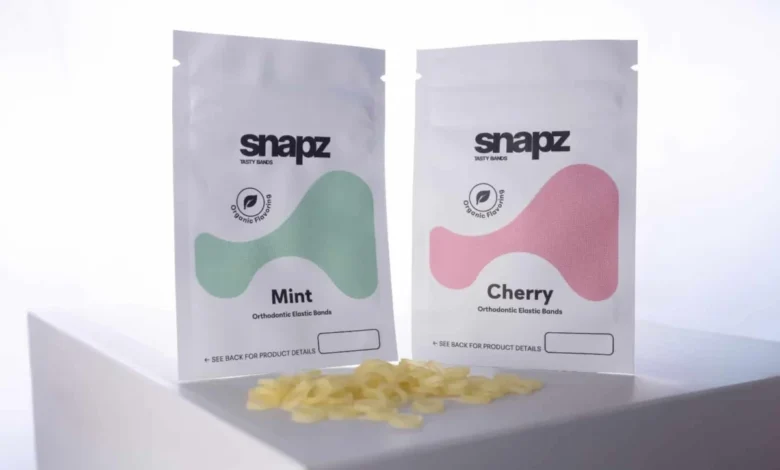
Snapz Innovations Inc has officially launched its flagship product, Snapz Tasty Bands, marking a strategic pivot in the orthodontic consumables market toward patient-centric design. By introducing flavoring technology to the ubiquitous orthodontic elastic band, the company aims to address one of the most persistent hurdles in modern dentistry: patient non-compliance. These elastics, which are critical for correcting malocclusions and aligning dental arches, have historically been viewed as a source of discomfort, dryness, and a nuisance for patients of all ages. With the introduction of mint and cherry variants, Snapz Innovations Inc seeks to transform a standard, often tedious aspect of orthodontic care into a more palatable daily routine.
The Evolution of Orthodontic Compliance
Orthodontic treatment is rarely a passive experience. While brackets and wires handle the structural heavy lifting of tooth movement, interarch elastics—the small, circular rubber bands patients must hook between their upper and lower braces—are essential for achieving the final, precise bite adjustments. However, the efficacy of these elastics is entirely dependent on the patient’s willingness to wear them as prescribed.
According to clinical studies published in the American Journal of Orthodontics and Dentofacial Orthopedics, patient compliance with interarch elastics is notoriously inconsistent. Research suggests that compliance rates can drop significantly after the first month of treatment as the novelty wears off and the discomfort—including the sensation of dry, inelastic, or flavorless latex—takes hold. Patients, particularly adolescents, often report the "rubbery" taste and the tactile sensation of standard elastics as primary deterrents to regular wear.
Snapz Innovations Inc has identified this friction point. By neutralizing the unpleasant, chemical-adjacent taste often associated with industrial-grade latex or synthetic elastic polymers and replacing it with familiar, refreshing flavors, the company is attempting to gamify the compliance process. This shift mirrors broader trends in medical device manufacturing, where "patient experience" is increasingly becoming a benchmark for clinical success.
Technical Functionality and Clinical Application
Despite the innovation in flavor, the fundamental physics of the product remain unchanged. Snapz Tasty Bands function with the same force-delivery profiles as traditional orthodontic elastics. This is a critical factor for practitioners; orthodontists require predictability in force application to ensure that teeth move according to a predetermined treatment plan.
The bands are designed to integrate seamlessly into existing orthodontic workflows. Patients do not need to change the way they wear their elastics or the way they hook them onto their brackets. The transition from a standard elastic to a Snapz Tasty Band is intended to be frictionless. The material composition, while infused with food-grade flavoring agents, maintains the necessary elasticity modulus required to exert constant, gentle pressure on the teeth.
For the orthodontist, the primary benefit is the reduction in "treatment drift." When patients fail to wear their elastics, treatment times extend, chair time increases, and the final occlusion may fall short of the ideal outcome. By improving the "wearability" of the bands, clinicians hope to see more consistent patient adherence, potentially leading to shorter overall treatment durations and fewer emergency adjustment appointments.
The Psychology of Compliance in Orthodontics
The launch of Snapz Tasty Bands touches upon a deeper psychological aspect of dentistry. The "long journey" of orthodontic treatment, often spanning 18 to 36 months, requires a high level of discipline. For children and teenagers, the psychological burden of braces is compounded by social pressures and the physical irritation of oral appliances.
Jennifer Moody Stubaus, Vice President of Snapz Innovations Inc, noted that the product serves as a response to the attrition of motivation that occurs over the course of a multi-year treatment plan. Small, positive sensory inputs can provide a psychological "nudge," making the habit of wearing elastics easier to maintain. This approach aligns with behavioral health strategies that suggest replacing a negative stimulus—such as the unpleasant texture or taste of a rubber band—with a neutral or positive one to improve long-term adherence.
Industry Implications and Market Trends
The introduction of flavored dental products is not entirely new—dentists have long used flavored fluoride gels and toothpastes to improve the patient experience—but the application of this technology to high-tension structural components like elastics is a significant innovation.
Market analysts tracking the dental consumables sector indicate that companies are increasingly focusing on the "patient journey." As the orthodontic market becomes more competitive, with the rise of clear aligner therapies and direct-to-consumer teeth straightening services, traditional orthodontic practices are under pressure to offer a more comfortable experience to retain patients.
If Snapz Tasty Bands demonstrate a measurable impact on compliance rates, they could set a new industry standard. Large-scale dental distributors are watching the rollout closely. If patient demand for these products grows, the expectation for "standard" elastics may shift, forcing other manufacturers to consider their own innovations in material science and patient comfort.
Availability and Distribution Strategy
Currently, Snapz Innovations Inc has adopted a hybrid distribution model. Patients can purchase the bands directly through the company’s online portal, allowing them to take agency over their treatment experience if their specific clinic does not yet stock them. However, the company is actively seeking partnerships with orthodontic practices to integrate the bands directly into the clinical supply chain.
For the orthodontic practitioner, the barrier to entry is low. The product does not require special training or new equipment. The decision to switch to Snapz Tasty Bands is primarily an inventory and procurement choice. Practices that prioritize high-end patient experiences—often referred to as "boutique" or "patient-first" practices—are seen as the primary early adopters of this technology.
Future Prospects for Orthodontic Innovation
The trajectory of orthodontic care is moving toward increased comfort and faster results. From the development of heat-activated archwires to the rise of accelerated osteogenic orthodontics, the goal has always been to reduce the burden of treatment. Snapz Tasty Bands represent a lower-tech, higher-impact solution to a perennial problem.
Future iterations of such products could potentially involve variations in elasticity levels, different color profiles, or perhaps even antimicrobial coatings that could further improve oral hygiene during treatment. As it stands, the current mint and cherry offerings provide a proof-of-concept that sensory improvements can indeed play a role in medical compliance.
Conclusion
As Snapz Innovations Inc rolls out its distribution, the broader orthodontic community will be observing whether this innovation translates into better clinical outcomes. While a flavored elastic band may seem like a minor detail in the context of comprehensive dental correction, in the world of patient compliance, the smallest factors often yield the most significant results. By acknowledging that patients are not just subjects of treatment but individuals navigating a long and often uncomfortable process, Snapz Innovations Inc is positioning its product as a vital tool in the modern orthodontist’s kit. Whether this leads to a widespread shift in how interarch elastics are manufactured and distributed remains to be seen, but the initial response indicates a strong appetite for innovation that prioritizes the patient’s daily experience.