Scenes with Your Orthodontist: Ten Insider Truths About Your Smile Journey
Orthodontic care is often perceived by patients as a straightforward mechanical process: brackets are attached, wires are tightened, aligners are dispensed, and teeth magically straighten over time. However, behind every successful orthodontic transformation lies a complex blend of advanced biomechanics, long-term developmental planning, and a rigorous collaborative partnership between the practitioner and the patient. While orthodontists routinely remind patients to wear their elastics, maintain rigorous hygiene, and keep their scheduled appointments, a vast array of clinical realities, diagnostic considerations, and preventative strategies occur entirely behind the scenes.
Understanding these hidden facets of orthodontic treatment can fundamentally transform the patient experience, shifting it from a passive compliance-based routine into an empowered, highly effective healthcare partnership. According to clinical data and professional guidelines from organizations such as the American Association of Orthodontists (AAO), modern orthodontics encompasses far more than cosmetic alignment. It is a comprehensive medical specialty dedicated to the optimization of craniofacial form, jaw mechanics, periodontal health, and long-term functional stability. To bridge the gap between clinical intent and patient understanding, leading dental professionals outline ten essential truths every patient should know about the intricate world of orthodontics.
Beyond Aesthetics: The Comprehensive Scope of Orthodontic Science
The primary misconception among patients entering an orthodontic clinic is that the sole objective of treatment is the aesthetic alignment of visible teeth. In reality, cosmetic straightness represents only a fraction of what an orthodontist evaluates during an initial consultation and subsequent management phases. Orthodontists are specialized dental professionals who undergo years of rigorous post-doctoral residency training specifically focused on dentofacial orthopedics and orthodontics. Consequently, their clinical evaluations encompass the complex spatial relationships between the upper and lower jaws, the functional dynamics of the bite (occlusion), the distribution of occlusal forces, and the overall structural integrity of the temporomandibular joint (TMJ) complex.
When an orthodontist formulates a treatment plan, they analyze how upper and lower teeth intercuspidate, whether certain teeth are absorbing excessive lateral forces, and how skeletal structures are developing. A smile may appear remarkably straight from an external perspective, yet harbor deep-seated functional discrepancies—such as a posterior crossbite, an anterior open bite, or a severe overjet—that place the teeth, supporting bone, and jaw joints at risk of premature wear and pathology. Furthermore, jaw alignment directly influences airway dimensions and respiratory function, particularly in growing children. Therefore, when an orthodontist recommends a treatment protocol that addresses more than just a single visibly crooked tooth, the ultimate objective is not merely a photogenic smile, but a durable, biologically harmonious relationship between the dental arches and the craniofacial skeleton.
Diagnostic Depth: What Lies Beneath the Surface
Modern diagnostic technology grants orthodontists unprecedented visibility into anatomical structures that remain entirely hidden during a routine visual inspection in the mirror. Panoramic X-rays, lateral cephalometric radiographs, three-dimensional cone-beam computed tomography (CBCT) scans, and digital intraoral impressions reveal crucial hidden variables. These diagnostic tools allow clinicians to identify impacted teeth residing entirely within the alveolar bone, supernumerary (extra) teeth, congenital hypodontia (missing permanent teeth), root resorption risks, and anomalies in eruption paths.
In pediatric and adolescent populations, this diagnostic depth is particularly critical for monitoring craniofacial growth trajectories. A child’s smile may present an outwardly normal appearance while underlying skeletal discrepancies or developing eruption blockages require timely clinical intervention. By capturing data that extends far beyond surface aesthetics, orthodontists can anticipate complications years before they manifest visibly, ensuring that therapeutic interventions occur at the optimal biological window for maximum efficacy and minimal invasiveness.
The Philosophy of Observation: Why Timing Matters
A common point of confusion for parents is receiving a recommendation for observation rather than immediate treatment during an early orthodontic evaluation. The AAO officially recommends that every child undergo an initial orthodontic screening no later than the age of seven. However, this clinical milestone does not imply that a seven-year-old patient will immediately be fitted with braces, palatal expanders, or fixed appliances. In a significant percentage of cases, the appropriate clinical course of action is watchful waiting.
During these observation periods, orthodontists actively monitor critical developmental milestones, including the sequential exfoliation of primary (baby) teeth, the eruption sequence of permanent successors, transverse and vertical jaw growth, and spontaneous bite adaptations. Sometimes, intervention is entirely unnecessary as nature resolves minor discrepancies. In other instances, monitoring allows the clinician to identify the precise moment when early interceptive treatment—known as Phase I orthodontics—can mitigate complex skeletal issues, potentially reducing the need for orthognathic surgery or complex extractions later in life. If an orthodontist advises a patient to return in six or twelve months for reevaluation, that directive represents an active, highly calculated component of a long-term therapeutic roadmap.
Customization Over Convention: Why Treatment Plans Vary
Patients frequently arrive at an initial consultation with a rigid treatment preference already established, often influenced by peer experiences, social media trends, or aggressive commercial marketing for specific clear aligner brands. While patient preferences are respected and factored into the decision-making process, orthodontic appliances—whether traditional metal braces, ceramic brackets, clear aligners, rapid palatal expanders, or functional appliances—are fundamentally clinical tools rather than consumer products.
The selection of a specific appliance system depends entirely on biological and mechanical imperatives unique to each individual. Two patients presenting with superficially similar smile aesthetics may require radically divergent treatment mechanics based on underlying skeletal patterns, bone density, periodontal biotype, root angulation, and compliance capacity. A master clinician evaluates these variables to select the modality that will achieve predictable, stable tooth movement without compromising periodontal health or root integrity. The true value of orthodontic care lies not in the brand of the appliance, but in the diagnostic expertise and biomechanical strategy guiding its application.
The Transparency of Progress: How Clinicians Detect Tracking Issues
Orthodontists possess extensive clinical experience that enables them to detect deviations from the prescribed treatment trajectory with remarkable accuracy. Whether a patient has neglected to wear intermaxillary elastics, consistently fallen short of the mandatory daily wear time for clear aligners, or repeatedly damaged fixed appliances through improper dietary choices, the physical response of the dentition tells a clear story.
When teeth fail to track according to digital simulation models or physical archwire sequences, clinical indicators immediately become apparent. Aligners begin to develop microscopic or macroscopic gaps along the incisal edges, teeth exhibit delayed rotation or translation, and structural components display unusual wear patterns. Orthodontists do not monitor compliance out of a desire to police patient behavior; rather, they require precise, truthful data to accurately diagnose why treatment momentum has stalled. When a patient encounters compliance challenges, transparent communication with the clinical team allows for timely mid-course corrections, appliance modifications, or protocol adjustments, preventing prolonged treatment timelines and frustrated expectations.
The Power of Partnership: The Inter-Appointment Interval
A fundamental reality of orthodontic treatment is that the vast majority of therapeutic progress occurs outside the controlled environment of the clinical office. While the orthodontist or dental assistant performs the technical activation—changing archwires, adjusting spring mechanisms, or dispensing new aligner trays—the sustained biological response relies entirely on the patient’s daily habits between appointments.
Adherence to prescribed elastic wear schedules, maintaining the recommended twenty-two-hour daily wear time for aligners, adhering to dietary restrictions to prevent bracket failure, and maintaining scheduled appointment intervals form the operational bedrock of successful treatment. Occasional lapses in compliance rarely derail an entire case, but chronic, repetitive deviations inevitably compound, resulting in extended treatment durations and compromised finishing details. Orthodontic care is an active partnership: the clinician provides the architectural blueprint and mechanical guidance, while the patient supplies the daily biological persistence required to execute the vision.
Protecting the Foundation: Enamel Health and Periodontal Care
While alignment remains the visible focus of orthodontics, preserving the structural integrity of the enamel and the health of the periodontal tissues is a paramount clinical priority. Fixed orthodontic appliances—comprising brackets, bands, archwires, and ligatures—create numerous microscopic retention sites where dental plaque, food debris, and acidogenic bacteria accumulate. Without rigorous, meticulous oral hygiene practices, patients face significantly elevated risks of localized decalcification (white spot lesions), gingival inflammation, gingival hyperplasia, and frank carious lesions.
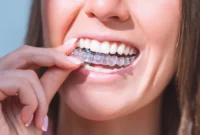
Clear aligners, while removable and theoretically easier to clean around, present their own hygiene challenges if patients fail to brush and floss before reinserting trays over plaque-coated teeth, effectively trapping bacteria against the enamel surface for extended periods. Orthodontists emphasize hygiene protocols not to burden patients, but to safeguard the biological health of the dentition while it undergoes active movement. Patients struggling with specialized hygiene tools, such as interdental brushes, floss threaders, or water irrigators, are strongly encouraged to seek guidance from their clinical team to prevent irreversible enamel damage.
The Collaborative Care Team: Orthodontist and General Dentist
A persistent point of confusion among patients is the division of responsibilities between general dentists and orthodontic specialists. Although both professions share a foundational commitment to oral health, their clinical scopes are fundamentally distinct and mutually exclusive. General dentists manage comprehensive baseline oral health, including diagnostic exams, routine dental prophylaxis, restorative fillings, endodontic therapy, and periodontal maintenance. Orthodontists specialize exclusively in the diagnosis, prevention, and correction of malocclusions and dentofacial deformities.
Crucially, orthodontic treatment does not supersede or replace regular comprehensive dental care. Throughout an active orthodontic journey, patients must maintain their routine recall appointments with their general dentist every six months—or more frequently if indicated—for professional cleanings and caries monitoring. The orthodontist moves teeth through bone; the general dentist maintains the structural health of those teeth and their supporting structures. Effective interdisciplinary communication between these two professionals ensures a holistic approach to patient wellness.
The Significance of Minor Mechanical Disruptions
Patients frequently hesitate to contact their orthodontic office when minor appliance failures occur, such as a marginally loose bracket, a slightly poking distal wire, a misplaced aligner tray, or a slightly unseated retainer. Driven by a desire not to be a nuisance, patients often wait weeks until their next scheduled appointment, potentially disrupting biomechanical progress.
In orthodontic biomechanics, continuous, light forces are essential for predictable cellular remodeling within the periodontal ligament. A loose bracket ceases to apply the intended force vector, while a lost aligner can lead to immediate relapse of achieved tooth movements within days. Orthodontic practices are specifically structured to triage these events efficiently. A brief telephone call or digital photo submission allows the clinical staff to determine whether the issue requires immediate intervention, temporary home management, or deferred attention at the next scheduled visit. Prompt communication prevents treatment regression and maintains optimal momentum.
The Permanent Commitment: Retention and Long-Term Stability
The removal of fixed braces or the delivery of the final clear aligner represents a major psychological and clinical milestone, but it emphatically does not mark the conclusion of orthodontic care. Human dentition is characterized by a lifelong physiological tendency to migrate, influenced by continuous periodontal fiber tension, perioral musculature forces, late mandibular growth, and age-related occlusal wear. Without a dedicated, lifelong retention protocol, teeth will inevitably relapse toward their original malpositioned states.
To counteract this natural biological tendency, orthodontists prescribe custom retainers—whether fixed bonded lingual wires or removable thermoplastic and Hawley appliances. Compliance with retention instructions is the single most critical factor in preserving the financial and personal investment made during active treatment. Over the initial post-treatment phase, full-time wear is typically required, gradually transitioning to lifelong nighttime wear. Furthermore, if a retainer is lost, breaks, or begins to exert excessive pressure due to shifting, patients must immediately consult their orthodontist rather than attempting to force a compromised appliance into place. Professional evaluation ensures that minor shifts can be intercepted before they necessitate a complete retreatment cycle.
Navigating the Patient-Clinician Dialogue
Ultimately, the overarching message from the orthodontic community centers on the power of open, uninhibited communication. Patients are never expected to master the intricacies of orthodontic biomechanics, bone remodeling physics, or anchorage mechanics; that specialized expertise remains the sole domain of the trained clinician. However, patients are expected to remain actively engaged participants in their own care pathways.
Whether experiencing unusual discomfort, dealing with a fractured component, facing persistent compliance hurdles, or simply seeking clarification regarding a specific phase of the treatment plan, patients should feel fully empowered to voice their concerns. Transparent dialogue enables orthodontists to fine-tune mechanics, address emerging pathology, and alleviate anxieties, ensuring a smooth, predictable, and mutually rewarding journey toward a healthy, functional, and aesthetically exceptional smile.