Achieving a healthy, confident smile involves far more than simply adhering rubber bands, wearing aligners as directed, brushing diligently around hardware, and showing up for scheduled adjustments. While these direct instructions form the cornerstone of any successful orthodontic journey, an entire world of specialized science, meticulous planning, and diagnostic evaluation occurs behind the scenes. According to dental health professionals and data from organizations such as the American Association of Orthodontists (AAO), modern orthodontics is a comprehensive medical discipline focused on structural harmony, skeletal development, and long-term oral wellness. To bridge the communication gap between clinicians and patients, industry specialists have compiled ten critical insights that shed light on the unseen complexities of orthodontic care, patient compliance, and the enduring partnership required to transform a smile.
Beyond Aesthetics: The Comprehensive Scope of Orthodontic Diagnosis
When patients sit in the examination chair, their primary concern is invariably aesthetic—straightening a crowded front tooth, closing a noticeable gap, or eliminating a minor rotation. However, specialized orthodontists operate with a vastly broader clinical mandate. The practice of orthodontics encompasses the intricate spatial relationships between the upper and lower jaws, the functional mechanics of the bite (occlusion), the distribution of occlusal forces across individual dental units, and the overall integrity of the craniofacial complex.
Furthermore, research indicates that jaw alignment and skeletal structure significantly influence broader physiological functions, including airway volume and breathing patterns, particularly during childhood and adolescent development. A smile may appear visually straight to an untrained observer while simultaneously harboring dangerous bite discrepancies, crossbites, or uneven load distributions that can accelerate enamel wear and temporomandibular joint (TMJ) dysfunction over time. Consequently, treatment plans are engineered to establish a balanced, functional relationship between the teeth and the musculoskeletal framework of the face, ensuring that aesthetic enhancements are supported by structural stability.
Diagnostic Technology: Unveiling What the Mirror Conceals
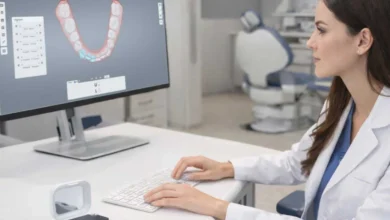
The human eye offers only a superficial perspective of oral health. Beneath the gumline and within the bone structure lie critical anatomical factors that dictate the trajectory of orthodontic treatment. Modern diagnostic protocols utilize advanced imaging technologies, including panoramic radiographs, lateral cephalometric X-rays, 3D cone-beam computed tomography (CBCT) scans, and digital intraoral impressions.
These diagnostic tools uncover hidden developmental anomalies that cannot be detected by simply looking in a mirror. Clinicians routinely identify impacted permanent teeth blocked by bone or primary roots, congenitally missing teeth, supernumerary (extra) teeth, and atypical eruption paths. In younger demographics, these imaging modalities allow specialists to monitor active craniofacial growth phases, ensuring that interceptive appliances are deployed at the exact chronological and biological window required to minimize invasive procedures later in life.
The Interceptive Philosophy: Why a Checkup Does Not Guarantee Immediate Treatment
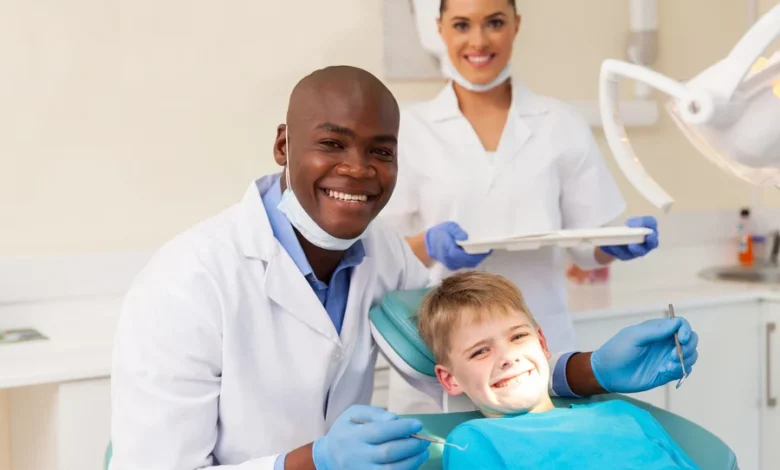
A common misconception among parents is that visiting an orthodontist automatically triggers the immediate application of braces, expanders, or fixed hardware. Addressing this, the AAO advocates for an initial orthodontic evaluation no later than age seven. By this developmental milestone, the first permanent molars have typically erupted, establishing the posterior occlusion and allowing clinicians to evaluate the spatial relationships of the developing arches.
However, an early evaluation frequently results in a recommendation for active observation rather than immediate physical intervention. Orthodontists function as growth specialists who track the sequential loss of primary teeth, the eruption timing of permanent successors, and ongoing skeletal expansion. In many instances, the optimal clinical strategy is to monitor natural development periodically, stepping in only if a specific intervention can favorably alter a developing malocclusion. When a specialist advises a family to return in six or twelve months, that directive represents an active, strategic component of a comprehensive treatment timeline.
Customized Biomechanics: Dispelling Appliance Preferences
In an era dominated by direct-to-consumer orthodontic marketing and pervasive social media advertising, patients frequently arrive at their initial consultations armed with rigid preferences regarding their treatment modality. While patient lifestyle considerations are important, appliances—whether traditional metal brackets, aesthetic ceramic braces, clear aligners, rapid palatal expanders, or functional Herbst appliances—are ultimately neutral clinical tools.
The selection of a specific appliance system is dictated by complex biomechanical requirements rather than stylistic preferences. Two individuals presenting with seemingly identical crowded smiles may require radically different treatment mechanics due to underlying discrepancies in bone density, periodontal support, skeletal classification, and root angulation. Orthodontists apply principles of physics and biology to determine how force vectors must be applied to move teeth safely through bone. The efficacy of the treatment relies not on the brand of the appliance, but upon the diagnostic expertise guiding its application.
The Transparency of Compliance: How Clinicians Track Patient Habits
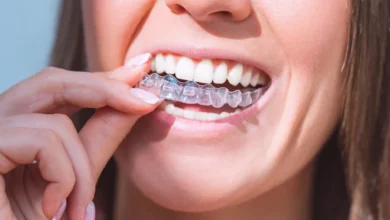
A pervasive myth among patients undergoing orthodontic care is that compliance failures can easily be concealed. Whether a patient has neglected to wear intermaxillary elastics, has fallen short of the prescribed twenty-two-hour daily wear time for clear aligners, or has continued to consume hard and sticky contraband foods, the physical evidence invariably manifests during clinical visits.
Orthodontic tooth movement is a predictable biological response to sustained, light pressure. When teeth fail to track along the projected digital or physical trajectory, the resulting discrepancies are immediately visible to the clinician. An aligner that fails to seat fully against the incisal edges or periodontal tissues that exhibit atypical inflammation patterns tell a clear diagnostic story. Specialists emphasize that honesty during progress evaluations is paramount; admitting to compliance challenges allows the clinical team to modify the treatment schedule, adjust force levels, or re-educate the patient without compromising the final structural outcome.
The Collaborative Partnership: Life Between Appointments
The active phase of orthodontic treatment is characterized by relatively brief, periodic visits to the clinic, interspersed by weeks or months of independent patient management at home. Consequently, the vast majority of orthodontic progress depends entirely on daily patient habits outside the office environment.
Clinical data demonstrates that consistent adherence to instructions—such as wearing elastics as prescribed, maintaining rigorous oral hygiene routines around brackets and wires, avoiding prohibited foods, and safeguarding removable appliances—directly dictates the duration and success of the treatment timeline. While a single day of missed elastic wear will not derail a multi-year treatment plan, cumulative compliance habits dictate whether a case finishes on schedule or extends significantly beyond initial timeframes. Orthodontics is fundamentally a collaborative partnership wherein the clinician provides the architectural blueprint, but the patient executes the daily labor required to realize the vision.
Periodontal Health and Enamel Preservation: Beyond Straight Alignment
While a beautifully aligned smile remains the most visible marker of successful orthodontic therapy, the health of the surrounding supporting structures—the gingiva (gums) and dental enamel—is of equal clinical importance. Fixed orthodontic appliances create numerous microscopic niches where dental plaque, food debris, and bacterial biofilms can accumulate, significantly elevating the risk of localized demineralization (white spot lesions), gingivitis, and periodontal inflammation if meticulous oral hygiene is neglected.
Orthodontists monitor periodontal health at every adjustment appointment, not out of overreach, but out of a clinical necessity to protect the dental tissues currently undergoing mechanical stress. Patients are routinely instructed to incorporate specialized interdental brushes, floss threaders, and water irrigators into their daily regimens. Protecting the structural integrity of the enamel and gums ensures that when the braces are finally removed, the underlying teeth are not only straight but also healthy and disease-free.
The Division of Labor: Orthodontists and General Dentists
A frequent point of confusion among consumers involves the distinct roles occupied by general dentists and orthodontic specialists. Although both professionals operate within the broader umbrella of oral health, their educational pathways, diagnostic focuses, and clinical interventions are distinct.
General dentists serve as the primary coordinators of lifelong oral health, managing routine examinations, professional prophylaxis (cleanings), restorative fillings, endodontic therapy, and periodontal maintenance. Conversely, orthodontists complete an additional two to three years of accredited, full-time residency training dedicated exclusively to the study of dentofacial orthopedics, growth modification, and tooth movement biomechanics. Throughout orthodontic treatment, maintaining concurrent visits to the general dentist is non-negotiable; orthodontic adjustments do not substitute for professional cleanings or caries surveillance. Together, the dentist and orthodontist function as an integrated clinical team dedicated to comprehensive oral wellness.
Proactive Troubleshooting: The Importance of Immediate Communication
Patients frequently encounter minor hardware anomalies—such as a loose orthodontic bracket, a persistently poking distal wire, a fractured clear aligner, or a tight-fitting retention appliance—and attempt to navigate the situation independently out of a desire to avoid burdening the office staff. However, delaying communication regarding compromised appliances can disrupt delicate biomechanical forces and stall or reverse active tooth movement.
Orthodontic practices maintain structured protocols for emergency triage and unscheduled visits. Contacting the clinical team promptly when an appliance is damaged allows staff to evaluate the structural integrity of the system and determine whether immediate in-office repair is required or if temporary home management is appropriate. Timely intervention prevents unwanted regressions and keeps the overall treatment schedule on track.
The Retention Phase: Why the Removal of Braces Marks a Transition, Not an End
The moment the braces or final aligners are removed is widely celebrated as the culmination of the orthodontic journey. Clinically, however, the removal of fixed hardware marks a critical transition into the retention phase of care. Periodontal ligaments and surrounding alveolar bone require extended periods of biological reorganization to stabilize teeth in their newly corrected positions.
Without continuous mechanical retention, natural physiological forces—including continuous mesial drift, soft tissue pressure from the lips and cheeks, and ongoing age-related craniofacial changes—will cause teeth to relapse toward their original malocclusion. Orthodontists prescribe custom removable or fixed retainers with explicit usage instructions that often extend into long-term or lifetime maintenance protocols. Furthermore, if a retainer becomes structurally compromised, lost, or suddenly exerts excessive pressure during re-insertion, patients are strongly advised to seek professional evaluation rather than forcing the appliance, as premature intervention can prevent costly and time-consuming orthodontic retreatment.