The Evolution of Clear Aligner Biomechanics
To understand the significance of the Pressure Points launch, it is necessary to examine the evolution of clear aligner therapy (CAT). Over the past two decades, CAT has transitioned from a niche solution for minor aesthetic corrections to a sophisticated orthodontic modality capable of addressing complex malocclusions. A primary challenge in this transition has been the accurate expression of torque—the labiolingual inclination of a tooth—which is notoriously difficult to achieve with plastic aligners compared to traditional fixed orthodontic appliances.
Historically, orthodontists relied on manual adjustments to achieve the necessary force systems. Clinicians would often use specialized pliers to create "dimples" or "bubbles" in the aligner plastic, manually applying concentrated pressure to specific areas of the tooth crown to facilitate rotation or root movement. While effective in the hands of an experienced practitioner, this method is inherently inconsistent. It relies on the manual dexterity of the clinician and the specific properties of the aligner material, which can vary in elasticity and durability.
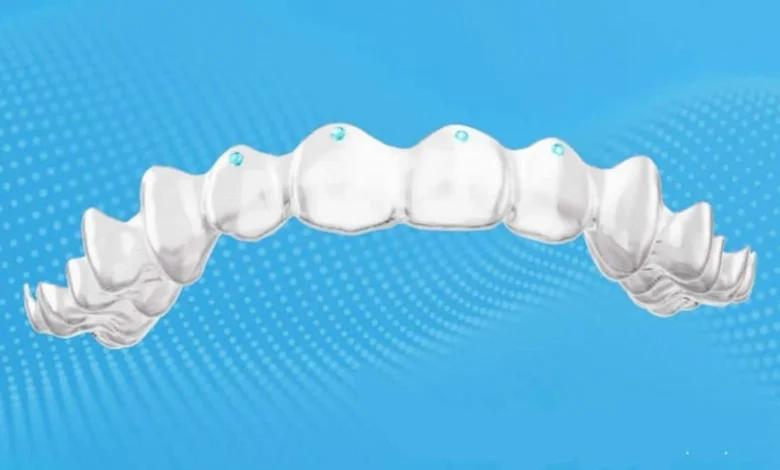
The introduction of Torque Ridges was the industry’s first standardized attempt to automate these force applications. By incorporating specific geometries into the aligner design, manufacturers sought to provide a consistent, factory-produced solution. However, as clinical data matured, the need for a more precise, biomechanically superior alternative became clear. Angelalign’s Pressure Points represent the next generation of this evolution, shifting from rigid, generalized structures to a dynamic, localized force application system.
Chronology of Innovation at Angelalign
The path to the development of Pressure Points is rooted in Angelalign’s long-standing commitment to research and development. The company’s trajectory in the digital orthodontics space has been marked by several key milestones:
- Foundational R&D: Years of internal clinical research focusing on biomechanical force distribution in clear aligners.
- The AngelButton Era: The launch of the angelButton, an auxiliary device designed to facilitate the use of elastics with aligners, set a precedent for the company’s focus on complex movement control.
- Torque Ridge Integration: The implementation of Torque Ridges served as the standard-bearer for torque correction, providing the baseline data that informed the development of the newer technology.
- Clinical Validation Phase: Extensive bench-testing and pilot clinical evaluations were conducted to compare the efficacy of Pressure Points against manual dimpling techniques and older ridge configurations.
- European Market Entry (Current Phase): The official release of Pressure Points to the European orthodontic community, marking the start of a phased global rollout strategy.
Engineering the Pressure Point Advantage
The technical superiority of Pressure Points lies in their ability to provide targeted, predictable force application. In the current configuration, these points are engineered to address torque corrections with unprecedented accuracy.
Angel Aligner’s high trimline options—which cover the entire tooth surface and extend up to 2 mm onto the gingiva—provide the necessary structural support to anchor these forces. When an aligner is fully seated, the Pressure Points engage with the tooth surface at precise vectors. This minimizes the risk of force decay, a common issue where the plastic material loses its ability to exert pressure as it relaxes over time.
By replacing the traditional, broader Torque Ridges with a more localized Pressure Point, the system reduces the amount of unnecessary material contact, allowing for a cleaner aesthetic while simultaneously concentrating the corrective force exactly where it is needed. For the clinician, this translates into a reduction in the need for "mid-course corrections" or "refinements," which are often required when the intended tooth movement does not align with the patient’s clinical reality.
Official Perspectives and Market Response
The launch has been met with positive anticipation from the orthodontic community, particularly in regions where Angelalign has established a strong presence. Xavier Cherbavaz, general manager and vice president for Europe, Africa, and the Middle East at Angelalign Technology Inc., emphasized that this launch is not merely a product update but a continuation of a broader corporate philosophy.
"Our commitment to research and to delivering innovative solutions for our customers and their patients began many years ago, including with the launch of the angelButton," Cherbavaz stated during the launch announcement. "Today, we continue that journey with the launch of our upgraded solution, Pressure Points."
The strategic emphasis on "predictable control" addresses the most common pain point for modern orthodontists: the desire for digital treatment plans that match final clinical outcomes. By reducing the variability inherent in manual aligner adjustments, Angelalign is positioning itself as a technology partner rather than just a product supplier, helping practitioners maintain higher standards of care across diverse patient demographics.
Data-Driven Clinical Implications
Data gathered from ongoing clinical research initiatives suggest that the move toward Pressure Points will have a measurable impact on treatment timelines. While the company has not yet released the proprietary data sets associated with the new feature, industry analysts note that improvements in torque control typically correlate with a 10% to 15% reduction in total treatment duration.
Furthermore, the integration of this feature into the digital planning software allows orthodontists to visualize the specific force applications before the aligners are even manufactured. This digital-first approach ensures that the treatment plan is optimized for biomechanical feasibility, reducing the likelihood of root-to-bone contact issues that can occur when teeth are moved too aggressively without proper torque control.
Future Capabilities and Global Expansion
The current launch is restricted to torque corrections in a single configuration, a move described by company insiders as a "controlled rollout." This allows the company to gather real-world data and feedback from a diverse range of orthodontic practices across Europe before proceeding to the next phases of development.
Looking ahead, Angelalign has confirmed that it intends to expand the functionality of Pressure Points to include:
- Rotation Management: Utilizing Pressure Points to provide the specific couple forces required to rotate teeth more effectively, particularly those with round or conical roots.
- Intrusion Capabilities: Enabling the predictable depression of teeth into the alveolar bone, a movement that is notoriously difficult to achieve with standard clear aligners.
- Expanded Geometry: Introducing varied shapes and sizes of Pressure Points to accommodate different tooth anatomies, such as narrow laterals or bulky molars.
While currently limited to the European market, the company is preparing for a global distribution strategy. This expansion will likely be guided by the "clinical feedback loop"—a process where data from European clinicians is fed back into the engineering department to refine the configurations before they reach markets in Asia, the Americas, and beyond.
Broader Impact on the Orthodontic Industry
The introduction of Pressure Points is emblematic of a wider trend in the orthodontic industry: the transition from "broad-stroke" aligner therapy to "precision" aligner therapy. As clear aligner technology becomes the standard of care for an increasing number of patients, the bar for clinical success has been raised.
Orthodontists are no longer satisfied with simply straightening teeth; they are now focused on the finer details of root angulation, gingival health, and long-term occlusal stability. Technologies like Pressure Points empower the clinician to take control of these variables, essentially bringing the precision of fixed appliances into the realm of removable clear aligners.
The shift also signals a changing relationship between the manufacturer and the practitioner. By providing more control within the treatment planning software, Angelalign is acknowledging that the orthodontist—not the software algorithm—remains the ultimate authority on patient care. This collaborative model, where human clinical judgment is augmented by high-precision mechanical features, is likely to define the next decade of orthodontic innovation.
Conclusion
Angelalign Technology Inc.’s launch of Pressure Points in the European market marks a pivotal moment in the refinement of clear aligner therapy. By successfully transitioning from manual dimpling and generalized Torque Ridges to a sophisticated, predictable, and localized force system, the company has addressed a significant biomechanical hurdle in modern orthodontics.
As the technology continues to evolve, incorporating rotation and intrusion capabilities, the role of the orthodontist will continue to be supported by increasingly granular levels of control. For the patient, this means shorter treatment times, more predictable results, and a higher standard of care. For the industry, it serves as a clear indication that the next frontier of clear aligner development lies not in the plastic itself, but in the intelligent application of physics to every individual tooth in the arch. As the company moves toward global distribution, the orthodontic community will be watching closely to see how this feature performs across a broader spectrum of complex clinical cases.