Archaeological Discovery in Aberdeen Reveals 15th-Century Gold Dental Bridge and Insights into Early Modern Restorative Dentistry

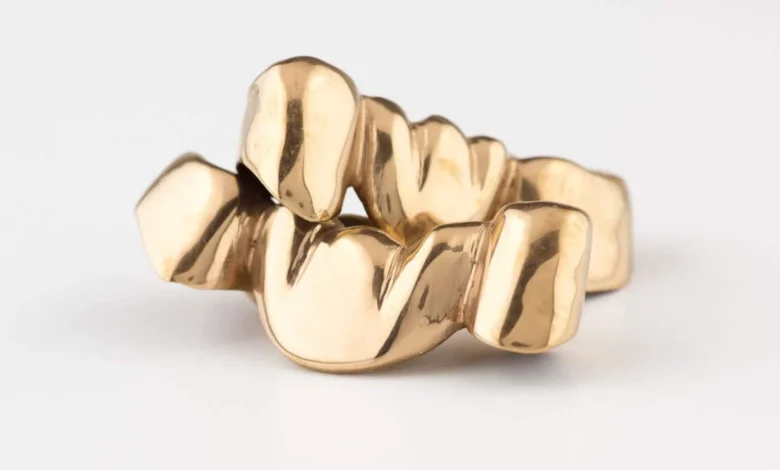
The uncovering of a meticulously crafted gold dental bridge within the remains of a 15th- to 17th-century skeleton in Aberdeen, Scotland, has provided researchers with a rare window into the intersection of early modern medicine, high-level craftsmanship, and social stratification. This discovery, facilitated by a multidisciplinary team of scientists and historians, underscores the advanced state of restorative dentistry long before the advent of modern clinical practice. The skeletal remains, identified as belonging to a middle-aged male, feature a dental prosthetic that serves as a physical testament to the wealth and social standing required to access such sophisticated oral healthcare during the late medieval and early modern periods.
Scientific Methodology and Identification
The identification and analysis of the remains required an array of sophisticated forensic and archaeological techniques. To establish a precise timeline for the individual’s life, researchers employed radiocarbon dating, which narrowed the window of his death to between 1460 and 1670. This era was a period of significant transition for Scotland, marked by the Renaissance, religious reformation, and the burgeoning of urban trade centers like Aberdeen.
To analyze the composition of the dental bridge without damaging the artifact, the team utilized X-ray spectroscopy and scanning electron microscopy (SEM). X-ray spectroscopy allowed the researchers to identify the elemental makeup of the metal, confirming it was a high-karat gold alloy. SEM provided high-resolution imagery of the bridge’s surface, revealing the minute details of its construction, including the tool marks left by the artisan and the methods used to secure the device to the existing natural teeth. These non-invasive techniques are essential in bioarchaeology, as they preserve the integrity of rare specimens while yielding data on ancient metallurgical practices.
The skeletal analysis further revealed that the man was of middle age at the time of his passing. Bioarchaeological markers suggested a life that, while privileged enough to afford gold dentistry, was not immune to the physiological stresses of the time. However, the presence of the bridge itself is the most telling indicator of his biography, suggesting he was a member of the elite—likely a merchant, a high-ranking cleric, or a member of the landed gentry.
The Craftsmanship of the Aberdeen Bridge
The dental bridge found in the Aberdeen skeleton is a remarkable example of pre-industrial prosthetic engineering. During the 15th through 17th centuries, dentistry as a standalone medical profession did not exist in the way it is understood today. Instead, oral care was a fragmented field: "tooth-drawers" or barber-surgeons handled extractions, while the creation of prosthetics often fell to goldsmiths and silversmiths due to their expertise in manipulating precious metals and creating fine wires.
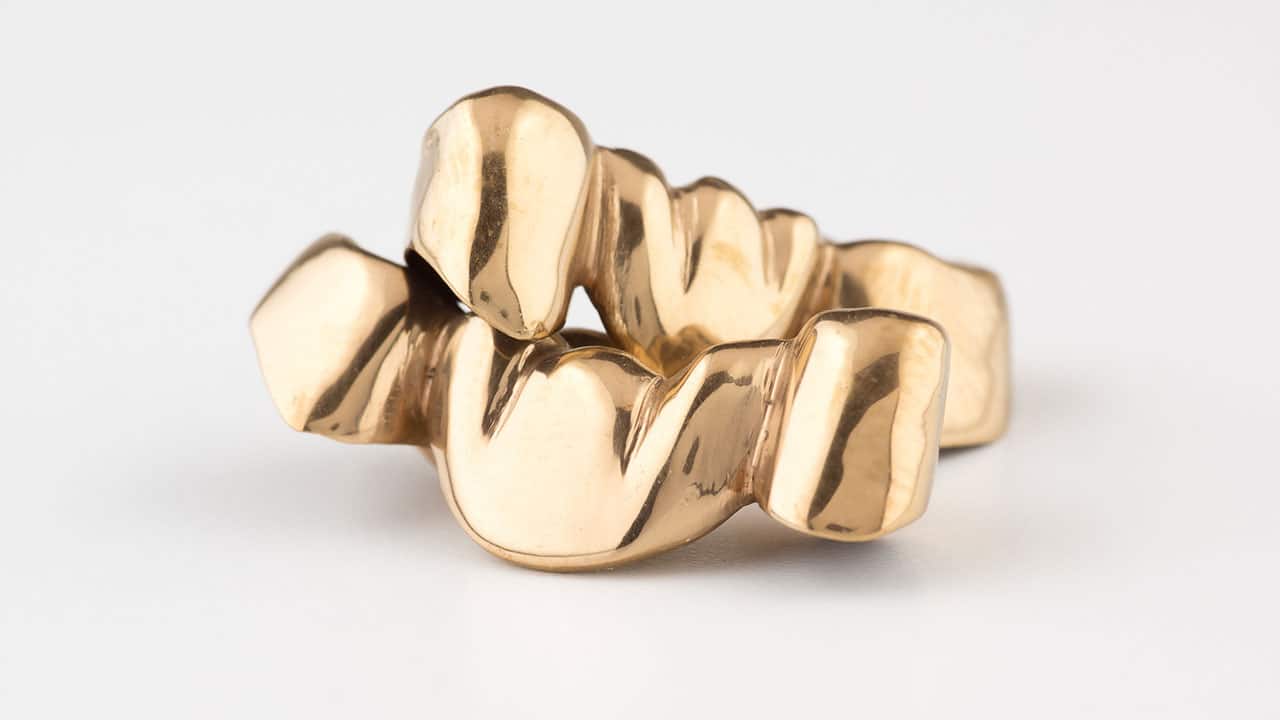
The Aberdeen bridge was fabricated from a high-karat gold alloy, chosen for its malleability and its resistance to corrosion in the moist, acidic environment of the human mouth. Analysis suggests the bridge was designed to replace missing anterior teeth, which are critical for both speech and appearance. The device was likely held in place through a process known as ligation, where fine gold wires were used to lash the prosthetic to the adjacent healthy teeth.
Historical records indicate that Aberdeen was a thriving hub of craftsmanship during this period. At the time the individual lived, approximately 22 goldsmiths were documented as operating within the city. These artisans were members of prestigious guilds, and their technical proficiency in soldering, casting, and wire-drawing would have been easily transferable to the creation of dental appliances. The discovery suggests a collaborative, albeit perhaps informal, relationship between the era’s medical practitioners and its finest metalworkers.
Chronology of Restorative Dentistry
The use of gold in dentistry is not a modern innovation, but the Aberdeen find is significant because it represents one of the earliest documented instances of such work in Scotland. To understand the context of this discovery, it is helpful to look at the broader timeline of dental restoration:
- Ancient Period (700 BCE – 100 CE): The Etruscans in modern-day Italy were the pioneers of gold dental work, using gold bands to secure human or animal teeth into the mouths of patients.
- The Middle Ages (500 – 1400 CE): Knowledge of restorative dentistry largely stagnated in Europe, with a focus shifting toward extractions performed by itinerant healers or barbers.
- The Renaissance and Early Modern Era (1400 – 1700 CE): As global trade expanded and wealth accumulated in urban centers, there was a resurgence in the demand for aesthetic dental work. The Aberdeen bridge falls squarely within this period of renewal.
- The 18th Century: Pierre Fauchard, often called the "father of modern dentistry," published Le Chirurgien Dentiste, formalizing the practice of dental prosthetics.
- The 19th Century to Present: The introduction of porcelain, vulcanite, and eventually modern polymers and titanium implants revolutionized the field.
The Aberdeen discovery bridges the gap between the rudimentary ligations of antiquity and the formalized prosthetic dentistry that would emerge in the 18th century.
Socio-Economic Status and the "Moral" Smile
In the 15th and 16th centuries, the condition of one’s teeth was more than a matter of health; it was a profound indicator of character and social identity. The prevailing cultural belief system often linked physical appearance to moral and spiritual standing. A "broken" or "rotten" smile was frequently associated with poverty, poor hygiene, or even divine punishment. Conversely, a restored or maintained set of teeth signaled that an individual possessed the "virtue" of self-care and, more importantly, the financial means to command the services of the city’s best artisans.
The cost of a gold bridge in the 16th century would have been astronomical for the average citizen. Beyond the raw value of the gold, the patient would have had to pay for the specialized labor of a goldsmith. This suggests that the Aberdeen man was part of an emerging class of wealthy urbanites who viewed their physical presentation as an essential component of their professional and social "brand." In an era where a merchant’s word and appearance were his primary assets, an investment in dental restoration was a pragmatic business decision as much as a medical necessity.
Expert Analysis and Regional Implications
Archaeologists and dental historians have noted that while gold bridges have been found in other parts of Europe—most notably among French and Italian nobility—their discovery in Scotland is particularly rare. This find challenges the historical perception of Scotland as a peripheral or less technologically advanced region during the late medieval period. Instead, it depicts Aberdeen as a cosmopolitan city with access to the same medical and artisanal luxuries found in the major capitals of Europe.
"This discovery changes our understanding of the availability of high-end medical care in Northern Britain," suggests the research team. "It shows that the elite in Aberdeen were not only aware of the latest trends in restorative surgery and prosthetics but also had the local infrastructure—via the goldsmith guilds—to realize those treatments."
Furthermore, the "wear patterns" on the bridge and the surrounding bone indicate that the device was not merely cosmetic or placed posthumously. The man had used this bridge for several years before his death, meaning it was a functional success. This speaks to the efficacy of the ligation method and the skill of the artisan in ensuring the device could withstand the mechanical stresses of mastication.
Broader Impact on Modern Bioarchaeology
The study of this skeleton and its gold bridge provides a template for future bioarchaeological investigations. It highlights the necessity of using multi-modal scientific analysis to extract the maximum amount of information from a single find. By combining the "hard" data of X-ray spectroscopy with the "soft" data of historical guild records, researchers have been able to reconstruct a vivid picture of a single life and the society that supported it.
The Aberdeen discovery also serves as a reminder of the enduring human desire to preserve health and appearance. While the materials have changed—moving from high-karat gold and wire to zirconia and digital 3D printing—the underlying motivation remains the same. The interplay between oral health, identity, and social value is a thread that runs through human history, and this 15th-century Scotsman stands as a remarkably well-preserved link in that chain.
As researchers continue to examine the remains, they hope to uncover more about the man’s diet and geographic origins through stable isotope analysis of his remaining natural teeth. This could reveal whether he was a local Aberdonian or a traveler who brought his sophisticated dental work with him from the continent. Regardless of his origin, his gold-clad smile remains one of the most significant archaeological finds in the history of Scottish medicine, proving that even centuries ago, the pursuit of a perfect smile was a powerful driver of innovation and status.
Related posts: