
On My Mat Inside The Mind Of A Yoga Teacher
On My Mat: Inside the Mind of a Yoga Teacher
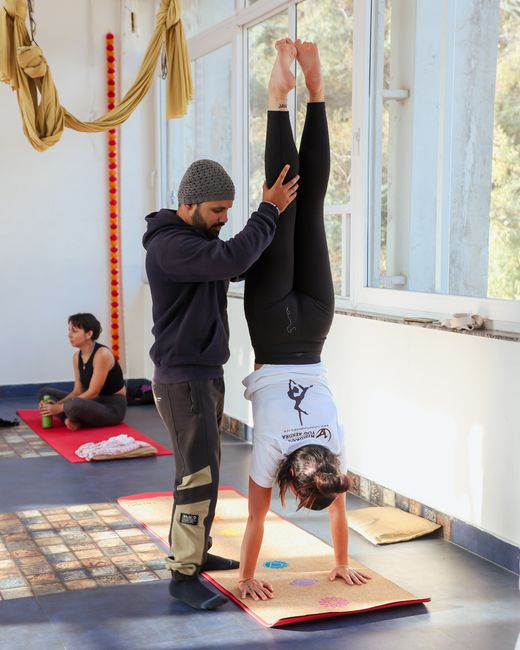
The yoga mat, for a teacher, is more than just a physical space. It’s a canvas for contemplation, a laboratory for anatomical exploration, and a sanctuary for emotional processing. Each inhale, each exhale, is a deliberate act of presence, a conscious engagement with the unfolding practice both within oneself and in the collective energy of the room. The mind of a yoga teacher is a constant hum of observation, analysis, and intuitive guidance. It’s a delicate dance between the established knowledge of alignment principles and the fluid, ever-changing needs of the students. We are perpetually scanning, not just for proper form, but for subtle shifts in breath, tension, and expression. A furrowed brow, a tightened jaw, a hesitant limb – these are all signposts, whispered clues that inform our verbal cues and adjustments, even if adjustments are not physically made. The goal isn’t perfection in posture, but rather fostering a deeper connection between mind, body, and breath, empowering individuals to discover their own innate wisdom and resilience. We are orchestrating an experience, not dictating a pose. The mat becomes a microcosm of life, where challenges are met with breath, where surrender is as vital as effort, and where the journey of self-discovery is the ultimate destination. The teacher’s mind is trained to hold space for all of it – the struggle, the breakthrough, the stillness, the laughter. It’s a practice of deep listening, both to the subtle whispers of the body and the resonant echoes of the spirit.
The anatomical intricacies of a pose are continuously replayed and re-evaluated. In Trikonasana (Triangle Pose), for instance, the mind isn’t just seeing a triangle. It’s dissecting the engagement of the quadriceps, the outward rotation of the femur, the subtle abduction of the shoulder blades. It’s considering the engagement of the core to support the spine, the extension of the breath to create space between the vertebrae, and the grounding of the feet to anchor the entire structure. The teacher’s internal monologue might be something like, "Are they feeling that stretch in the hamstring, or is their back rounding? Can I encourage a slight tuck of the tailbone to protect the lumbar spine? Is the top arm reaching towards the sky, or is it collapsing downwards? How can I cue this to promote thoracic extension without compromising the neck?" This constant analysis isn’t about rigid adherence to a singular ideal; it’s about understanding the biomechanics and energetics of the human form to offer the most supportive and liberating experience for each individual. We are constantly referencing a vast internal library of anatomical knowledge, filtered through the lens of embodied experience. We understand that the ‘correct’ alignment for one student might be detrimental to another based on their unique skeletal structure, past injuries, or current flexibility. The art lies in translating this complex understanding into accessible, actionable language and gentle encouragements. We are not just instructors; we are translators of bodily wisdom, helping students decipher the subtle languages their own bodies are speaking. The mat becomes a silent dialogue between the teacher’s knowledge and the student’s lived experience.
Beyond the physical, the emotional and energetic landscape of the classroom is a primary focus. A yoga teacher’s mind is attuned to the subtle currents of feeling that flow through the practice. We observe the collective exhale after a challenging sequence, the shared sigh of release, the palpable sense of calm that settles after Savasana. We are also attuned to moments of individual struggle – a student holding back tears in a forward fold, the tension held in the shoulders during a balancing pose, the subtle shaking in the legs during a challenging warrior. Our internal guidance system is constantly assessing the emotional temperature of the room. Is there a collective feeling of exhilaration or perhaps a lingering stress from the outside world? How can the sequence be adjusted, or the language be framed, to meet these energetic needs? The intention is to create a safe container for whatever arises. This might involve offering modifications for those feeling overwhelmed, encouraging self-compassion for those pushing too hard, or simply acknowledging the validity of all emotions without judgment. The mat is a space where vulnerability is not only accepted but often invited. The teacher’s mind is a reservoir of empathy, prepared to hold space for the myriad of human experiences that unfold on the mat. We understand that yoga is not just about physical postures; it’s a profound journey of self-awareness and emotional integration. The practice of holding space is as integral to the teacher’s role as demonstrating a perfect Chaturanga. We aim to foster a sense of belonging and acceptance, allowing each student to show up authentically, whatever that may look like on any given day.
The development of intuition and self-awareness is a cornerstone of the teacher’s practice. The mind learns to recognize patterns, not just in anatomy, but in energy and intention. Over time, a teacher develops a sixth sense, an ability to anticipate needs before they are vocalized. This might manifest as offering a blanket to someone whose energy feels low, or suggesting a gentle backbend to someone who appears to be holding a lot of emotional weight. The teacher’s internal compass is constantly recalibrating, responding to the subtle cues of the collective and the individual. This intuitive guidance is not magical; it’s a cultivated skill, honed through years of dedicated practice and keen observation. It’s about being fully present and receptive to what is unfolding, both within oneself and in the students. The teacher’s own mat time is non-negotiable, not just for maintaining physical prowess, but for cultivating this deep inner awareness. It’s on our own mat that we process the energetic imprint of the classes, further refine our understanding of ourselves, and build the resilience needed to hold space for others. We learn to distinguish between our own energetic fluctuations and those of the room. The ability to remain centered and grounded, even when faced with challenging energetic dynamics, is crucial. This cultivated intuition allows for a more dynamic and responsive teaching style, one that feels less like a script and more like a living, breathing conversation with the students and their evolving needs.
The concept of progression and adaptation is central to the teacher’s pedagogical approach. A yoga teacher’s mind is constantly considering the journey of the students, both in the present moment and over time. How can this pose be modified to be more accessible for a beginner, while simultaneously offering a deeper challenge for an experienced practitioner? The teacher is not just thinking about the next pose in the sequence; they are contemplating the entire arc of the practice, from the initial warm-up to the final relaxation. This involves a deep understanding of how different poses build upon each other, how breathwork can enhance the physical experience, and how mindful transitions can deepen the practice. The teacher is a curator of movement and awareness, designing sequences that are both intelligently sequenced and intuitively guided. They are looking for opportunities to offer variations, encouraging students to listen to their bodies and choose the option that best serves them. This might mean suggesting a block under the hand in a lunge, encouraging a wider stance in a forward fold, or offering an arm variation in a bind. The teacher’s mind is a fertile ground for creative sequencing, constantly seeking new ways to explore familiar poses and introduce novel challenges. The goal is to empower students to develop their own autonomy and self-reliance, to learn how to adapt the practice to their ever-changing needs. This adaptability is not just about physical modifications; it’s about cultivating a mindset of resilience and open-mindedness, encouraging students to approach challenges with curiosity rather than fear. The teacher’s mind is forever in a state of learning and evolving, absorbing new information and refining their understanding of the practice.
The ethical framework that underpins a yoga teacher’s practice is paramount. The teacher’s mind operates within a sphere of ethical considerations, ensuring that the space created is safe, inclusive, and respectful. This goes beyond physical safety and extends to emotional and energetic well-being. The teacher is mindful of power dynamics, ensuring that their language and actions are empowering rather than controlling. They are conscious of potential triggers, both physical and emotional, and strive to create an environment where everyone feels seen, heard, and valued. This might involve being sensitive to discussions about body image, offering alternative language that is body-positive, or being aware of cultural appropriation. The teacher’s commitment to non-harming (ahimsa) extends to every aspect of their teaching. They are continuously engaged in self-reflection, examining their own biases and assumptions, and actively working to create a more equitable and just practice for all. The teacher’s mind is a constant learning process, actively seeking to deepen their understanding of social justice issues and how they intersect with yoga. They understand that a truly transformative yoga practice is one that fosters not only personal growth but also contributes to a more compassionate and connected world. The ethical compass guides not only the sequencing of poses but also the tone of voice, the choice of words, and the overall intention behind the practice. It’s about fostering a sense of community where diversity is celebrated and all practitioners feel a sense of belonging.
The persistent pursuit of personal growth is a defining characteristic of a yoga teacher’s internal world. The teacher’s mind is a reflection of their own ongoing journey of self-discovery. The mat is not a static performance space; it’s a dynamic laboratory where the teacher continues to learn, to evolve, and to deepen their understanding of themselves and the practice. This commitment to lifelong learning is essential. It involves attending workshops, engaging in continued education, and actively seeking feedback from students. The teacher understands that they are not an endpoint, but a guide on a shared path. They are willing to be vulnerable, to admit when they don’t know something, and to embrace the process of ongoing refinement. This dedication to personal growth not only enhances their teaching but also serves as an inspiration to their students. When a teacher is actively engaged in their own journey of self-exploration, they create an environment that encourages authenticity and curiosity in others. The mat, for the teacher, is a place of both service and self-cultivation. It’s a continuous cycle of giving and receiving, learning and sharing, all fueled by a deep and abiding love for the transformative power of yoga. The mind of a yoga teacher is a testament to the fact that the practice itself is the ultimate teacher, and the journey of learning never truly ends.
