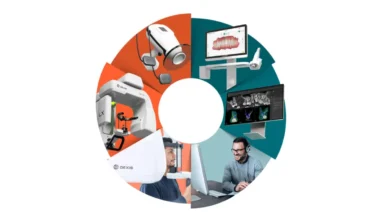
The American Association of Orthodontists announced the 2026 award winners during its annual session, recognizing new practice and treatment products.


The American Association of Orthodontists (AAO), the world’s largest dental specialty organization, celebrated the pinnacle of innovation within the orthodontic field by bestowing its prestigious 2026 New Products Showcase Awards. During its highly anticipated Annual Session, held from May 1 to May 3, 2026, in Orlando, Florida, the association recognized DentalMonitoring for its DM End-To-End Monitoring platform and Celebrace for its namesake Celebrace system. These awards underscore the industry’s rapid evolution, particularly in leveraging artificial intelligence and digital solutions to enhance both practice efficiency and patient treatment outcomes.
The AAO Annual Session: A Confluence of Orthodontic Excellence
The AAO Annual Session stands as the premier global gathering for orthodontic professionals, serving as a vital platform for continuing education, networking, and the exhibition of groundbreaking technologies. The 2026 session in Orlando exemplified this role, drawing an impressive attendance of over 12,000 registered participants from 80 countries. This international presence highlights the universal commitment to advancing orthodontic science and patient care across diverse global healthcare landscapes.
Throughout the three-day event, attendees engaged in more than 200 scientific and educational sessions. These comprehensive programs were meticulously curated, featuring insights from leading clinicians, pioneering researchers, and seasoned practice management experts. Topics ranged from advanced biomechanics and contemporary treatment modalities, such as clear aligner therapy and accelerated orthodontics, to critical aspects of practice optimization, including financial management, marketing strategies, and team leadership. The sheer volume and depth of content offered underscore the AAO’s unwavering dedication to providing its members with independent, objective, and cutting-edge continuing education, essential for maintaining clinical excellence in an ever-evolving specialty.
Central to the Annual Session’s vibrancy was its expansive exhibit hall, which hosted over 350 companies. This bustling marketplace served as a dynamic showcase for the latest advancements in orthodontic technology, materials, and services. From diagnostic imaging equipment and innovative bracket systems to sophisticated practice management software and patient engagement tools, the exhibit hall provided orthodontists and their teams with a direct opportunity to explore, evaluate, and integrate novel solutions into their practices. It is within this competitive and innovative environment that the New Products Showcase Award holds particular significance.
The New Products Showcase Award: A Peer-Driven Recognition of Innovation
The annual New Products Showcase Award is a highly coveted honor, distinguishing truly transformative products among the myriad of innovations presented by exhibitors. What sets this award apart is its unique selection process: winners are chosen via onsite voting by attending orthodontists and residents. This democratic approach ensures that the recognized products genuinely resonate with the daily needs and preferences of the orthodontic community, reflecting practical utility, clinical efficacy, and potential for real-world impact. The award serves not only as a testament to the winning companies’ ingenuity but also as a reliable indicator for practitioners seeking to adopt the most promising new technologies.
The 2026 competition was particularly robust, reflecting a period of accelerated technological development within orthodontics. The two categories, Practice Product and Treatment Product, ensure a comprehensive evaluation of innovations that streamline operations as well as those that directly enhance clinical care.
DentalMonitoring: Redefining Practice Management with AI-Powered Oversight
Receiving the Practice Product Award, DentalMonitoring was recognized for its DM End-To-End Monitoring platform. This connected solution represents a significant leap forward in orthodontic practice management, leveraging proprietary artificial intelligence (AI) technology, comprehensive clinical insights, and robust patient communication tools. The platform is designed to provide seamless support throughout the entire orthodontic care journey, from initial consultation to retention.
At its core, DM End-To-End Monitoring facilitates remote oversight of patients between in-office visits. Patients use a smartphone application and a ScanBox device to regularly submit high-resolution scans of their dentition. DentalMonitoring’s AI algorithms then analyze these scans, identifying subtle changes in tooth movement, appliance fit, oral hygiene, and potential issues. This data is instantly relayed to the orthodontist, offering a continuous, real-time snapshot of treatment progression.
The implications of such a system are profound. For orthodontists, it significantly strengthens clinical oversight, allowing them to intervene proactively if treatment deviates from the planned trajectory or if complications arise. This reduces the need for emergency appointments and ensures treatment stays on schedule, optimizing chair time and practice efficiency. Furthermore, the platform’s patient communication tools foster greater engagement and compliance, as patients receive personalized feedback and reminders, empowering them to take a more active role in their treatment.
Beyond direct treatment management, DM End-To-End Monitoring enables practices to structure and monetize observation and retention programs. Traditionally, these phases involve infrequent check-ups that may not always generate direct revenue. With remote monitoring, practices can offer value-added services, ensuring continued oversight and support for patients even after active treatment, thereby enhancing long-term patient satisfaction and generating recurring revenue streams. This innovation aligns perfectly with the growing trend of teledentistry and remote healthcare, offering convenience for patients and increased operational capacity for practices.
A spokesperson for DentalMonitoring, upon receiving the award, might have commented, "We are immensely honored that DM End-To-End Monitoring has been recognized by the AAO and, more importantly, by the orthodontists and residents who will utilize our technology. This award validates our commitment to empowering practices with cutting-edge AI to deliver superior, more convenient, and more efficient patient care. We believe remote monitoring is not just an add-on but a fundamental shift towards smarter, connected orthodontics."
Celebrace: Elevating Treatment Precision through Integrated Digital Workflows
The Treatment Product Award was presented to Celebrace for its innovative Celebrace system. This advanced solution seamlessly integrates AI, sophisticated digital workflows, and state-of-the-art indirect bonding techniques, offering a streamlined and highly personalized approach to orthodontic care. The core promise of Celebrace is to provide precision treatment tailored to individual patient needs, driven by robust, data-driven insights.
The Celebrace system represents the culmination of advancements in digital dentistry. It likely begins with highly accurate intraoral scans, which are then processed through proprietary AI algorithms to generate a precise 3D model of the patient’s dentition and surrounding structures. This digital blueprint allows orthodontists to meticulously plan tooth movements and design customized appliance setups with unprecedented accuracy. The integration of indirect bonding solutions means that brackets are precisely positioned on models and then transferred to the patient’s teeth simultaneously using custom trays, significantly reducing chair time and ensuring optimal bracket placement for predictable treatment outcomes.
The use of AI in Celebrace extends beyond initial planning, potentially incorporating predictive analytics to forecast treatment responses and adjust plans dynamically. This level of data-driven insight empowers orthodontists to make more informed decisions, minimizing mid-treatment adjustments and optimizing the overall treatment duration. For patients, this translates to a more comfortable experience, fewer in-office visits, and ultimately, a more precise and aesthetically pleasing result.
The recognition of Celebrace at the 2026 Annual Session is particularly notable as it follows another significant achievement: in March 2026, Celebrace also won the AAO’s 2026 Ortho Innovator Award. This dual recognition within the same year underscores the profound impact and consistent excellence of the Celebrace system, signaling its potential to become a cornerstone technology in contemporary orthodontic treatment. It highlights a clear trend towards highly customized, digitally-guided treatment approaches that prioritize efficiency, precision, and patient-specific outcomes.
A representative from Celebrace, acknowledging the dual honors, might have stated, "To receive both the Ortho Innovator Award and the New Products Showcase Award from the AAO in the same year is a tremendous honor and a testament to the hard work and dedication of our team. Celebrace is designed to revolutionize how orthodontists approach treatment, offering unparalleled precision and personalization through the intelligent integration of AI and digital workflows. We are proud to contribute to a future where every patient receives truly bespoke orthodontic care."
Broader Implications for the Orthodontic Landscape
The recognition of DentalMonitoring and Celebrace reflects several critical shifts and trends shaping the future of orthodontics. The dominance of AI and digital technology in both award-winning products signals a clear trajectory towards a more digitized, data-driven, and patient-centric specialty.
Firstly, the emphasis on remote monitoring, exemplified by DM End-To-End Monitoring, addresses the growing demand for convenience and accessibility in healthcare. Patients, accustomed to digital interactions in other aspects of their lives, increasingly expect similar ease in their medical treatments. Remote monitoring not only meets this expectation but also enhances safety and effectiveness by providing continuous professional oversight, bridging the gap between in-office appointments. This trend is likely to expand, transforming traditional practice models and potentially increasing patient compliance and satisfaction.
Secondly, Celebrace’s focus on precision, personalization, and streamlined digital workflows points to the ongoing evolution of treatment methodologies. The era of one-size-fits-all orthodontics is rapidly fading, replaced by systems that leverage advanced imaging and AI to create highly individualized treatment plans. This not only leads to superior clinical outcomes but also improves practice efficiency by reducing treatment time and minimizing the need for complex adjustments. The integration of indirect bonding further optimizes chair time, a critical factor for busy practices.
The collective impact of these innovations suggests a future where orthodontic practices are more efficient, treatments are more precise, and patient experiences are significantly enhanced. Practices adopting these technologies are likely to gain a competitive edge, attract tech-savvy patients, and operate with greater clinical confidence and profitability. The AAO, by recognizing such advancements, plays a pivotal role in guiding its members towards adopting technologies that uphold the highest standards of care and push the boundaries of the specialty.
Leadership’s Vision and the Path Forward
Dr. Michael Durbin, DDS, MS, the newly installed AAO president, eloquently captured the essence of the Annual Session’s significance. In a release, he stated, "The AAO Annual Session continues to provide orthodontists and their staff with the most reliable, independent and objective continuing education in the specialty, and a myriad of professional and personal growth opportunities. This year’s event reinforced the AAO’s commitment to strengthen the specialty by bringing the latest technological advancements to practitioners from across the United States and throughout the world." His remarks underscore the AAO’s dual mission: to educate and to innovate, ensuring that its members remain at the forefront of orthodontic science and practice.
The enthusiasm generated by the 2026 Annual Session sets a high bar for future events. The AAO is already looking ahead, with the next Annual Session scheduled for June 4 to 6, 2027, in the vibrant city of Vancouver. As preparations unfold, attendees can anticipate further announcements regarding keynote speakers, scientific programs, and special events later this year, with registration slated to open in November 2026. The continuous evolution of the Annual Session reflects the dynamic nature of the orthodontic profession itself, constantly adapting to new research, technologies, and patient needs.
In conclusion, the 2026 AAO New Products Showcase Awards to DentalMonitoring and Celebrace are more than just accolades; they are a clear signal of the transformative power of technology in orthodontics. These innovations, driven by AI and digital integration, are not merely incremental improvements but represent foundational shifts that promise to redefine how orthodontic care is delivered, managed, and experienced globally. The American Association of Orthodontists, through its Annual Session and prestigious awards, continues to play a vital role in championing progress and ensuring that its members are equipped to lead the charge into the future of orthodontic excellence.