For over six decades, the name Ormco has functioned as a cornerstone of the orthodontic industry, synonymous with the evolution of fixed appliances and bracket mechanics. However, as the orthodontic landscape undergoes a rapid digital transformation, the company is shifting its strategic focus. Under the leadership of Veronica Acurio, president of orthodontics at Envista, Ormco is moving beyond its traditional identity as a hardware manufacturer to establish itself as an integrated platform provider. This transition aims to synthesize the historically bifurcated worlds of aligner therapy and fixed appliances into a single, cohesive digital ecosystem.
The current shift reflects a broader industry trend where orthodontic practices are transitioning from manual, labor-intensive craft-based models to high-efficiency, enterprise-managed clinics. Acurio notes that this evolution is not merely a preference but a response to macroeconomic pressures, including rising inflation, persistent labor shortages, and tightening profit margins. By integrating aligners, fixed appliances, and laboratory services into one unified workflow, Envista is attempting to solve the operational fragmentation that has plagued the industry for years.
A Chronology of Digital Integration in Orthodontics
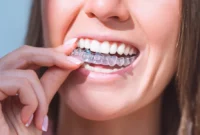
The trajectory of digital orthodontics has historically been defined by the separation of modalities. In the early 2000s, the introduction of clear aligners created a digital-first segment that operated almost entirely independently of the traditional bracket-and-wire market. For roughly two decades, the industry operated under the assumption that a practice had to choose between being a “digital aligner practice” or a “traditional bracket practice.”
However, the late 2010s saw the beginning of a convergence. As intraoral scanning became a standard of care, the data generated from these scans began to bridge the gap between treatment types. Ormco’s current strategy marks the next stage in this timeline: the institutionalization of the hybrid practice. By digitizing the fixed appliance workflow through advancements like Ormco Digital Bonding, the company is effectively retrofitting legacy mechanics with modern software capabilities. This movement represents a departure from the “disruptive” model of the past decade, moving instead toward an “integrative” model that prioritizes existing clinical expertise while leveraging digital efficiency.
Supporting Data and Operational Realities
The necessity for this shift is supported by mounting data regarding practice efficiency. Studies from the American Association of Orthodontists (AAO) indicate that clinical chair time remains the most significant overhead expense for a practice. According to recent market analysis, practices that utilize indirect bonding and digital treatment planning can reduce chair time by an average of 25% to 30% per patient, compared to traditional direct bonding techniques.
Furthermore, labor shortages have forced orthodontists to reconsider their delegation strategies. Data suggests that in practices with high digital adoption, clinical assistants can handle a larger portion of the bonding and adjustment process under the doctor’s supervision. By providing a platform that streamlines the transfer of data from a digital scan to a precise clinical execution, Ormco’s tools serve as a force multiplier for staff. When a practice can reduce the time required for a standard bonding appointment from 60 minutes to 40 minutes, the downstream impact on patient capacity is substantial, potentially allowing a practice to increase its daily volume by 15% without adding additional personnel.
The Strategic Pivot: Beyond the Aligner-Only Narrative
The primary friction point in the orthodontic market has been the “aligners vs. brackets” narrative. For years, major market players focused their R&D budgets almost exclusively on clear aligner technology, leaving the fixed appliance segment to remain largely analog. Acurio argues that this was a strategic oversight. With fixed appliances still accounting for a majority of orthodontic cases worldwide, the refusal to modernize this segment created a massive, untapped opportunity for operational improvement.

Ormco’s strategy involves the integration of its flagship brands—Spark Aligners, Damon Ultima brackets, and AOA Lab appliances—into a single interface. This allows a clinician to start a case with a digital plan that can transition between modalities seamlessly. For example, a complex malocclusion might require a phase of fixed appliance therapy to correct severe rotations, followed by a transition to clear aligners for finishing. In the past, this would have required the practitioner to manage two distinct software environments, duplicate patient records, and navigate different communication protocols with the lab. Now, the goal is to provide a single digital thread that follows the patient from the initial diagnostic scan to the final retainer delivery.
Official Perspectives and Industry Reactions
During the most recent AAO Annual Session, the reception to these technological shifts was notably proactive. Clinicians who have spent their careers refining their skills with fixed appliances expressed a strong desire for digital tools that don’t force them to change their core biomechanical philosophy. The introduction of the EtchFree bonding process is a prime example of this: by removing the steps of acid-etching, rinsing, and drying—steps that are notoriously difficult to standardize in a high-volume clinical environment—the company is addressing a common point of frustration for both the doctor and the patient.
Industry analysts suggest that this strategy is a pragmatic response to the “clinical inertia” that often prevents practitioners from adopting new technologies. By meeting doctors where they are—using the same trusted hardware while automating the auxiliary tasks—Envista is reducing the perceived risk of digital migration. The feedback from the field indicates that this approach is resonating, particularly with established, mid-to-large-sized practices that cannot afford the downtime associated with a complete overhaul of their clinical workflow.
Broader Impact and Future Implications
The long-term implications of this digital integration are significant. As orthodontics becomes increasingly data-driven, the ability to collect, analyze, and apply clinical outcomes across both fixed and removable modalities will become a competitive advantage. If a company can provide data-backed insights on which treatments are more predictable for specific malocclusions, the entire standard of care will shift toward evidence-based, software-supported decision-making.
Furthermore, the expansion of digital bonding to established bracket lines—such as Mini Diamond and Orthos—signals that the era of the “manual-only” bracket is coming to an end. This is not just a trend; it is a fundamental shift in the economics of the specialty. As practices continue to consolidate into group practices and DSOs (Dental Support Organizations), the demand for standardized, scalable, and digital workflows will only intensify.
Acurio’s vision for the future is clear: orthodontics will move away from being a collection of disparate tools and toward a unified, connected patient journey. By investing nearly half of its R&D budget into the software layer, Envista is placing a massive bet that the value in the coming decade will be found not in the metal of the bracket itself, but in the intelligence of the system that manages it.
As the industry looks toward the next five years, the success of this strategy will likely be measured by the ability of practitioners to maintain their clinical autonomy while shedding the operational bottlenecks of the past. The “all-in-one” platform approach is not just a product roadmap; it is a survival strategy for the modern orthodontist, ensuring that as the market changes, the clinical foundation remains stable, efficient, and, most importantly, centered on the patient.