
Stuffed Peppers Recipes With Up To 43 Grams Of Protein
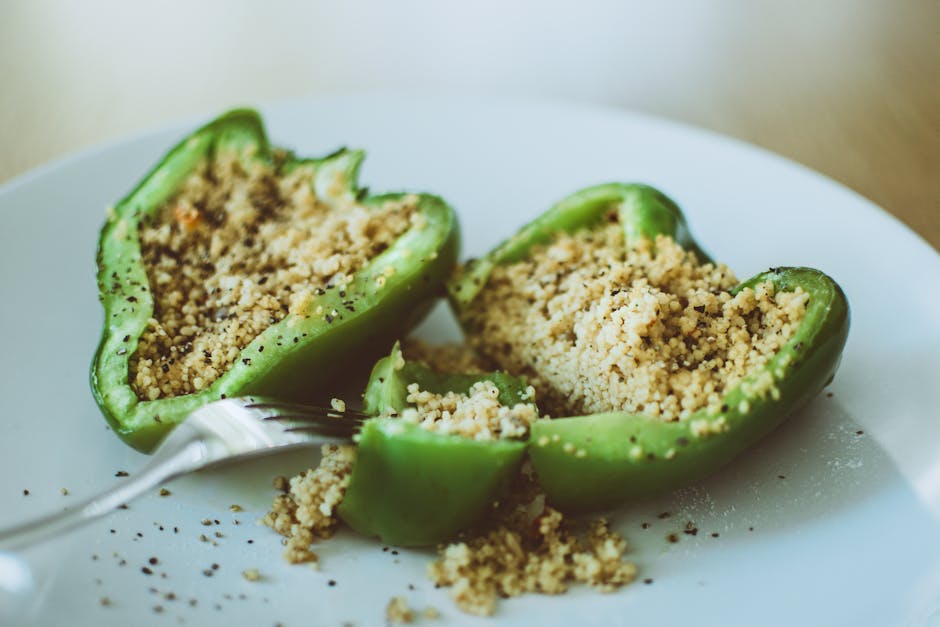
High-Protein Stuffed Peppers: Delicious Recipes for Muscle Building and Satiety
Stuffed peppers are a versatile and satisfying dish, offering a healthy and flavorful way to incorporate vegetables and lean protein into your diet. This article focuses on recipes specifically designed to deliver a substantial protein punch, with many options reaching or exceeding 43 grams of protein per serving, making them ideal for athletes, bodybuilders, or anyone seeking to boost their daily protein intake for muscle repair, satiety, and overall well-being. We’ll explore various filling combinations, highlighting key protein sources and offering tips for maximizing flavor and nutritional value.
The foundational element of any high-protein stuffed pepper recipe is the filling. The most straightforward and protein-dense approach involves lean ground meats. Ground turkey, lean ground beef (90% lean or higher), and ground chicken are excellent choices. For a plant-based protein boost, consider incorporating lentils, quinoa, black beans, or crumbled tofu. Combining these protein sources can create a more complex flavor profile and a richer nutritional tapestry. For instance, a blend of ground turkey and black beans offers both animal and plant-based protein, along with fiber. Lentils, particularly red or green lentils, cook down beautifully and absorb flavors, making them a fantastic meat substitute or addition. Quinoa, a complete protein, adds a satisfying texture and essential amino acids.
When constructing your protein-packed filling, consider the ratio of protein to other ingredients. While vegetables are crucial for vitamins, minerals, and fiber, an overwhelming proportion of non-protein ingredients can dilute the overall protein content. Aim for at least 50-60% of the filling by weight to be your primary protein source. For example, if you’re using one pound of ground turkey for four large bell peppers, this forms the base of your protein. Adding half a cup of cooked quinoa and a can of drained black beans to that pound of turkey will further enhance the protein count.
Flavor is paramount, even in a health-focused dish. The sweetness of bell peppers, especially red, orange, and yellow varieties, pairs wonderfully with savory fillings. The cooking method also plays a significant role. Baking stuffed peppers allows the flavors to meld and the peppers to soften without becoming mushy. The addition of aromatics like onions, garlic, and herbs is non-negotiable. Diced onions and minced garlic sautéed until fragrant before being mixed into the filling form a flavor base that elevates the entire dish. Fresh herbs like parsley, cilantro, or oregano, as well as dried herbs like basil, thyme, or Italian seasoning, add complexity and brightness.
For a truly protein-centric experience, let’s delve into specific recipe frameworks.
Lean Ground Turkey & Quinoa Stuffed Peppers: This recipe is a powerhouse of lean protein. Start with 1.5 pounds of lean ground turkey (93% or 99% lean). Sauté one medium diced onion and 3-4 cloves of minced garlic in a tablespoon of olive oil until softened. Add the ground turkey and cook until browned, breaking it up with a spoon. Drain any excess fat. Stir in 1 cup of cooked quinoa. For liquid and flavor, add 1 (15-ounce) can of diced tomatoes (undrained), 1/4 cup of low-sodium chicken or vegetable broth, and seasonings. Essential seasonings include 1 teaspoon of smoked paprika, 1 teaspoon of cumin, 1/2 teaspoon of onion powder, 1/2 teaspoon of garlic powder, salt, and black pepper to taste. You can also add a pinch of cayenne pepper for a subtle kick. Mix well.
Prepare four large bell peppers (any color, but red and yellow tend to be sweeter) by cutting off the tops, scooping out the seeds and membranes, and blanching them in boiling water for 3-5 minutes. This step helps them soften and cook more evenly. Alternatively, you can roast them briefly before stuffing. Spoon the turkey and quinoa mixture generously into each pepper. Place the stuffed peppers in a baking dish. Pour an additional 1/2 cup of broth or tomato sauce into the bottom of the dish to create steam and prevent sticking. Cover the dish tightly with aluminum foil and bake at 375°F (190°C) for 35-45 minutes, or until the peppers are tender and the filling is heated through. For an optional protein and flavor boost, sprinkle with 1/4 cup of shredded cheese (like Monterey Jack or a cheddar blend) during the last 10 minutes of baking.
Protein Calculation (Estimated per serving of 1 pepper):
- 1.5 lbs lean ground turkey (approx. 110g protein total)
- 1 cup cooked quinoa (approx. 8g protein)
- Total filling protein for 4 peppers: ~118g. Per pepper: ~29.5g.
- Adding 1/4 cup cheese (approx. 7g protein): ~36.5g protein.
- To reach over 43g, you could increase the turkey to 2lbs, or add another protein source like 1/2 cup of cottage cheese or Greek yogurt mixed into the filling. 2lbs turkey (~147g protein) + quinoa (~8g) + cheese (~7g) = ~162g total, ~40.5g per pepper. Adding 1/2 cup low-fat cottage cheese (~14g protein) brings it to ~176g total, ~44g per pepper.
Lean Ground Beef & Lentil Stuffed Peppers: This recipe offers a hearty and satisfying protein profile with the richness of beef and the fiber-rich goodness of lentils. Use 1.25 pounds of lean ground beef (90% or 93% lean). Sauté one large diced onion and 3-4 cloves of minced garlic in a tablespoon of olive oil. Add the ground beef and cook until browned, draining excess fat. Stir in 1 cup of cooked green or brown lentils. For moisture and flavor, incorporate 1 (15-ounce) can of tomato sauce, 1/4 cup of beef broth (low-sodium), and a tablespoon of Worcestershire sauce (optional, but adds umami). Season with 1 teaspoon of Italian seasoning, 1/2 teaspoon of dried basil, salt, and pepper to taste.
Prepare four large bell peppers as described previously. Stuff them generously with the beef and lentil mixture. Place in a baking dish with 1/2 cup of beef broth or tomato sauce at the bottom. Cover and bake at 375°F (190°C) for 40-50 minutes, or until peppers are tender. Again, you can add shredded cheese in the final minutes of baking.
Protein Calculation (Estimated per serving of 1 pepper):
- 1.25 lbs lean ground beef (approx. 90g protein total)
- 1 cup cooked lentils (approx. 18g protein)
- Total filling protein for 4 peppers: ~108g. Per pepper: ~27g.
- Adding 1/4 cup cheese (approx. 7g protein): ~34g protein.
- To increase protein, consider using 1.5 lbs of beef (approx. 108g protein) and 1 cup of lentils (~18g) = ~126g total, ~31.5g per pepper. Adding 1/2 cup of 2% cottage cheese (~14g) brings it to ~140g total, ~35g per pepper. For higher protein, you could incorporate 1/4 cup of nutritional yeast, though its protein contribution is modest. A more significant boost comes from increasing the beef to 1.75 lbs (~122g protein) + lentils (~18g) + cheese (~7g) = ~147g total, ~36.75g per pepper. To truly hit 43g+, consider a blend: 1 lb lean ground beef (~72g) + 1 cup cooked lentils (~18g) + 1/2 cup cooked chicken breast, finely diced or shredded (~25g) = ~115g total for the filling. Divided by 4 peppers = ~28.75g. Adding 1/2 cup low-fat cottage cheese (~14g) would bring it to ~42.75g.
Chicken Breast & Black Bean Stuffed Peppers (Southwestern Style): This recipe offers a lighter protein option with a vibrant flavor profile. Use 1.5 pounds of cooked chicken breast, shredded or finely diced. You can bake or poach the chicken yourself, or use rotisserie chicken for convenience. Combine the chicken with one (15-ounce) can of black beans (rinsed and drained), one cup of cooked corn kernels (fresh or frozen), and one cup of cooked brown rice or quinoa. For a Southwestern flair, sauté one diced red onion and 2-3 cloves of minced garlic in a tablespoon of olive oil. Stir in 1 teaspoon of chili powder, 1 teaspoon of cumin, 1/2 teaspoon of smoked paprika, and a pinch of cayenne pepper. Mix this spice blend into the chicken, beans, and rice mixture. Add 1/4 cup of salsa and 2 tablespoons of chopped fresh cilantro.
Prepare four large bell peppers. Stuff them with the chicken and black bean mixture. Place in a baking dish with 1/4 cup of salsa and 1/4 cup of chicken broth at the bottom. Cover and bake at 375°F (190°C) for 30-40 minutes, until peppers are tender and filling is hot. Garnish with additional cilantro and a dollop of plain Greek yogurt for extra protein and creaminess.
Protein Calculation (Estimated per serving of 1 pepper):
- 1.5 lbs cooked chicken breast (approx. 130g protein total)
- 1 (15-ounce) can black beans (approx. 20g protein)
- 1 cup cooked brown rice (approx. 5g protein)
- Total filling protein for 4 peppers: ~155g. Per pepper: ~38.75g.
- Adding 1/4 cup salsa (negligible protein) and 1/4 cup chicken broth (negligible protein).
- To reach over 43g, you could increase the chicken to 1.75 lbs (~151g protein) + black beans (~20g) + rice (~5g) = ~176g total, ~44g per pepper. Or, instead of rice, use 1 cup of cooked quinoa (~8g protein), bringing the total to ~158g, ~39.5g per pepper. Adding 2 tablespoons of plain Greek yogurt (approx. 3g protein) per serving would bring it even higher.
Plant-Based Powerhouse: Tofu, Lentil & Walnut Stuffed Peppers: For a completely plant-based approach, this recipe delivers significant protein and healthy fats. Start with 1 (14-ounce) block of extra-firm tofu, pressed and crumbled. In a bowl, combine the crumbled tofu with 1 cup of cooked brown or green lentils and 1/2 cup of finely chopped walnuts. Sauté one medium diced onion and 3-4 cloves of minced garlic in 1 tablespoon of olive oil. Stir in 1 teaspoon of nutritional yeast, 1 teaspoon of dried thyme, 1/2 teaspoon of smoked paprika, salt, and pepper to taste. Add a 1/4 cup of vegetable broth and 2 tablespoons of tomato paste to bind. Mix this into the tofu, lentil, and walnut mixture. You can also add 1/4 cup of chopped sun-dried tomatoes for extra flavor.
Prepare four large bell peppers. Stuff them generously. Place in a baking dish with 1/2 cup of vegetable broth. Cover and bake at 375°F (190°C) for 40-50 minutes, until peppers are tender.
Protein Calculation (Estimated per serving of 1 pepper):
- 1 (14-ounce) block extra-firm tofu (approx. 32g protein)
- 1 cup cooked lentils (approx. 18g protein)
- 1/2 cup chopped walnuts (approx. 7g protein)
- Nutritional yeast (approx. 2g protein)
- Total filling protein for 4 peppers: ~59g. Per pepper: ~14.75g.
- This plant-based option requires more substantial additions to reach 43g protein per serving. To significantly boost, consider: 2 blocks of extra-firm tofu (~64g protein) + 1.5 cups cooked lentils (~27g protein) + 1 cup chopped walnuts (~14g protein) + 1/4 cup hemp seeds (~10g protein) = ~115g total, ~28.75g per pepper. For even higher protein, incorporate 1 cup of cooked edamame (~17g protein) and 1/2 cup of cooked quinoa (~4g protein) into the filling. This would bring the total to ~136g, ~34g per pepper. To truly hit 43g+, a very high ratio of protein-dense ingredients is needed. For example: 2 blocks tofu (~64g) + 1.5 cups lentils (~27g) + 1 cup cooked edamame (~17g) + 1/2 cup hemp seeds (~10g) = ~118g. Divided by 4 peppers = ~29.5g. To reach 43g per pepper, the total filling would need to be ~172g protein. This would require significantly larger portions of each protein source or additional high-protein plant ingredients like seitan.
Tips for Maximizing Protein and Flavor:
- Greek Yogurt/Cottage Cheese: Stirring in plain Greek yogurt or low-fat cottage cheese into meat or plant-based fillings can significantly increase protein content without drastically altering flavor or texture, especially with the tang of Greek yogurt complementing savory dishes.
- Cheese Varieties: While some cheeses add protein, opt for those with higher protein-to-fat ratios when possible. Parmesan and aged cheddars offer more protein than softer cheeses.
- Egg Binder: In some recipes, especially those with ground meats, a whisked egg can act as a binder and contribute a small amount of protein.
- Herbs and Spices: Don’t underestimate the power of a well-seasoned filling. Experiment with different spice blends, dried herbs, and fresh garnishes to enhance flavor without adding empty calories.
- Broth and Tomato Products: Using broth or tomato sauce as the liquid base adds moisture and flavor while contributing minimal protein. Low-sodium options are recommended.
- Vegetable Selection: While the focus is protein, the bell peppers themselves contribute vitamins and fiber. Red, orange, and yellow peppers are sweeter and often preferred for stuffing.
- Portion Control: Be mindful of portion sizes. The protein content is calculated per pepper, so adjust serving sizes as needed.
- Make Ahead: Stuffed peppers can often be assembled ahead of time and baked when ready to serve, making them a convenient option for meal prepping.
By focusing on lean protein sources and strategic ingredient combinations, stuffed peppers can transform into a remarkably protein-rich and satisfying meal. These recipes provide a foundation for building muscle, promoting satiety, and enjoying a delicious and healthy dish. Experiment with these ideas and adjust seasonings to your personal preferences for a truly tailored high-protein experience.
