
Why A Food Scale Is Your Weight Loss Secret Weapon
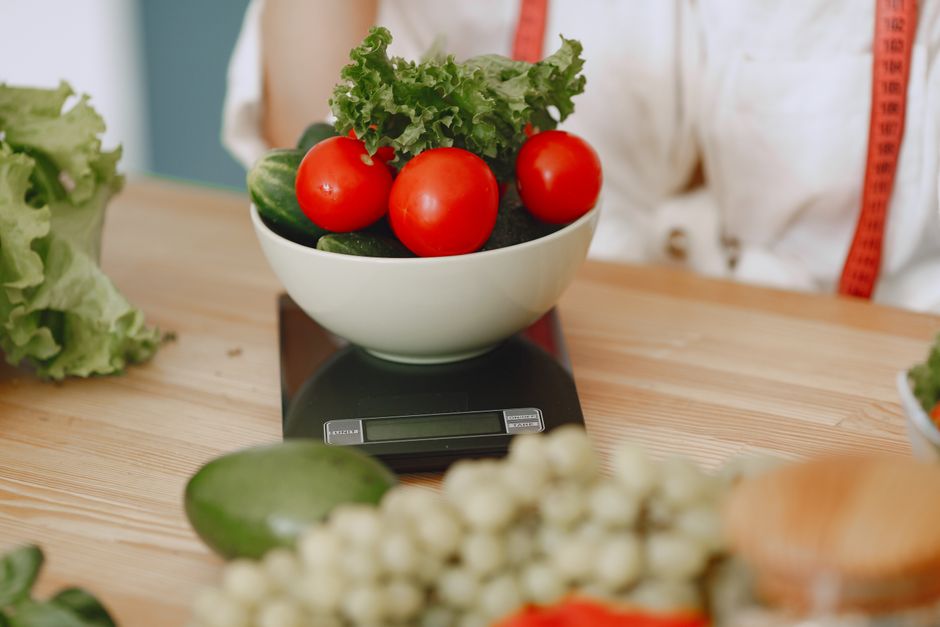
Unlock Your Weight Loss Potential: Why a Food Scale is Your Undeniable Secret Weapon
The pursuit of weight loss often involves intricate meal plans, rigorous exercise routines, and a constant battle against cravings. Yet, a simple, unassuming tool – the food scale – often gets overlooked. This unassuming device, however, possesses the power to revolutionize your weight loss journey by providing an unparalleled level of accuracy and insight that is crucial for achieving sustainable results. Ignoring its capabilities is akin to navigating a minefield blindfolded; you might get lucky, but the risks of miscalculation and subsequent failure are significantly amplified. The core of effective weight loss hinges on understanding and controlling energy balance, a concept measured in calories. Without precise measurement of food intake, this balance remains an elusive target. A food scale transforms this abstract concept into a tangible, manageable reality, offering a quantifiable foundation upon which to build your weight loss strategy.
The most fundamental reason for the food scale’s efficacy in weight loss lies in its ability to eliminate guesswork. Portion distortion is a pervasive problem in modern diets. What we perceive as a standard serving size is frequently far larger than recommended, especially when dining out or relying on pre-packaged foods where serving sizes are often deceptively small. For instance, a "serving" of nuts might be listed as 1 ounce, which translates to a mere handful. Without a scale, it’s incredibly easy to consume double or even triple that amount, adding hundreds of surplus calories without realizing it. Similarly, a "cup" of cooked pasta can vary significantly in weight depending on its shape and how tightly it’s packed. A food scale provides an objective, consistent measure, allowing you to accurately track the precise amount of food you are consuming. This precision is not about obsessive micromanagement; it’s about establishing a baseline of accurate data. Without this data, your efforts are based on estimations, which are notoriously unreliable when it comes to calorie intake.
Understanding calorie density is another area where a food scale proves indispensable. Different foods, even those that appear similar in volume, have vastly different calorie counts. For example, 100 grams of chicken breast, a lean protein source, contains approximately 165 calories. The same 100 grams of avocado, a healthy fat, contains around 160 calories. While close in this instance, consider 100 grams of almonds, which can pack upwards of 579 calories. This significant difference underscores why simply eyeballing quantities can lead to massive calorie discrepancies. A food scale allows you to directly compare the caloric impact of various foods on a gram-for-gram basis. This knowledge empowers you to make informed food choices, opting for lower-calorie, nutrient-dense options when you need to manage your intake more strictly, or understanding the caloric cost of denser foods. It shifts the focus from perceived "good" or "bad" foods to a more scientific understanding of their energetic contribution to your daily total.
Beyond simple calorie counting, a food scale facilitates accurate macronutrient tracking, a critical component for many weight loss diets, including ketogenic, low-carb, and high-protein approaches. Proteins, carbohydrates, and fats all contribute different amounts of calories per gram (4 calories per gram for protein and carbohydrates, 9 calories per gram for fat). To effectively adhere to specific macronutrient ratios, precise measurement of each food item is paramount. For example, if you are aiming for a high-protein diet, simply estimating your protein intake from lean meats and fish will likely fall short of your target, leading to suboptimal results. A food scale allows you to weigh your protein sources accurately, ensuring you are consistently meeting your protein goals, which is crucial for satiety, muscle preservation, and metabolic function during weight loss. The same applies to tracking carbohydrate and fat intake, especially for individuals managing conditions like diabetes or seeking to enter ketosis.
The psychological impact of using a food scale should not be underestimated. It fosters a sense of control and accountability. When you are actively weighing your food, you become more mindful of your consumption habits. This heightened awareness can act as a powerful deterrent against mindless snacking or overeating. The act of weighing itself creates a mental pause, prompting you to consider whether you truly need that extra portion or snack. This deliberate process can help break ingrained habits and encourage more intentional eating. Furthermore, seeing the actual weight of your food can be eye-opening, often revealing that you’ve been consuming more than you intended. This realization, while potentially sobering, is the first step towards making necessary adjustments. It demystifies the eating process, transforming it from an intuitive, often erroneous, activity into a deliberate and data-driven one.
Consistency is the cornerstone of successful weight loss, and a food scale is a powerful tool for achieving it. When you consistently track your food intake with accuracy, you establish a reliable baseline. This baseline allows you to identify patterns and understand how specific food choices or portion sizes impact your weight. If your weight loss plateaus, you can revisit your food logs, weigh your typical meals again, and identify potential areas where calorie creep might be occurring. This data-driven approach makes troubleshooting far more effective than simply guessing what might be going wrong. It enables a systematic analysis of your dietary habits, allowing for targeted adjustments rather than broad, often ineffective, changes.
Furthermore, a food scale is essential for accurately calculating your Basal Metabolic Rate (BMR) and Total Daily Energy Expenditure (TDEE) for more precise calorie target setting. While online calculators provide estimations, these estimations are significantly more accurate when you have precise data on your current food intake. By accurately tracking your food consumption for a week and observing your weight changes, you can refine your understanding of your individual metabolism. This refined understanding allows for the creation of a more personalized and effective calorie deficit, which is the fundamental driver of weight loss. Without accurate food intake data, any calorie target is merely a well-intentioned guess.
The portability and affordability of food scales make them an accessible tool for almost everyone. Digital food scales are widely available, often costing less than a single meal at a restaurant. They are compact and can easily be carried to work, packed for travel, or kept in your kitchen. This accessibility removes a significant barrier to adopting this crucial weight loss practice. The initial investment is minimal, but the potential return in terms of successful and sustainable weight loss is immense. Comparing the cost of a food scale to the potential costs associated with various fad diets or weight loss programs, it becomes clear that this is one of the most cost-effective strategies available.
Learning to read food labels accurately is also enhanced by using a food scale. Food labels often list nutritional information per serving, but the actual weight of that serving is not always clearly indicated or may be different from what you are accustomed to. For example, a label might state "per 100g" or "per 1/2 cup," but if you’re using a cup measure, you might not be getting exactly 100g. A food scale allows you to verify these measurements and ensure you are truly consuming the amount specified on the label. This skill is particularly important for processed foods, where serving sizes can be small and calorie counts can add up quickly if the labeled serving is consistently exceeded.
For individuals managing specific dietary restrictions or medical conditions, such as celiac disease, diabetes, or kidney disease, a food scale is not just a weight loss tool but a necessity for health management. Accurate measurement of ingredients is crucial for controlling nutrient intake, managing blood sugar levels, and preventing adverse reactions. For example, individuals with kidney disease need to carefully monitor their intake of potassium and phosphorus, and a food scale allows for precise measurement of foods rich in these minerals. Similarly, precise carbohydrate counting for diabetics relies heavily on accurate weighing of carbohydrate-containing foods.
The convenience of modern life often leads to reliance on convenience foods and eating out, both of which present challenges for accurate portion control. Restaurant portions are notoriously large, and pre-portioned packaged foods can still be misleading. A food scale empowers you to bring accountability to these situations. When you’re at a restaurant, you can discreetly use a portable scale to measure a portion of your meal before eating, allowing you to control your intake. When at home with packaged foods, you can weigh out your designated serving to ensure accuracy, even if the packaging suggests a different amount. This adaptability makes the food scale a practical tool for a wide range of eating scenarios.
Ultimately, the food scale transforms weight loss from a subjective, often frustrating, endeavor into an objective, science-based process. It provides the data you need to understand your body’s energy balance, make informed food choices, and track your progress with unparalleled accuracy. By embracing the humble food scale, you are not merely weighing your food; you are weighing your options, your habits, and ultimately, your success. It is a fundamental tool that demystifies the complexities of nutrition and empowers individuals with the knowledge and control necessary to achieve sustainable and lasting weight loss results. Its impact extends far beyond the number on the scale, fostering a healthier relationship with food and a deeper understanding of your body’s nutritional needs.
