
4 Must Try Bodyweight Exercises Build Strength
Master Your Body: 4 Essential Bodyweight Exercises for Unstoppable Strength
Bodyweight training offers a potent, accessible, and highly effective pathway to building significant strength and muscularity without the need for external weights or gym memberships. The human body, a marvel of biomechanical engineering, provides a versatile toolkit for resistance, forcing muscles to adapt, grow, and become more resilient. This article will detail four fundamental bodyweight exercises that form the cornerstone of any effective calisthenics program. These movements, when performed with proper technique and progressive overload, can deliver transformative results, enhancing not just physical strength but also functional movement patterns crucial for everyday life. Mastering these foundational exercises will equip individuals with the tools to continuously challenge their bodies and unlock new levels of physical prowess.
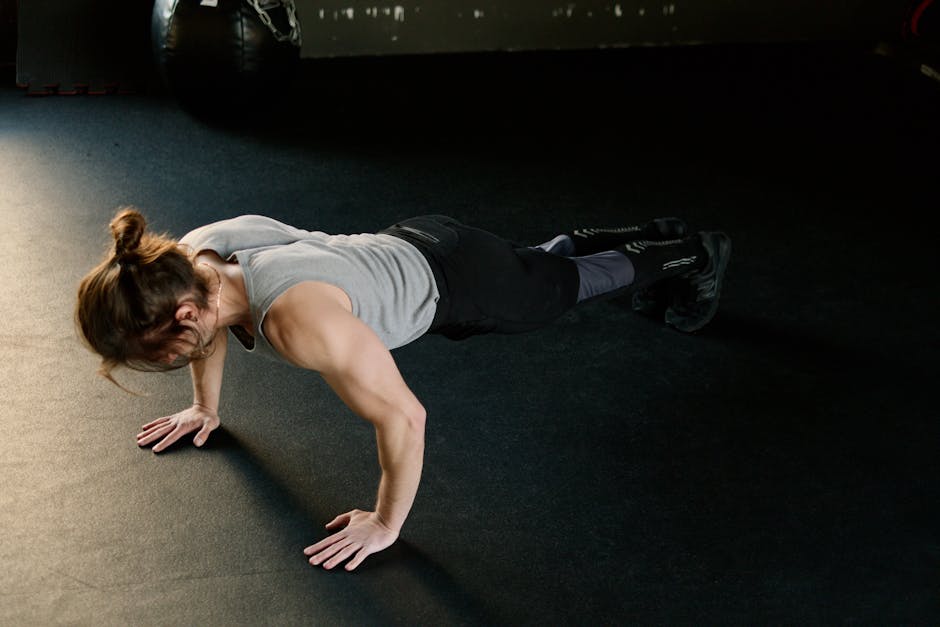
The Push-Up stands as a universally recognized and incredibly versatile exercise for developing upper body pushing strength. Its effectiveness stems from its ability to target a wide array of muscle groups simultaneously, including the pectorals (chest), anterior deltoids (front shoulders), and triceps. The core muscles – abdominals and obliques – also play a crucial stabilizing role, ensuring proper form and preventing the back from arching. To perform a standard push-up, begin in a plank position with hands positioned slightly wider than shoulder-width apart, fingers pointing forward. The body should form a straight line from head to heels, with the core engaged and glutes squeezed. Lower the chest towards the floor by bending the elbows, keeping them tucked slightly towards the body (around 45 degrees) rather than flaring out wide. The chest should aim to make contact with the floor, or come as close as possible while maintaining form. Exhale as you push back up to the starting position, fully extending the arms. The key to maximizing strength gains from push-ups lies in proper execution and progressive overload. Beginners can start with knee push-ups, focusing on form and gradually progressing to full push-ups as strength increases. Variations are abundant and cater to different strength levels and specific muscle emphasis. Incline push-ups (hands elevated on a raised surface) make the exercise easier, while decline push-ups (feet elevated) increase the difficulty and target the upper chest and shoulders more intensely. Diamond push-ups (hands together, forming a diamond shape) heavily emphasize the triceps. For advanced practitioners, plyometric push-ups, such as clap push-ups or explosive push-ups where the hands leave the ground, can build power and explosivity. Consistency is paramount; aiming for multiple sets and repetitions throughout the week will yield consistent strength development. Tracking progress by increasing the number of repetitions, sets, or difficulty of variations will ensure continued adaptation and muscle growth. The push-up’s accessibility and adaptability make it an indispensable exercise for building upper body pushing strength for individuals of all fitness levels.
The Squat is the undisputed king of lower body exercises, engaging the quadriceps, hamstrings, glutes, and calves with unparalleled effectiveness. Beyond building brute lower body strength, the squat also profoundly impacts core stability and hip mobility. To execute a proper bodyweight squat, stand with feet shoulder-width apart, toes pointing slightly outwards. Keep the chest up, shoulders back, and engage the core. Imagine sitting back into a chair, initiating the movement by hinging at the hips and bending the knees simultaneously. The back should remain straight throughout the movement, avoiding any rounding. The goal is to lower the hips until they are parallel to the knees, or ideally, below parallel (a deep squat). Ensure that the knees track over the toes and do not collapse inward. The weight should be distributed evenly across the foot, with the heels remaining planted on the ground. To return to the starting position, drive through the heels, extending the hips and knees while keeping the chest elevated and core engaged. The benefits of mastering the bodyweight squat extend far beyond aesthetics. It strengthens the muscles that support the spine, improves posture, and enhances functional movements such as sitting, standing, and lifting. Progressive overload in squats can be achieved through various methods. Increasing the number of repetitions per set, performing more sets, or slowing down the eccentric (lowering) phase of the movement can all contribute to greater stimulus. Advanced variations include jump squats, which build explosive power, and pistol squats, a single-leg variation that demands exceptional strength, balance, and mobility. The pistol squat, in particular, is a testament to advanced bodyweight strength and coordination, requiring significant single-leg power and control. Regularly incorporating squats into a training regimen is crucial for developing balanced lower body strength, improving athletic performance, and promoting long-term physical health. The foundational nature of the squat makes it a non-negotiable exercise for anyone serious about building comprehensive lower body strength.
The Pull-Up is the benchmark exercise for upper body pulling strength, targeting the latissimus dorsi (lats), biceps, rhomboids, and traps. It is a compound movement that requires significant strength and control to execute properly, making it an excellent indicator of overall upper body power. To perform a pull-up, grasp a pull-up bar with an overhand grip (palms facing away from you), slightly wider than shoulder-width apart. Hang from the bar with arms fully extended, maintaining a slight bend in the elbows to avoid hyperextension. Engage the core and glutes to create a stable base and prevent swinging. Initiate the pull by engaging the back muscles, drawing the shoulder blades down and back. Pull the chest towards the bar, aiming to bring the chin over the top. Focus on feeling the contraction in the lats and upper back. Lower yourself back down to the starting position with controlled movement, extending the arms fully. The journey to achieving unassisted pull-ups often requires a progression of exercises. For individuals who cannot yet perform a full pull-up, assisted pull-ups using resistance bands or an assisted pull-up machine are invaluable. Negative pull-ups, where one jumps or is lifted to the top position and then slowly lowers themselves, are also highly effective for building the necessary strength. Inverted rows, performed with a lower bar or rings, are another excellent precursor, mimicking the pulling motion but at a reduced intensity. Once consistent unassisted pull-ups are achieved, variations can be introduced to increase the challenge and target different muscle fibers. Wide-grip pull-ups emphasize the lats more intensely, while close-grip or chin-ups (palms facing you) increase the involvement of the biceps. Weighted pull-ups, using a dip belt or weighted vest, are the ultimate progression for building maximal pulling strength. The pull-up is not just about aesthetics; it is fundamental for improving posture, developing a powerful upper back, and enhancing functional strength for activities such as climbing and carrying. Its demanding nature ensures significant muscular adaptation and a substantial increase in upper body pulling capacity.
The Plank provides unparalleled benefits for developing core strength and stability, which is foundational for nearly every other physical movement. A strong core acts as the body’s central power house, transferring force efficiently between the upper and lower body, preventing injuries, and improving posture. To perform a standard forearm plank, position yourself on the floor with your forearms resting on the ground, elbows directly beneath your shoulders, and hands clasped or flat on the floor. Extend your legs straight back, resting on the balls of your feet. The body should form a straight line from head to heels, with the core engaged and glutes squeezed. Avoid letting the hips sag towards the floor or rise too high. Imagine drawing the belly button towards the spine. The neck should remain in a neutral position, aligned with the rest of the spine, avoiding looking up or letting the head drop. Hold this position for as long as possible while maintaining proper form. The plank’s true strength lies in its isometric nature, teaching muscles to contract and hold without movement. This translates directly to improved stability during dynamic activities. Progressive overload for planks involves increasing the duration of the hold. Once you can comfortably hold a plank for several minutes, variations can be introduced to further challenge the core. Side planks, performed on one forearm, engage the obliques more intensely. Plank jacks, where the feet are spread and brought back together in a jumping motion, add a cardiovascular element and challenge dynamic core control. Plank with leg raises or arm raises can further test stability and balance. For individuals who find the standard plank too challenging, starting on the knees is a perfectly acceptable modification. The importance of a strong core cannot be overstated. It is essential for athletic performance, injury prevention, and maintaining good posture throughout life. The plank, in its simplicity, offers a direct and highly effective path to building this vital pillar of physical fitness.
