
1 Week Bodyweight Core Workout
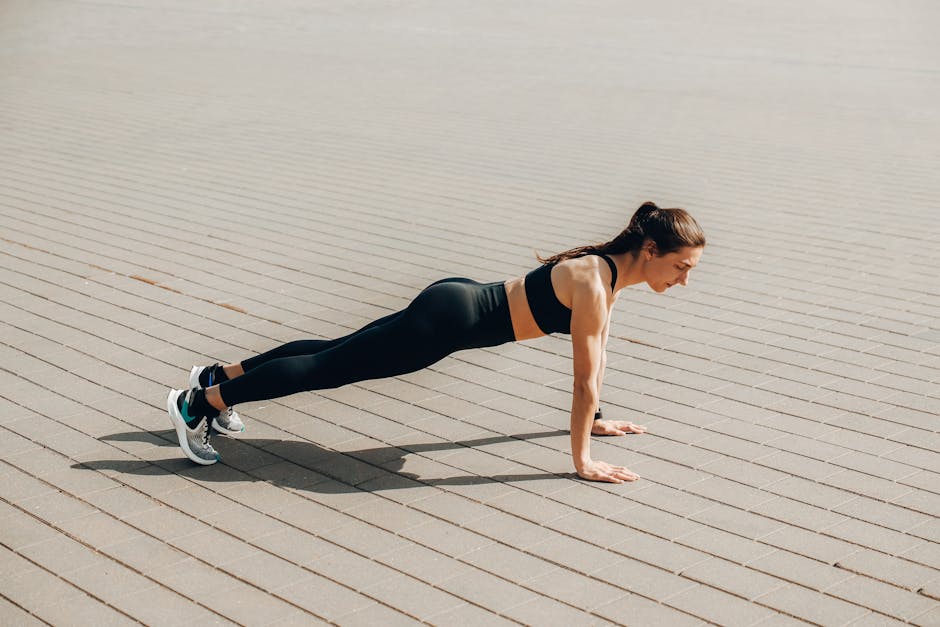
Unleash Your Core Strength: A 7-Day Bodyweight Workout Plan for Peak Performance
The core is the epicenter of human movement, a muscular powerhouse that stabilizes the spine, facilitates athletic performance, and is instrumental in preventing injury. A strong core transcends aesthetics; it is fundamental to functional fitness, enabling efficient transfer of power from the lower to the upper body and vice versa. This 7-day bodyweight core workout plan is meticulously designed to target all major core muscle groups – the rectus abdominis, obliques, transverse abdominis, and the erector spinae – with a progressive approach that builds strength, endurance, and control. No equipment is necessary, making this plan accessible to anyone, anywhere. Consistency is key to unlocking its full potential, transforming your midsection into a resilient and powerful engine. Each day focuses on a specific facet of core development, ensuring a holistic and comprehensive approach to building a robust core. This isn’t just about achieving a toned stomach; it’s about building a foundation for improved posture, reduced lower back pain, enhanced athletic capabilities, and a more resilient body overall.
Day 1: Foundation & Activation – Building the Base
This initial day focuses on activating and awakening the deep core muscles, particularly the transverse abdominis, which acts as an internal corset, providing crucial spinal stability. The exercises are fundamental and emphasize proper form and controlled breathing.
Exercise 1: Plank (3 sets, 30-60 seconds hold)
The plank is a cornerstone of core training. It engages the entire anterior core chain. To perform: position yourself face down, resting on your forearms and toes. Elbows should be directly beneath your shoulders, and your body should form a straight line from head to heels. Engage your glutes and squeeze your abdominal muscles, preventing your hips from sagging or rising too high. Focus on maintaining a neutral spine, avoiding any arching or rounding. Breathing should be deep and controlled through the nose and out through the mouth. The goal is to create isometric tension throughout the core. As you progress, aim to increase the duration of your holds. Consider variations like forearm planks, high planks (on hands), or side planks to increase the challenge and target different muscle fibers. The key is to maintain a rigid and stable torso. Avoid holding your breath; continuous, diaphragmatic breathing is essential for sustaining the hold and promoting oxygenation of the working muscles.
Exercise 2: Bird Dog (3 sets, 10-12 repetitions per side)
This exercise challenges core stability and proprioception while promoting spinal neutrality. Starting on all fours, with hands directly beneath shoulders and knees beneath hips, extend your right arm forward and your left leg backward simultaneously. Keep your core engaged, ensuring your hips remain level and your lower back doesn’t arch or round. Your extended arm and leg should form a straight line with your torso. Hold for a brief moment at the peak of the movement before slowly returning to the starting position. Alternate sides for each repetition. Focus on a slow, controlled tempo. The movement should originate from the core, not momentum. Imagine a glass of water on your lower back; you want to keep it from spilling. This exercise is excellent for developing coordination and balance, which are vital components of a functional core. It also effectively targets the erector spinae muscles along the spine.
Exercise 3: Dead Bug (3 sets, 10-12 repetitions per side)
The dead bug is another excellent exercise for developing core stability and anti-extension. Lie on your back with your knees bent at 90 degrees, shins parallel to the floor, and arms extended towards the ceiling. Engage your core and press your lower back gently into the floor. Slowly lower your right arm towards the floor behind your head while simultaneously extending your left leg forward, keeping it a few inches off the ground. Maintain a stable torso throughout the movement, ensuring your lower back doesn’t arch. Return to the starting position with control and repeat on the opposite side. The key is to isolate the limb movement while keeping the core braced. This exercise teaches you to resist the natural tendency of the spine to hyperextend. Focus on the feeling of your abdominal muscles working to stabilize your spine.
Day 2: Rectus Abdominis Focus – The Six-Pack Powerhouse
Today’s workout targets the rectus abdominis, the most superficial abdominal muscle responsible for flexion of the spine (the crunching motion). However, we will still maintain a strong emphasis on engaging the deeper core muscles for stability.
Exercise 1: Crunches (3 sets, 15-20 repetitions)
This is a classic for a reason. Lie on your back with your knees bent and feet flat on the floor. Place your hands lightly behind your head, or cross them over your chest. Engage your core and exhale as you lift your head and shoulders off the floor, curling your torso towards your knees. Focus on squeezing your abdominal muscles at the top of the movement. Avoid pulling on your neck; the movement should come from your abs. Inhale as you slowly lower back down to the starting position. The range of motion is small but potent. Think about shortening the distance between your rib cage and your pelvis. Proper form is crucial to avoid neck strain. The emphasis is on controlled contraction and release.
Exercise 2: Reverse Crunches (3 sets, 12-15 repetitions)
Reverse crunches target the lower portion of the rectus abdominis. Lie on your back with your knees bent at 90 degrees, shins parallel to the floor, and arms by your sides. Engage your core and lift your hips off the floor, bringing your knees towards your chest. The movement is initiated by your lower abs. Focus on a controlled lift and a deliberate squeeze at the top. Lower your hips back down slowly with control. Avoid using momentum to swing your legs. The emphasis is on drawing your knees towards your chest using your abdominal muscles. This exercise is effective for strengthening the lower abdominals.
Exercise 3: Leg Raises (3 sets, 15-20 repetitions)
Leg raises are highly effective for engaging the rectus abdominis, particularly the lower fibers, and also challenge the hip flexors. Lie on your back with your legs extended and together. Place your hands by your sides or under your lower back for support. Engage your core and slowly lift your legs towards the ceiling, keeping them as straight as possible. As your legs reach a vertical position, slowly lower them back down, stopping just before they touch the floor. Maintaining a slight bend in the knees can reduce strain on the lower back if needed. The key is to control the descent and prevent your lower back from arching. Imagine keeping your navel drawn towards your spine.
Day 3: Oblique Power – Twisting and Turning Strength
The obliques, located on the sides of your abdomen, are crucial for rotational movements and lateral flexion. This day focuses on building their strength and endurance.
Exercise 1: Russian Twists (3 sets, 15-20 repetitions per side)
Russian twists engage the external and internal obliques. Sit on the floor with your knees bent and feet flat. Lean back slightly, maintaining a straight back, and lift your feet a few inches off the ground (optional, for increased difficulty). Clasp your hands together in front of your chest. Twist your torso to the right, bringing your hands towards the floor beside your hip. Then, twist to the left, completing one repetition. Focus on a controlled rotation originating from your torso, not just your arms. Imagine your chest is leading the movement. Keep your core engaged throughout. This exercise directly targets rotational strength.
Exercise 2: Side Plank (3 sets, 30-45 seconds hold per side)
The side plank is an excellent isometric exercise for the obliques and quadratus lumborum. Lie on your side, supporting your body on your forearm, with your elbow directly beneath your shoulder. Stack your feet one on top of the other. Engage your obliques and lift your hips off the floor, creating a straight line from head to heels. Your body should form a rigid plank on its side. Hold the position, focusing on maintaining tension in your obliques and preventing your hips from dropping. Breathe deeply and evenly. This exercise is fantastic for developing lateral core stability.
Exercise 3: Bicycle Crunches (3 sets, 15-20 repetitions per side)
Bicycle crunches are a dynamic exercise that powerfully targets the obliques. Lie on your back with your knees bent and hands lightly behind your head. Bring your right elbow towards your left knee, simultaneously extending your right leg straight. Then, switch sides, bringing your left elbow towards your right knee while extending your left leg. Continue alternating in a pedaling motion. Focus on a controlled and deliberate movement, aiming to bring your elbow to your opposite knee. The core should be engaged to facilitate the twist and stabilization. This exercise mimics a natural movement pattern while challenging the obliques.
Day 4: Endurance & Stability – Holding Strong
Today is about building muscular endurance within the core and reinforcing stability through longer holds and functional movements.
Exercise 1: Extended Plank (3 sets, 45-75 seconds hold)
Build upon the basic plank from Day 1. Increase the duration of your holds. Focus on maintaining perfect form throughout the extended period. If your form falters, it’s better to shorten the hold than to sacrifice integrity. This develops mental toughness and increases the time your core muscles are under tension, leading to improved endurance. Deep, diaphragmatic breathing is crucial here to sustain the hold. Imagine your core as a solid, unwavering shield.
Exercise 2: Hollow Hold (3 sets, 30-60 seconds hold)
The hollow hold is a challenging isometric exercise that engages the entire anterior core. Lie on your back with your legs extended and arms extended overhead. Engage your core and lift your arms, head, and legs slightly off the floor, creating a "hollow" shape with your body. Your lower back should be pressed firmly into the floor. The goal is to maintain this position without your lower back arching. This exercise requires significant abdominal activation to counteract gravity. Focus on keeping your core tight and your breathing steady.
Exercise 3: Superman (3 sets, 12-15 repetitions)
The Superman exercise targets the erector spinae muscles, crucial for maintaining good posture and supporting the spine. Lie face down on the floor with your arms and legs extended. Engage your glutes and lower back muscles to lift your arms, chest, and legs off the floor simultaneously. Squeeze your back muscles at the peak of the movement. Hold for a second or two before slowly lowering back down with control. Avoid hyperextending your neck. The focus is on lifting with your back muscles. This exercise helps to balance the strength of the anterior core.
Day 5: Dynamic Core – Power & Control in Motion
This day introduces more dynamic movements that challenge the core to stabilize during flexion, extension, and rotation.
Exercise 1: Mountain Climbers (3 sets, 30-45 seconds)
Mountain climbers are a cardiovascular exercise that also strongly engages the core. Start in a high plank position. Bring your right knee towards your chest, then quickly switch, bringing your left knee towards your chest. Continue alternating in a running motion, keeping your hips relatively stable and your core engaged. Focus on maintaining a brisk pace while keeping your torso from rocking excessively. This exercise builds core endurance and power while also providing a cardiovascular challenge.
Exercise 2: V-Ups (3 sets, 10-12 repetitions)
V-ups are a powerful exercise that targets the entire rectus abdominis. Lie on your back with your legs extended and arms extended overhead. Engage your core and simultaneously lift your legs and torso towards each other, forming a "V" shape. Your hands should ideally touch your feet or shins. Lower back down with control. The movement should be fluid and controlled, emphasizing the contraction of your abdominal muscles.
Exercise 3: Plank Jacks (3 sets, 15-20 repetitions)
Plank jacks combine the stability of the plank with a dynamic jumping motion. Start in a high plank position. Keeping your core engaged and your upper body stable, jump your feet out wide, similar to a jumping jack. Then, jump your feet back together. The movement should be controlled, with your core doing the work to minimize hip sway. This exercise adds a plyometric element to core training, improving power and coordination.
Day 6: Active Recovery & Core Integration – Mind-Muscle Connection
Today is about active recovery, allowing muscles to repair while still engaging the core in functional, low-impact movements. This day emphasizes the mind-muscle connection.
Exercise 1: Cat-Cow (3 sets, 10-12 repetitions)
Cat-cow is a gentle yoga pose that mobilizes the spine and promotes awareness of core engagement. Start on all fours. Inhale as you drop your belly towards the floor, arching your back and lifting your head and tailbone (Cow pose). Exhale as you round your spine towards the ceiling, tucking your chin to your chest and drawing your navel towards your spine (Cat pose). This movement focuses on spinal articulation and breath coordination, crucial for optimal core function.
Exercise 2: Glute Bridges with Core Brace (3 sets, 15-20 repetitions)
Lie on your back with your knees bent and feet flat on the floor, hip-width apart. Engage your core, drawing your navel towards your spine. Lift your hips off the floor, squeezing your glutes at the top. Ensure your core remains braced and your lower back doesn’t hyperextend. Hold briefly before slowly lowering. This exercise strengthens the glutes and hamstrings while also reinforcing core engagement to support the lower back.
Exercise 3: Bird Dog (Slow and Controlled) (3 sets, 8-10 repetitions per side)
Perform the bird dog from Day 1, but with an even slower and more controlled tempo. Focus intently on the feeling of your core muscles stabilizing your torso as you extend your limbs. This deeper engagement fosters greater mind-muscle connection and reinforces the principles of core stability learned earlier in the week.
Day 7: Full Core Challenge – Putting it All Together
This final day is a comprehensive test of your core strength, endurance, and stability, combining elements from the previous days into a challenging circuit.
Circuit (Perform 3 rounds with minimal rest between exercises and 60-90 seconds rest between rounds):
- Plank: 60 seconds
- Bicycle Crunches: 20 repetitions per side
- Side Plank: 45 seconds per side
- V-Ups: 12 repetitions
- Russian Twists: 20 repetitions per side
- Superman: 15 repetitions
- Hollow Hold: 45 seconds
This circuit is designed to push your core to its limits, integrating all the skills and strength developed throughout the week. Focus on maintaining proper form even as fatigue sets in. Proper hydration and nutrition are essential to support your body’s recovery and performance throughout this demanding circuit. The culmination of this week’s effort will leave you with a noticeably stronger, more resilient, and more functional core, ready to tackle any physical challenge. The consistent progression and varied exercises ensure a well-rounded development of your core musculature.
