2 Week Power Walking Program to Build Fitness
2 Week Power Walking Program to Build Fitness sets the stage for this enthralling narrative, offering readers a glimpse into a story that is rich in detail and brimming with originality from the outset. This program is designed for beginners, providing a structured approach to incorporating power walking into your fitness routine.
You’ll learn the fundamentals of proper walking technique, gradually increase your distance and intensity, and discover the benefits of incorporating interval training.
This program isn’t just about physical fitness; it’s about building a sustainable habit that you can enjoy for years to come. We’ll explore the importance of nutrition, hydration, and strength training to maximize your results. Whether you’re looking to lose weight, improve your cardiovascular health, or simply feel more energized, this 2-week program is a fantastic starting point for your journey.
Incorporating Strength Training
Power walking is an excellent cardiovascular workout, but adding strength training to your routine can significantly enhance your fitness journey. Strength training helps build muscle mass, improves bone density, boosts metabolism, and enhances your overall strength and power. By incorporating strength training into your power walking program, you’ll create a well-rounded fitness plan that addresses both cardiovascular and muscular fitness.
Sample Strength Training Routine, 2 week power walking program to build fitness
A simple strength training routine can be performed 2-3 times per week, focusing on major muscle groups. Here’s a sample routine:
- Squats:Targets your quadriceps, hamstrings, and glutes. Stand with feet shoulder-width apart, lower your hips as if sitting in a chair, keeping your back straight and core engaged.
- Lunges:Works your quadriceps, hamstrings, and glutes. Step forward with one leg, bending both knees to 90 degrees, keeping your front knee behind your toes.
- Push-ups:Strengthens your chest, shoulders, and triceps. Start in a plank position, lower your chest towards the floor, and push back up.
- Plank:Engages your core muscles. Hold a plank position, maintaining a straight line from head to heels.
- Rows:Works your back and biceps. Use a resistance band or dumbbells, pull your elbows towards your sides, keeping your back straight.
Choosing Appropriate Weights and Repetitions
For beginners, it’s essential to start with lighter weights and gradually increase the weight as you get stronger.
Begin with a weight that allows you to perform 8-12 repetitions with good form.
As you get stronger, you can increase the weight by 2.5-5 pounds per session.
A 2-week power walking program can really boost your fitness, and you can make it even more effective by making some smart food choices. Check out this 10 healthy swaps save 300 calories infographic for some simple ideas that can help you stay on track.
These swaps are a great way to reduce your calorie intake without sacrificing flavor, and they’ll give you more energy to power through those walks!
Importance of Proper Form and Technique
Proper form and technique are crucial for safe and effective strength training.
A two-week power walking program can be a fantastic way to jumpstart your fitness journey. You’ll build endurance, tone your muscles, and feel a boost of energy. But as you ramp up your workouts, you might wonder if supplements can give you an extra edge.
Experts debate whether supplements are necessary , and the answer ultimately depends on your individual needs and goals. Regardless, remember to focus on a balanced diet and consistent exercise, and your two-week power walking program will be a success!
- Focus on controlled movements:Avoid jerking or using momentum.
- Maintain proper alignment:Keep your back straight, core engaged, and shoulders relaxed.
- Breathe deeply:Inhale as you lower the weight and exhale as you lift it.
- Listen to your body:If you experience any pain, stop immediately.
Measuring Progress and Setting Goals: 2 Week Power Walking Program To Build Fitness
Tracking your progress is essential for staying motivated and ensuring you’re making the most of your power walking program. By setting realistic goals and monitoring your performance, you can tailor the program to your needs and celebrate your achievements along the way.
A 2-week power walking program can be a fantastic way to boost your fitness, but it’s essential to fuel your body right. To maximize your energy levels and prevent fatigue, I highly recommend checking out an RD-approved approach to eating for fullness and satisfaction.
This will ensure you’re getting the nutrients you need to power through those walks and build a stronger, healthier you.
Tracking Progress
Monitoring your progress helps you understand how your body is responding to the exercise and allows you to adjust your workouts accordingly. There are several effective methods for tracking your progress:
- Distance:Note the distance you walk each session. Aim to gradually increase your distance over time. For example, if you start with 1 mile, you might aim for 1.25 miles the next session, then 1.5 miles, and so on.
- Time:Keep track of how long your walks take. As your fitness improves, you’ll be able to walk for longer periods without feeling overly fatigued.
- Heart Rate:Monitoring your heart rate during your walks provides valuable insights into your cardiovascular fitness. Use a heart rate monitor or fitness tracker to record your heart rate and ensure you’re staying within your target heart rate zone.
Setting Achievable Goals
Setting achievable goals is crucial for staying motivated and preventing discouragement. Here are some examples of achievable goals for beginners over a 2-week power walking program:
- Week 1:Aim to walk for 30 minutes, 3 days a week. Gradually increase your walking speed and distance as you feel more comfortable.
- Week 2:Increase your walking time to 45 minutes, 3 days a week. You can also try incorporating hills or inclines to challenge yourself further.
Adjusting the Program
Your power walking program should be tailored to your individual fitness level and goals.
- If you find the program too easy:Increase the duration or intensity of your walks. You can do this by walking for longer, adding more inclines, or increasing your walking speed.
- If you find the program too challenging:Reduce the duration or intensity of your walks. Take shorter walks or reduce the incline or walking speed.
Maintaining Motivation and Consistency
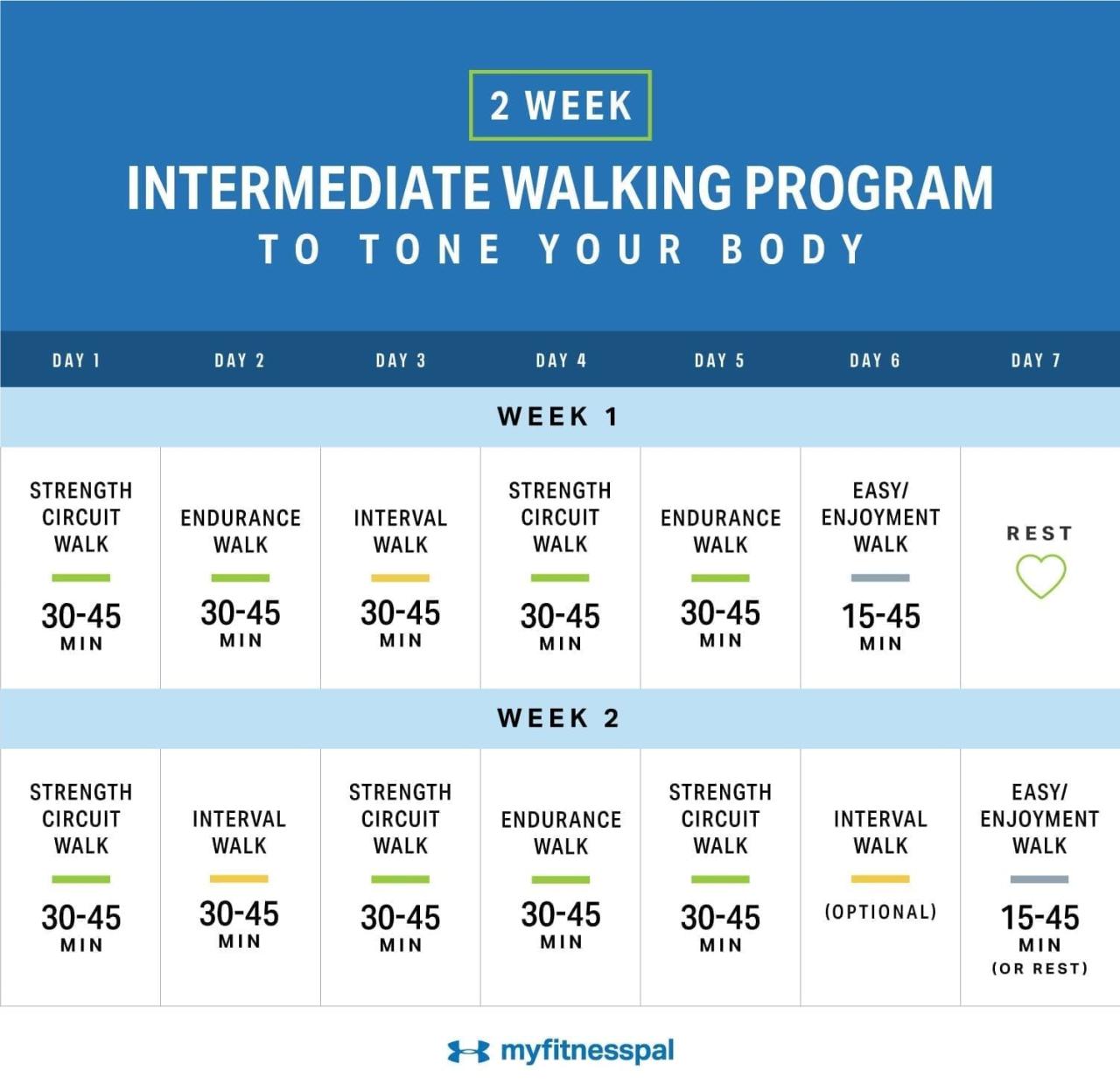
Staying motivated and consistent throughout a two-week power walking program is crucial for achieving your fitness goals. It’s natural to encounter challenges, but with the right strategies, you can overcome obstacles and maintain a positive mindset.
Setting Realistic Expectations
Setting realistic expectations is essential for long-term motivation. It’s important to recognize that progress takes time and consistency. Starting with a challenging but achievable goal, and gradually increasing the intensity and duration of your walks, can help prevent burnout and maintain your motivation.
For example, instead of aiming for a 5-mile walk every day, start with 20 minutes of power walking three times a week and gradually increase the distance and frequency as you feel more comfortable.
Outcome Summary
Ready to lace up your shoes and hit the pavement? This 2-week power walking program is your roadmap to a fitter, healthier you. Remember, consistency is key. Even small steps forward contribute to significant progress over time.
So, embrace the journey, celebrate your achievements, and enjoy the transformative power of walking!