
Plank Mistakes And How To Avoid Them
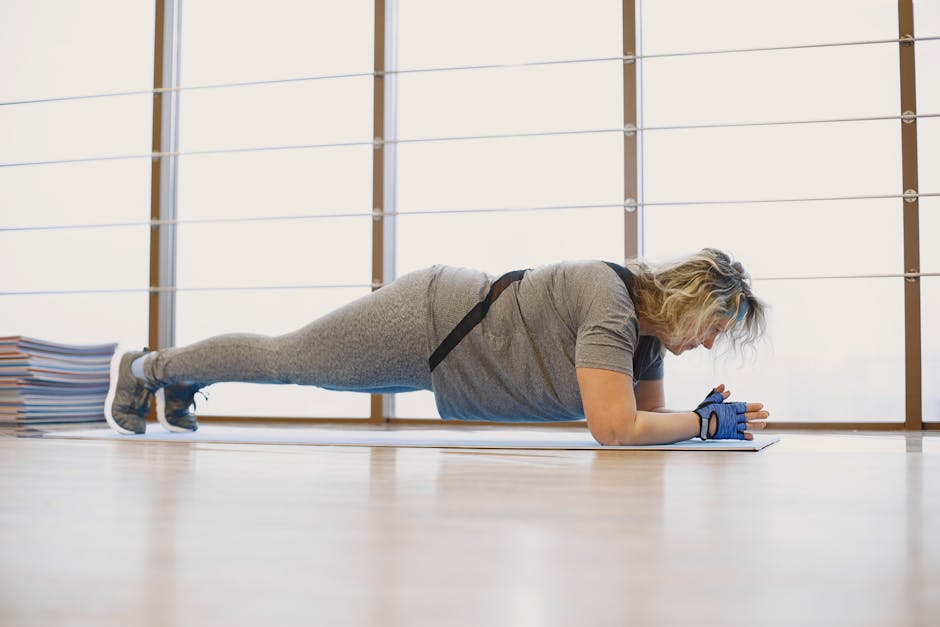
Mastering the Plank: Avoiding Common Mistakes for Optimal Core Strength and Injury Prevention
The plank is a foundational exercise, lauded for its ability to build core strength, improve posture, and enhance overall stability. Its deceptively simple appearance belies a complex interplay of muscles that must engage efficiently for proper execution. However, despite its ubiquity, many individuals perform the plank with subtle yet significant errors that undermine its effectiveness and, worse, increase their risk of injury. Understanding these common mistakes and how to rectify them is paramount for anyone seeking to harness the full benefits of this powerful isometric hold.
One of the most prevalent errors in plank execution is the sagging lower back. This occurs when the hips drop too low, creating an excessive arch in the lumbar spine. The primary culprits are a weak core, particularly the transverse abdominis and multifidus muscles, and a lack of engagement from the glutes. When the lower back sags, the spine is placed under undue stress, potentially leading to lower back pain and even disc compression over time. To avoid this, focus on actively squeezing your glutes as if you were trying to crack a walnut between them. This glute activation will naturally lift the hips and create a neutral spine. Additionally, imagine drawing your belly button towards your spine, engaging your deep abdominal muscles. Your body should form a straight line from your head to your heels, avoiding any dips or excessive curves. If you find yourself unable to maintain this straight line, it indicates your core is not yet strong enough for a sustained plank, and you should reduce your hold time or opt for regressions like knee planks.
Conversely, over-arching the upper back is another frequent misstep. Instead of a slight rounding of the upper back to engage the scapular stabilizers, some individuals push their shoulder blades upwards, creating a rounded or hunched appearance. This often stems from a lack of awareness of proper shoulder and upper back positioning. To correct this, actively press the floor away with your forearms and palms. Think about spreading your shoulder blades apart, creating space between them. This engages the serratus anterior muscles, which are crucial for scapular stability and preventing winging. The goal is to maintain a proud chest and avoid letting your upper back collapse. Imagine your upper back is a small hill you are trying to create, not a deep valley.
Incorrect neck positioning is a silent saboteur of proper plank form. Many people allow their heads to hang down, creating an exaggerated flexion in the cervical spine, or they crane their necks upwards, leading to hyperextension. Both positions can strain the neck muscles and contribute to tension headaches or neck pain. The ideal neck alignment is a neutral one, continuing the natural curve of the spine. To achieve this, imagine a laser pointer attached to the back of your head, shining directly onto the floor a few inches in front of your hands. Alternatively, think about keeping your gaze focused on a spot on the floor that is roughly equidistant between your hands. Your ears should be in line with your shoulders.
Lack of full body engagement renders the plank significantly less effective. Often, individuals focus solely on their abdominal muscles, neglecting other crucial areas. A strong plank requires a coordinated effort from the entire kinetic chain. This means engaging not just the core but also the glutes, quads, shoulders, and even the feet. As mentioned, glute and quad engagement is vital for hip stability and preventing the lower back from sagging. Actively pressing your thighs up and squeezing your glutes creates a solid foundation. Your feet should also be actively engaged, pressing down into the floor. This full-body tension creates a rigid structure, maximizing the benefits of the exercise. Think of your body as a single, solid unit.
Holding your breath is a common but detrimental practice during isometric exercises like the plank. Holding your breath increases intra-abdominal pressure in an uncontrolled manner and can lead to dizziness or lightheadedness. It also hinders your ability to maintain core engagement. Proper breathing is essential for oxygenation and for facilitating controlled muscle activation. Aim for deep, diaphragmatic breaths throughout the plank. Inhale through your nose, allowing your belly to expand, and exhale slowly through your mouth. This controlled breathing pattern will help you sustain the hold for longer and with better form. Many find it helpful to exhale on exertion or at the peak of their tension.
Over-reliance on forearms without proper wrist alignment can lead to discomfort and potential wrist injuries. If your elbows are positioned too far forward, beyond your shoulders, it places excessive pressure on the wrists. Conversely, having them too far back can shift the emphasis away from the core. Your elbows should be directly beneath your shoulders, forming a 90-degree angle at the elbow joint. Your forearms should be parallel, or your hands can be clasped together if that is more comfortable and maintains proper elbow positioning. Ensure your wrists are not acutely bent; aim for a relatively neutral angle. If you experience wrist pain, consider performing planks on your fists or using forearm support if available.
Ignoring hip positioning is a subtle but significant mistake. Many individuals allow their hips to either hike too high towards the ceiling or drop too low, as previously discussed. The ideal hip position is neutral, in line with the shoulders and ankles, forming a straight line. This is achieved through the combined efforts of core and glute engagement. If your hips are too high, you are essentially performing an upward-facing dog variation rather than a plank, and the core engagement is diminished. If they are too low, you risk the sagging lower back. Focus on creating that straight line from head to heels, with your hips neither sagging nor elevated.
Elbows too far forward or too far back is another postural error that impacts the effectiveness of the plank. As mentioned in the wrist alignment section, elbows directly under the shoulders are crucial. If they are too far forward, the stress shifts to the shoulders and upper back, and the core engagement can be compromised. If they are too far back, the exercise can become more of a triceps and chest exercise, with less emphasis on the core. The 90-degree angle at the elbow, with the elbow aligned with the shoulder, is the optimal position for maximizing core activation and maintaining proper shoulder health.
Performing the plank too long can lead to a breakdown in form. While dedication is commendable, attempting to hold a plank for excessively long durations when your core is fatigued will inevitably result in compensatory movements and poor technique. This not only negates the benefits of the exercise but also increases the risk of injury. It’s far more beneficial to perform shorter, high-quality planks with perfect form than to endure long, sloppy holds. Focus on quality over quantity. If your form starts to deteriorate, it’s time to come out of the plank. Gradually increase your hold time as your core strength improves, always prioritizing proper execution.
Lack of progressive overload can stall progress. Once you can comfortably hold a plank with perfect form for your target duration, it’s time to challenge yourself further. Simply repeating the same plank for the same duration will eventually lead to a plateau. Progressive overload can be achieved by gradually increasing the hold time, adding repetitions with short rests, incorporating variations such as side planks, plank jacks, or plank with shoulder taps, or even adding external weight. Listen to your body and consistently aim to push your limits safely.
Performing planks on an unstable surface without proper preparation can be detrimental. While exercises on unstable surfaces can enhance proprioception and challenge stabilizing muscles, attempting a plank on a wobbly BOSU ball or unstable mat when you haven’t mastered the basic plank on a solid surface is counterproductive. This can lead to a loss of focus on core engagement and an increased risk of falling or straining yourself. Master the plank on a firm, level surface first before introducing instability.
Ignoring pain signals is a cardinal sin in any exercise regimen. If you experience sharp or persistent pain during a plank, it’s a clear indication that something is wrong. This could be due to improper form, an underlying injury, or simply overexertion. Do not push through pain. Stop the exercise immediately, reassess your form, and if the pain persists, consult a healthcare professional or a qualified fitness instructor. Pain is your body’s way of telling you to stop, and ignoring it can lead to more serious injuries.
Not engaging the feet is a common oversight. While the focus is often on the upper body and core, the feet play a vital role in stabilizing the entire posture. Actively pressing the tops of your feet into the floor, or maintaining a slight tension in your ankles and toes, contributes to overall body tension and a stronger plank. This subtle engagement helps to create a more rigid and stable foundation, preventing any unnecessary rocking or swaying.
Lack of consistent practice will hinder improvement. The plank is an exercise that rewards consistency. Aim to incorporate planks into your regular workout routine several times a week. Even short, regular sessions will yield better results than infrequent, lengthy ones. Consistency builds muscle memory, strengthens the target muscles, and improves your ability to maintain proper form over time.
In conclusion, while the plank is a seemingly straightforward exercise, achieving optimal benefits and avoiding injury hinges on meticulous attention to form. By understanding and actively correcting common mistakes such as sagging lower backs, incorrect neck alignment, lack of full body engagement, improper breathing, and inadequate hip and shoulder positioning, individuals can transform their planks from a potential source of pain into a powerful tool for building a robust and resilient core. Prioritizing quality over quantity, listening to your body, and consistently practicing with proper technique are the cornerstones of mastering this fundamental exercise.