
Tag Lunar New Year
Lunar New Year: A Deep Dive into Traditions, Symbolism, and Global Celebrations
Lunar New Year, also widely known as the Spring Festival in China and Tết Nguyên Đán in Vietnam, represents a profound cultural and societal pivot. It’s not merely a calendar change but a multifaceted celebration steeped in ancient history, rich symbolism, and a diverse array of regional customs. This epochal event marks the beginning of a new lunar cycle, traditionally tied to the agricultural calendar, signifying renewal, prosperity, and the hope for a bountiful year ahead. The precise date of Lunar New Year varies annually, dictated by the lunisolar calendar, typically falling between January 21st and February 20th of the Gregorian calendar. Its observance extends across East and Southeast Asia, with significant diaspora communities celebrating worldwide, making it one of the most significant and widely observed holidays globally. Understanding Lunar New Year necessitates an exploration of its core tenets: the zodiac, ancestral veneration, auspicious practices, and the vibrant communal festivities that define this pivotal time.
The Chinese Zodiac forms a fundamental pillar of Lunar New Year. This 12-year cycle assigns an animal to each year, believed to influence the personality traits, fortune, and compatibility of individuals born within that year. The animals, in order, are Rat, Ox, Tiger, Rabbit, Dragon, Snake, Horse, Goat, Monkey, Rooster, Dog, and Pig. Each animal possesses distinct characteristics, and the year of its reign is associated with specific omens and predictions. For instance, the Dragon is often associated with power and good fortune, while the Rabbit is linked to gentleness and peace. The transition into a new zodiac year is a moment of introspection and anticipation, with many consulting almanacs and fortune tellers for insights into the year’s prospects. The belief in the zodiac’s influence permeates daily life, from making important decisions to choosing marriage partners. The mythology surrounding the origin of the zodiac, often involving a race to the Jade Emperor, adds a layer of storytelling and cultural transmission that reinforces its importance. This cyclical nature also imbues the holiday with a sense of continuity and the enduring passage of time, connecting generations through shared astrological beliefs.
Ancestral veneration is a cornerstone of Lunar New Year observances, reflecting a deep respect for lineage and the enduring bonds of family. During this period, families meticulously clean their homes to sweep away ill fortune from the past year and welcome prosperity. This act of purification extends metaphorically to spiritual cleansing, preparing for a fresh start. Altars are adorned with offerings to ancestors, including food, incense, and symbolic paper money, often burned to send wealth and provisions to the afterlife. Families gather for elaborate reunion dinners, a crucial event that emphasizes familial unity and togetherness. These dinners are characterized by an abundance of symbolic dishes, each carrying specific wishes for the coming year. For example, fish symbolizes surplus, dumplings represent wealth, and noodles signify longevity. The act of sharing these meals reinforces familial ties and acknowledges the vital role ancestors play in the family’s well-being. The reverence for elders and the continuation of family traditions are paramount, ensuring that the lessons and legacies of previous generations are passed down. This profound connection to the past shapes the present and informs aspirations for the future, underscoring the continuity of life and the importance of maintaining harmonious relationships.
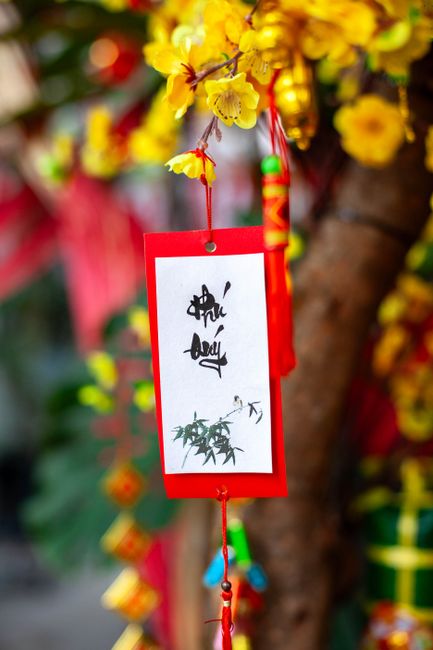
Auspicious practices and symbolism are woven into every facet of Lunar New Year celebrations. Red, the dominant color, is believed to ward off evil spirits and bring good luck and prosperity. Red envelopes, or hongbao (Mandarin) and lì xì (Vietnamese), containing money, are traditionally given by elders to younger generations, symbolizing blessings and good fortune. The gifting of tangerines and oranges, due to their phonetic resemblance to words for wealth and luck in some Chinese dialects, is another prevalent custom. Decorations often include intricate paper cuttings, lanterns, and couplets featuring auspicious calligraphy, all designed to usher in good fortune. Specific flowers, such as plum blossoms (representing resilience) and orchids (representing fertility and abundance), are also displayed. The timing of events is carefully considered, with the first few days of the New Year often dedicated to specific activities, such as visiting family and friends, paying respects to elders, and attending temple ceremonies. The meticulous attention to these details, rooted in centuries of tradition, highlights a profound belief in the power of ritual and symbolism to shape one’s destiny and attract positive energy. The emphasis on sound and visual cues – the crackle of firecrackers, the vibrant reds and golds – creates an immersive sensory experience designed to invigorate and inspire.
Communal festivities are the vibrant pulse of Lunar New Year, transforming public spaces into lively arenas of celebration. Lion dances and dragon dances, performed to the rhythmic beat of drums and cymbals, are central to these festivities. These energetic performances are believed to bring good luck and chase away evil spirits. The vibrant costumes and acrobatic displays captivate audiences of all ages. Lantern festivals illuminate the nights, with communities gathering to admire elaborate lanterns of various shapes and sizes, often carrying riddles or auspicious messages. Temple fairs and street markets teem with activity, offering a dazzling array of traditional foods, handicrafts, and entertainment. These public gatherings foster a strong sense of community and shared identity, bringing people together to celebrate the turning of the year and express collective hopes for the future. The vibrant atmosphere, punctuated by laughter, music, and the aroma of festive foods, creates an unforgettable experience that strengthens social bonds and reinforces cultural heritage. The communal aspect is not just about shared joy but about collective well-being and a unified aspiration for a prosperous and peaceful year.
Beyond its origins in East Asia, Lunar New Year has become a global phenomenon, celebrated by diasporic communities and embraced by multicultural societies worldwide. Major cities across the globe, from London and New York to Sydney and Vancouver, host parades, festivals, and cultural events that showcase the richness and diversity of Lunar New Year traditions. This global reach reflects the increasing interconnectedness of the world and the universal human desire for renewal, hope, and togetherness. The adaptation of traditions to local contexts, while preserving their core essence, demonstrates the enduring appeal and adaptability of Lunar New Year. These international celebrations not only offer opportunities for cultural exchange and understanding but also provide a platform for diaspora communities to connect with their heritage and pass it on to future generations. The widespread observance of Lunar New Year underscores its significance as a universal celebration of new beginnings, family, and cultural identity in an increasingly globalized world. Its continued evolution and adaptation across continents speak to its deep-seated human relevance and its capacity to resonate with diverse populations.
