The Critical Role of Early Orthodontic Assessment: Unlocking Lifelong Oral Health and Optimal Development

Early orthodontic treatment, often referred to as interceptive treatment, signifies a strategic phase of care initiated while a child still possesses a mix of both primary (baby) and permanent teeth. This approach is not designed to rush every child into comprehensive orthodontic appliances like braces prematurely. Instead, its fundamental objective is to empower orthodontists with the ability to identify nascent dental and skeletal developmental irregularities and, where necessary, judiciously guide growth patterns. This proactive intervention aims to significantly enhance a child’s long-term oral health trajectory, optimize bite function, and potentially simplify or mitigate the need for more complex treatments later in life. It represents a shift towards a preventive and developmental approach in pediatric dental care, recognizing that certain conditions are most effectively addressed during formative growth stages.
The Rationale Behind Early Intervention: Why Age 7?
The American Association of Orthodontists (AAO), the leading authority in the field, strongly advocates for a child’s initial orthodontic check-up to occur either when a potential orthodontic problem is first observed by parents or a general dentist, and crucially, no later than the age of seven. This specific age benchmark is not arbitrary; by seven years old, most children have typically developed a sufficient number of permanent incisors and first molars, alongside their remaining primary dentition. This mixed dentition stage provides an orthodontist with a critical window to thoroughly evaluate the developing occlusion (bite), the alignment of teeth, and the intricate growth patterns of the facial and jaw bones.
At this developmental juncture, an experienced orthodontist can detect subtle, often imperceptible issues that might not be evident to parents or even a general dentist. These can include genetic predispositions to malocclusion, the early signs of jaw discrepancies, or habits that could negatively impact dental development. The AAO’s recommendation is rooted in decades of clinical research and observation, underscoring that while comprehensive treatment often waits until adolescence, the optimal timing for assessment is significantly earlier. This early screening allows for the detection of issues that, if left unaddressed, could escalate into more severe problems requiring more invasive, lengthy, and potentially costlier interventions down the line. It serves as a foundational step in a child’s lifelong oral health journey, emphasizing foresight and timely intervention over reactive treatment.
The Initial Orthodontic Consultation: More Than Just Braces
A child’s first orthodontic visit is predominantly an informational and diagnostic appointment, rather than an immediate prelude to treatment. It is a comprehensive evaluation designed to gather crucial data about the child’s dental and skeletal development. During this visit, the orthodontist will typically conduct a thorough visual examination of the teeth, jaws, and facial profile. This often involves taking panoramic X-rays to assess unerupted teeth, root development, and jaw structure, as well as clinical photographs. The orthodontist will discuss findings with the parents, explaining any observed issues and outlining potential developmental paths.
Based on this comprehensive assessment, there are generally three potential outcomes following an early orthodontic check-up:
- No Treatment Needed Now: The child’s dental and jaw development is proceeding normally, with no identifiable issues requiring intervention at this stage.
- Monitoring (Follow and Monitor): This is a common outcome, indicating that while there are no immediate concerns demanding active treatment, the orthodontist has identified certain developmental patterns or potential issues that warrant periodic observation. This "watch and wait" approach involves scheduling follow-up appointments, often every six to twelve months, to track the child’s growth and tooth eruption timing. It allows the orthodontist to intervene only if and when it becomes demonstrably beneficial, leveraging the child’s natural growth spurts.
- Early Treatment Recommended: In specific cases where an existing or developing problem poses a significant risk to the child’s long-term oral health or facial development, the orthodontist may recommend interceptive treatment. This decision is made when the potential benefits of early intervention outweigh waiting.
The "follow and monitor" group is particularly significant. It signifies a proactive, yet conservative, approach. It means the orthodontist is actively tracking the child’s unique growth patterns and tooth eruption sequence, ready to recommend treatment only if and when it aligns with the optimal window for intervention. This personalized strategy ensures that treatment is initiated at the most advantageous time, maximizing efficacy and minimizing unnecessary procedures.
Identifying Candidates for Early Orthodontic Treatment
While many orthodontic challenges are indeed best addressed during adolescence, once most or all permanent teeth have erupted, certain conditions demonstrably benefit from early interceptive treatment. The primary driver for early intervention in these cases is the potential for a developing problem to become significantly more severe and complex if left unaddressed until a later stage. The prevalence of malocclusion, or misaligned teeth and jaws, is notably high, with studies suggesting that a substantial percentage of children could benefit from some form of orthodontic guidance. For instance, according to a report by the National Health and Nutrition Examination Survey (NHANES), approximately 75% of children and adolescents exhibit some form of malocclusion.
In these specific instances, the core purpose of early orthodontic treatment is multifaceted: to intercept the developing issue, eliminate its underlying cause whenever feasible, strategically guide the growth of facial and jaw bones, and ensure adequate space for the proper eruption of incoming permanent teeth. It is crucial to understand that in some situations, early treatment may be considered "Phase One," potentially followed by a "Phase Two" treatment later, once all permanent teeth have erupted. Phase Two would then focus on meticulously positioning those permanent teeth into their ideal final alignment.
Orthodontists typically recommend early intervention for specific concerns that, if ignored, could lead to significant functional, aesthetic, or health complications. These include:
- Underbites (Class III Malocclusion): Where the lower front teeth bite in front of the upper front teeth. Early correction is critical as delaying treatment often leads to more extensive surgical interventions in adulthood. Studies indicate that early treatment for underbites can significantly reduce the need for orthognathic surgery by up to 75%.
- Crossbites (Posterior and Anterior): Occurring when upper teeth bite inside the lower teeth. Posterior crossbites can lead to asymmetric jaw growth and functional shifts, while anterior crossbites affect aesthetics and function. Approximately 10-15% of children experience a posterior crossbite. Early expansion can correct this, preventing uneven jaw development.
- Significant Crowding: Insufficient space in the jaw for all permanent teeth to erupt correctly. Early intervention can create necessary space, potentially reducing the need for permanent tooth extractions later.
- Excessive Spacing: Gaps between teeth, sometimes indicating underlying jaw-size discrepancies or missing teeth.
- Extra or Missing Teeth (Supernumerary or Anodontia): Diagnosing these early allows for planning their removal or management, or space creation for future prosthetics.
- Open Bites: When front teeth do not meet when the back teeth are biting together. This can be caused by habits like thumb sucking or tongue thrusting and can impact speech and chewing.
- Deep Bites (Excessive Overbite): Where the upper front teeth overlap the lower front teeth too much, potentially causing gum irritation or wear on the lower teeth.
- Protruding Upper Front Teeth (Overjet): Often caused by a jaw imbalance or habits, making the teeth more susceptible to trauma. Research suggests that early treatment for severe overjet can reduce the incidence of dental trauma by 50-60%.
- Harmful Oral Habits: Persistent thumb, finger, or pacifier sucking habits beyond a certain age can significantly affect teeth alignment and jaw growth. Intercepting these habits early is vital.
- Jaw Growth Discrepancies: Uneven growth of the upper and lower jaws, which can lead to significant functional and aesthetic problems.
These problems can stem from a variety of factors, including inherited genetic traits, traumatic accidents, untreated dental disease leading to premature tooth loss, or atypical patterns such as abnormal swallowing or mouth breathing. Recognizing these issues early allows for interventions that harness a child’s natural growth potential, which is a finite and powerful resource.
Diverse Approaches to Early Orthodontic Care
Early orthodontic treatment is never a one-size-fits-all solution; instead, it is meticulously customized to the individual child’s specific needs and developmental stage. The array of treatments available is broad, ranging from fixed appliances to removable devices, each designed to achieve specific corrective goals. The overarching aim is to move teeth, modify jaw position, or stabilize teeth to foster lasting, healthy changes in the oral structure.
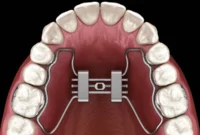
One prominent example of an early intervention device is the palatal expander. This appliance, typically fixed to the upper molars, is used to gently widen the upper jaw. This is particularly effective in correcting posterior crossbites and creating much-needed space for crowded permanent teeth. Because the upper jaw (maxilla) is still growing and its two halves have not fully fused in childhood, expansion during this period is highly effective and less invasive than in adulthood.
Other common early orthodontic treatments include:
- Space Maintainers: If a baby tooth is lost prematurely due to decay or injury, a space maintainer can prevent adjacent teeth from drifting into the vacant space, thus reserving room for the permanent tooth to erupt correctly.
- Removable Appliances: Custom-made plates or aligners can be used for minor tooth movements, habit correction, or to guide jaw growth.
- Functional Appliances: These devices are designed to influence jaw growth by posturing the lower jaw forward or backward, often used to correct overbites or underbites by harnessing the child’s natural growth spurts.
- Headgear: In some cases, headgear might be used to modify jaw growth or tooth position, though its use has become less common with the advent of other appliances.
- Partial Braces: Sometimes, a limited number of braces are placed on specific permanent teeth to correct alignment issues or create space, rather than a full set of braces.
In a significant number of early consultations, active appliance treatment may not be immediately necessary. Instead, the orthodontist might recommend a more conservative approach, such as the strategic removal of certain primary (baby) teeth at a precisely timed moment. This technique, known as serial extraction, can guide the eruption of permanent teeth into a more favorable position, leveraging the natural processes of a child’s growth and development. The critical element across all these approaches is the precise coordination of the treatment plan with the child’s unique biological timing and developmental milestones, emphasizing a thoughtful, individualized strategy over a generic solution.
The Long-Term Imperative: Benefits of Proactive Orthodontics
The fundamental necessity of addressing certain orthodontic issues early stems from the principle that some conditions are inherently easier, more efficient, and more stable to correct when detected and treated during the dynamic phases of childhood growth. Delaying intervention until all permanent teeth have erupted, or until facial growth is largely complete, can transform what might have been a relatively straightforward issue into a significantly more challenging and potentially compromise-laden problem.
The benefits of early orthodontic evaluation and, when indicated, interceptive treatment, are far-reaching:
- Reduced Complexity of Future Treatment: Early intervention can often simplify or shorten the duration of Phase Two comprehensive orthodontic treatment later in adolescence. In some cases, it may even eliminate the need for a second phase altogether.
- Improved Oral Function: Correcting bite problems early can enhance chewing efficiency, improve speech patterns, and reduce abnormal wear on tooth surfaces.
- Enhanced Oral Hygiene: Properly aligned teeth are easier to clean, reducing the risk of cavities, gum disease, and other periodontal issues.
- Prevention of Dental Trauma: Protruding upper front teeth are highly susceptible to fractures and injuries. Early correction can significantly mitigate this risk.
- Guidance of Jaw Growth: During childhood, the bones of the face and jaw are still malleable. Early treatment can guide this growth, correcting imbalances that would be much harder, or even impossible, to address without surgery in adulthood.
- Space Management: Creating or preserving space for erupting permanent teeth can prevent severe crowding, potentially avoiding the need for permanent tooth extractions.
- Correction of Harmful Habits: Early intervention can break detrimental oral habits like thumb sucking, which can otherwise lead to significant dental and skeletal malformations.
- Boost in Self-Esteem: For children struggling with noticeable dental irregularities, early correction can have a profound positive impact on self-confidence and social interaction. Children are often highly aware of their appearance, and addressing these concerns early can prevent psychological distress.
- Potential Cost Savings: While early treatment incurs an initial cost, it can often lead to overall cost savings by preventing more complex, lengthy, or surgically intensive treatments in the future. For example, avoiding orthognathic surgery or extensive restorative work due to severe malocclusion.
- Long-Term Stability: Addressing underlying skeletal and dental issues during growth can contribute to more stable and lasting results, reducing the likelihood of relapse.
An early evaluation equips families with invaluable knowledge. It provides a clear understanding of the child’s current dental and skeletal status, offers insights into potential future developments, and, critically, clarifies whether proactive measures taken today can avert a more complicated, lengthy, or invasive situation tomorrow. This foresight is a cornerstone of modern, patient-centric healthcare.
The Collaborative Approach: Role of Parents and Pediatric Dentists
The success of early orthodontic intervention relies heavily on a collaborative effort involving parents, the pediatric dentist, and the orthodontist. Pediatric dentists play a crucial role as the first line of defense, often being the first to identify potential orthodontic concerns during routine check-ups. They are instrumental in educating parents about the importance of an early orthodontic assessment and facilitating timely referrals.
Parents, in turn, are key partners in observing their child’s oral habits and development, and in adhering to the orthodontist’s recommendations, whether it’s for monitoring or active treatment. This partnership ensures that the child receives comprehensive care that addresses not just immediate dental needs, but also future developmental trajectories. The AAO emphasizes that the decision for early treatment is always a shared one, based on detailed diagnostics and a clear communication of the benefits and potential outcomes.
Navigating the Path to a Healthy Smile: Recommendations for Families
To provide your child with the optimal opportunity for developing a healthy, functional, and aesthetically pleasing smile, engaging with a qualified and experienced orthodontist is paramount. The American Association of Orthodontists (AAO) represents a distinguished body of specialists who have undergone rigorous post-dental school training specifically in orthodontics and dentofacial orthopedics. Their specialized expertise ensures that your child receives care informed by the highest standards of practice and the latest advancements in the field.
It is important for families to understand that a referral from a general dentist is typically not a prerequisite for an orthodontic consultation. Many AAO orthodontists extend the courtesy of offering an initial consultation at no cost and without any obligation, providing an accessible pathway for parents to gain vital insights into their child’s oral development. This initial visit serves as a foundational step, allowing an orthodontist to meticulously assess potential problems and recommend a course of action that is most appropriate and timely for your child’s unique needs. In the intricate journey of orthodontic care, the precise timing of intervention can indeed be everything, profoundly influencing the ease, efficacy, and ultimate success of treatment.
Families seeking to take this proactive step can readily locate a certified AAO orthodontist in their vicinity by utilizing the convenient Locator Tool available on the AAO’s official website. This tool connects parents with highly skilled professionals dedicated to crafting healthy, confident smiles, ensuring that every child has the best possible start towards lifelong oral well-being.