AlignerOff Launches Innovative Retractable Removal Tool to Enhance Clear Aligner Patient Compliance and Oral Hygiene

The global clear aligner market has undergone a significant transformation over the past decade, moving from a niche orthodontic solution to a mainstream staple of dental aesthetics. As millions of patients worldwide transition to removable tray systems, practitioners have identified a persistent, practical challenge: the physical removal of these trays. AlignerOff LLC has officially addressed this industry-wide pain point with the launch of the AlignerOff Retractable Aligner Removal Tool, an accessory engineered to replace the reliance on fingernails and repetitive manual contact with the mouth.
The Clinical Genesis of the AlignerOff Tool
The development of the AlignerOff tool was spearheaded by Inma Steffe, a registered dental hygienist (RDH) and Master of Science holder with over 20 years of intensive clinical and educational experience. Throughout her career, Steffe observed a recurring trend among her patients: a high level of frustration associated with the daily removal of tight-fitting orthodontic trays.
For many, the process is not merely an inconvenience but a significant barrier to consistent wear time. Patients often report difficulties due to limited dexterity, the presence of orthodontic attachments, or the desire to protect manicured nails. Steffe’s clinical observations confirmed that when removal becomes difficult or painful, patients may be tempted to skip cleaning cycles or, in extreme cases, reduce their total daily wear time, directly impacting the efficacy of their orthodontic treatment plan. By conceptualizing a tool that bridges the gap between the appliance and the patient, Steffe aimed to remove the "friction" from the treatment process, thereby supporting better long-term compliance.
Design Evolution and Engineering Specifications
The AlignerOff tool represents a departure from static, non-retractable aligner removal hooks currently available on the market. The device is constructed from food-grade ABS (Acrylonitrile Butadiene Styrene) plastic, a material selected for its durability, chemical resistance, and safety in oral applications.
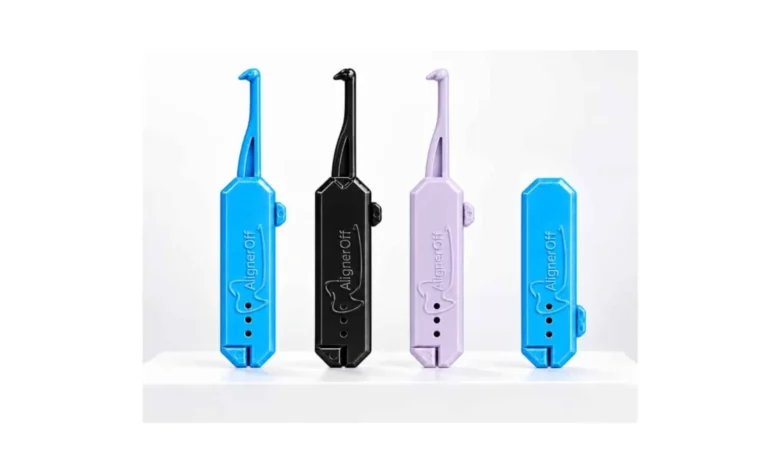
The standout feature of the design is the retractable hook mechanism. In its dormant state, the hook is housed within the ergonomic body of the device. When the patient prepares to remove their aligners, a simple engagement of the mechanism extends the hook, providing the necessary leverage to grasp the posterior edge of the aligner tray. This allows the user to apply gentle, controlled pressure to "pop" the aligner off the tooth structure without the need to probe deeply into the buccal corridor with fingers.
The retractable nature of the hook serves a dual purpose: it protects the integrity of the hook tip from debris and damage when stored in a pocket or purse, and it maintains a higher standard of hygiene. By eliminating the need to place fingers inside the oral cavity—a practice that introduces potential bacteria and saliva contact—the tool addresses a fundamental concern regarding modern hygiene standards in public spaces. The device also includes secondary utility, as the hook can be used to navigate and secure orthodontic elastics, which are frequently prescribed in conjunction with clear aligner therapy.
Contextualizing the Clear Aligner Market Growth
To understand the necessity of such an accessory, one must look at the meteoric rise of the clear aligner industry. Market research analysts indicate that the global clear aligners market size, valued at approximately $3 billion to $5 billion in recent years, is projected to maintain a compound annual growth rate (CAGR) in the double digits through 2030. This growth is driven by a heightened consumer focus on aesthetic dentistry, the normalization of "invisible" orthodontics, and the rise of direct-to-consumer teledentistry models.
However, as the patient demographic for aligners expands to include a wider range of age groups—from adolescents to older adults with varying levels of motor skill—the need for assistive technology has become more pronounced. Orthodontic attachments, often referred to as "buttons" or "bumps," are small composite shapes bonded to teeth to facilitate specific tooth movements. These attachments, while essential for treatment success, make the removal of the trays significantly more difficult, often requiring more force than a patient can comfortably exert with their fingers.
Implications for Treatment Compliance and Patient Experience
Orthodontic treatment success is strictly contingent upon wear time; standard clinical guidance suggests that patients should wear their aligners for 20 to 22 hours per day. Any barrier to removing the trays—whether for eating, drinking, or oral hygiene—creates a psychological hurdle that may lead to non-compliance.
"Patients are expected to wear their aligners consistently, but the simple act of removing them can be challenging, particularly at the beginning of treatment," Steffe noted in a press release. "I created the retractable AlignerOff tool to make that daily step easier, more hygienic, and less stressful for patients."
The implications for clinical practice are twofold. First, by providing patients with a reliable removal tool, orthodontists and general dentists may see a reduction in "emergency" office visits related to patients struggling to remove trays. Second, by facilitating easier hygiene routines, the tool indirectly supports better periodontal health, as patients are more likely to remove their aligners for thorough brushing and flossing if the process is not arduous.
Patent Protection and Strategic Rollout
The innovation behind the AlignerOff tool has been formally recognized through intellectual property protections. The device is currently protected by U.S. Design Patent No. D1,054,561 S, with additional utility patents currently pending. This legal framework provides AlignerOff LLC with a competitive edge as it seeks to capture a portion of the orthodontic accessory market.
The company is currently executing a multi-channel distribution strategy. Individual patients can purchase the tool directly through the company’s digital storefront, available in blue and black colorways, with a lavender variant slated for future release. Simultaneously, AlignerOff is courting dental and orthodontic practices to integrate the tool into "starter kits" provided to patients at the commencement of their treatment. This B2B (business-to-business) approach is a common strategy in the dental space, as it ensures that the tool is placed directly into the hands of the end-user by their own clinician, reinforcing the clinical validity of the product.
Broader Industry Impact and Future Outlook
The launch of the AlignerOff tool serves as a case study in the maturation of the dental industry. As orthodontics moves toward a more digitized and user-centered model, the ecosystem of accessories—ranging from ultrasonic cleaning baths to specialized removal tools—is becoming increasingly sophisticated.
The focus on "ergonomic" dental aids reflects a broader trend in health-tech, where the focus is shifting from the primary medical device to the peripheral tools that improve the daily life of the patient. By addressing the physical, tactile challenges of aligner therapy, AlignerOff is positioning itself as a vital component of the modern orthodontic experience.
As the company looks to expand its reach, the focus will likely remain on clinical partnerships and educational outreach. For the millions of individuals currently navigating the complexities of clear aligner treatment, such tools represent a quiet but significant upgrade in their daily routine, transforming a potentially frustrating chore into a seamless, hygienic, and manageable aspect of their orthodontic journey. The integration of this tool into mainstream dental practice is expected to continue throughout the coming fiscal year, marking a shift toward more inclusive and accessible orthodontic care.