The company states that a recent European court decision regarding a discontinued feature will not affect ongoing orthodontic treatments.

Angelalign Technology Inc. has formally addressed a recent legal development concerning its intellectual property standing in Europe, confirming that a ruling by the Paris Local Division of the Unified Patent Court (UPC) regarding the "Torque Ridges" feature will have no material impact on its current clinical operations or patient outcomes. The ruling, which centers on a patent infringement claim brought by industry giant Align Technology Inc., pertains to specific mechanics used in orthodontic aligners to achieve precise tooth movement. Despite the legal finding, Angelalign maintains that its transition to alternative technologies has effectively insulated its European provider network from disruption.
Legal Context and the Unified Patent Court Ruling
The Unified Patent Court is a relatively new judicial body designed to streamline patent litigation across participating European Union member states. The case brought by Align Technology—the developer of the Invisalign system—alleged that Angelalign’s proprietary Torque Ridges feature infringed upon existing intellectual property rights intended to manage the complex mechanics of tooth repositioning.
In its decision, the Paris Local Division of the UPC concluded that the specific configuration of the Torque Ridges feature did indeed overlap with the scope of patents held by Align Technology. This verdict represents a significant moment in the ongoing, highly competitive global market for clear aligners, where technological differentiation is a primary driver of market share. Intellectual property disputes in this sector are frequent, as companies invest heavily in research and development to refine the biomechanical efficiency of their plastic aligner trays.
Chronology of the Transition
The legal proceedings coincided with a broader strategic shift in Angelalign’s European product portfolio. According to official corporate communications, the company had proactively phased out the Torque Ridges feature in Europe well before the court reached its final judgment. The timeline of this transition is as follows:
- Early 2026: Angelalign identifies an opportunity to optimize its torque control mechanisms, initiating a transition away from the legacy Torque Ridges design.
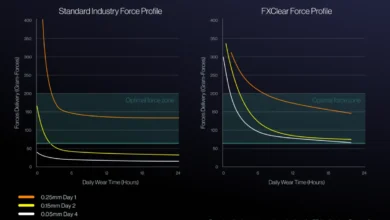
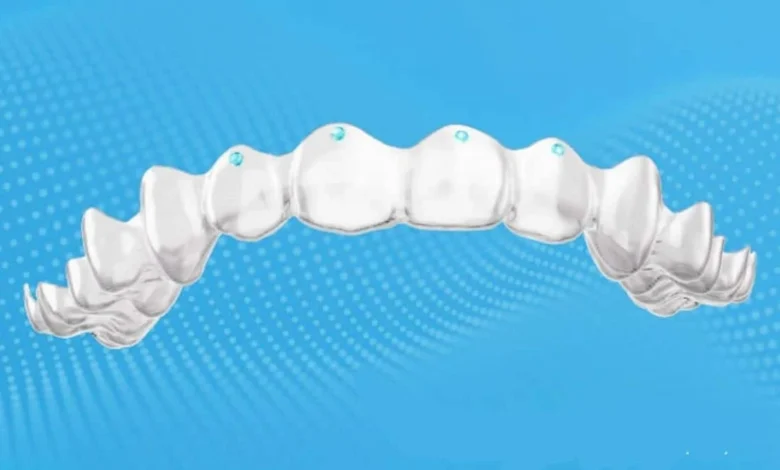
- September 2026: The company officially launches "Pressure Points" in the European market. This new feature was engineered to improve torque control and overall force distribution, replacing the previous iteration.
- Late 2026/Early 2027: The Unified Patent Court issues its ruling regarding the legacy Torque Ridges feature. Because the technology was already removed from the company’s active inventory in Europe, the mandate to return or cease the use of the infringing feature applied only to a product that was no longer in circulation.
By moving to the Pressure Points system, Angelalign claims it has effectively superseded the technological dispute, ensuring that orthodontists across Europe are equipped with current-generation tools that remain compliant with regional intellectual property standards.
Market Dynamics and Competitive Landscape
The global clear aligner market is currently experiencing rapid growth, driven by increasing consumer demand for aesthetic dental corrections and a rise in the number of general practitioners offering orthodontic services. With high barriers to entry, incumbents like Align Technology rely heavily on expansive patent portfolios to maintain their competitive edge. For newer entrants like Angelalign, the challenge lies in balancing rapid innovation with the stringent requirements of international patent law.
Data from recent industry reports suggest that the clear aligner segment is one of the fastest-growing areas in dental medicine. As of 2026, the market is valued in the billions, with significant regional variations in adoption rates. Europe remains a critical theater for this competition, characterized by sophisticated regulatory environments and a high density of qualified orthodontists who prioritize precision and clinical reliability. The legal friction between Angelalign and Align Technology is emblematic of a "patent war" that often accompanies such high-growth, high-stakes medical technology sectors.
Official Responses and Corporate Strategy
Xavier Cherbavaz, general manager and vice president for Europe, Africa, and the Middle East at Angelalign, emphasized that the company’s primary focus remains the continuity of patient care. In a formal statement released following the court’s decision, Cherbavaz noted that the shift to Pressure Points was not merely a reaction to litigation, but a deliberate move to enhance clinical outcomes. "Our priority is to ensure that orthodontists can continue delivering excellent care to their patients," Cherbavaz stated. "Torque Ridges has already been retired in Europe and replaced with Pressure Points, an approach intended to support controlled force application and tooth contact."
Adding to this, Richard Hirschland, the company’s chief commercial officer and senior vice president, addressed the broader implications of the ruling. While expressing respectful disagreement with the court’s reasoning, he confirmed that Angelalign intends to comply with the ruling’s requirements. "Angel takes intellectual property rights seriously and is careful not to infringe on valid patents," Hirschland said. "We are reviewing the court’s reasoning carefully and will consider all available options. Angel will continue to innovate and improve its products to benefit its providers and their patients despite litigation by a competitor."
Geographic Scope and Global Implications
It is important to note that the jurisdiction of the Unified Patent Court is limited to participating European nations. Consequently, the ruling has no legal weight in markets such as the United Kingdom, Spain (which is a signatory but subject to specific regional legal dynamics), the Americas, or the Asia-Pacific region. In these territories, Angelalign’s product offerings remain unaffected, and the company continues to operate under its existing patent strategies.
The geographical fragmentation of patent law means that a ruling in one jurisdiction does not automatically translate to a global injunction. However, for a multinational medical device company, such rulings can influence product development roadmaps and global supply chain strategies. If a specific feature is deemed infringing in a major market like the European Union, companies often opt for a global rollout of the replacement technology to ensure consistency in manufacturing and clinical training.
Analysis: What This Means for Orthodontists
For the practicing orthodontist, the primary concern in cases of patent litigation is the stability of their supply chain and the efficacy of the treatment tools they rely on. The fact that Angelalign has already transitioned to the Pressure Points feature suggests that the company’s European clinical partners will experience minimal disruption.
However, the legal situation highlights the importance of "future-proofing" clinical workflows. Orthodontists, who invest significant time in mastering the specific biomechanics of a particular aligner system, generally prefer stability. The transition to new features like Pressure Points requires clinicians to familiarize themselves with updated force delivery metrics. While this transition is often seamless, it underscores the necessity for companies to provide robust technical support and clinical education.
As Angelalign continues to navigate the complexities of international patent litigation, its ability to retain market share will depend on the clinical performance of its new technologies. If the Pressure Points feature proves superior in terms of torque control and efficiency, the company may emerge from this period of litigation with a stronger product offering than it had previously. Conversely, continued legal challenges from established competitors will likely force the company to remain vigilant in its R&D and legal vetting processes.
In summary, the recent ruling by the Unified Patent Court serves as a reminder of the volatility inherent in the orthodontic technology space. While the immediate operational impact on Angelalign appears to be effectively mitigated by the company’s proactive technological transition, the incident underscores the intense competitive environment that defines the current dental health landscape. As the company evaluates its further legal options, the focus for its European network remains squarely on the delivery of patient-centric orthodontic solutions.
Related posts: