
Quick Home Bodyweight Workout
The Ultimate Quick Home Bodyweight Workout: Sculpt Your Physique Without Equipment
This comprehensive guide details a highly effective, equipment-free workout you can perform anywhere, anytime. Designed for maximum impact in minimal time, this routine targets major muscle groups, promoting strength, endurance, and fat loss. The beauty of bodyweight training lies in its accessibility and versatility. You don’t need a gym membership, expensive machines, or specialized equipment. All you require is your own body and a small space. This workout leverages fundamental human movements, engaging muscles in a functional and holistic manner. By mastering these foundational exercises, you build a strong base that can be progressively overloaded through variations, increased repetitions, or reduced rest periods, ensuring continuous improvement and preventing plateaus. The focus is on compound movements, exercises that involve multiple joints and muscle groups simultaneously, which are inherently more efficient for calorie expenditure and overall muscle activation. Think of it as a full-body symphony, where each movement plays a crucial role in harmonizing your physical development. We will delve into the specific exercises, proper form for each, recommended sets and repetitions, and strategies for maximizing the benefits of this quick yet potent workout.
The Foundation: Essential Bodyweight Exercises and Their Benefits
The cornerstone of any effective bodyweight workout rests on a few key, foundational movements. These exercises, when performed correctly, engage a vast network of muscles, contributing to overall strength, cardiovascular health, and improved body composition.
1. Squats: This fundamental lower body exercise targets the quadriceps, hamstrings, glutes, and calves. Beyond strength, squats improve hip mobility, core stability, and can even enhance athletic performance by building explosive power in the legs. The movement mimics sitting down and standing up, a natural and functional action that is crucial for everyday activities. Proper form is paramount to prevent knee strain and maximize glute activation. Keep your chest up, back straight, and push your hips back as if you’re sitting into a chair. Aim to descend until your thighs are parallel to the floor, or as deep as comfortable while maintaining proper form. Beginners can start with shallow squats and gradually increase depth. Adding variations like jump squats or pistol squats (single-leg squats) can significantly increase the intensity and challenge. For SEO, keywords like "bodyweight squat benefits," "how to do a squat correctly," and "leg exercises at home" are crucial.
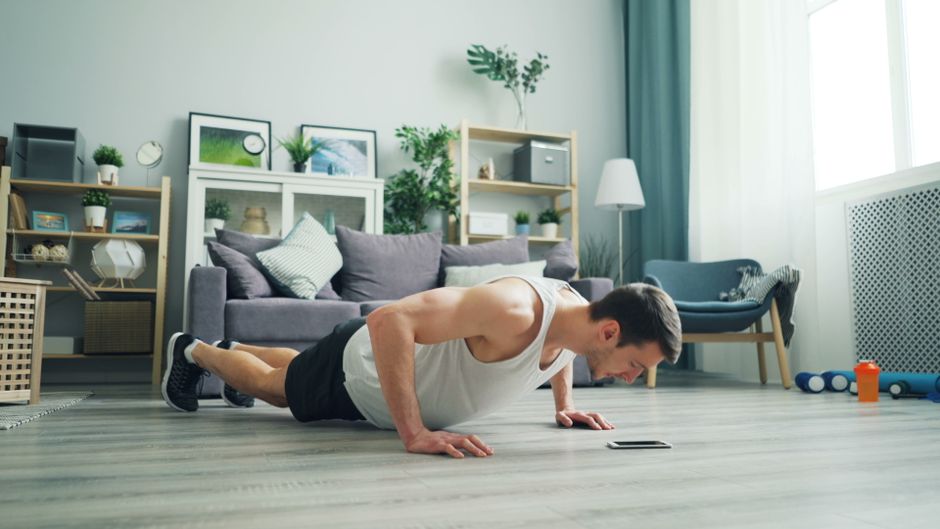
2. Push-ups: The king of upper body bodyweight exercises, the push-up effectively targets the chest, shoulders, triceps, and core. It’s a powerful assessment of upper body pushing strength. Mastering the push-up is a significant milestone in bodyweight training. Maintaining a straight line from head to heels is key, engaging your core to prevent your hips from sagging or rising too high. Lower your chest towards the floor, aiming to get as close as possible while keeping your elbows tucked slightly towards your body, rather than flaring out wide. If standard push-ups are too challenging, start on your knees. As you get stronger, progress to incline push-ups against a wall or sturdy furniture, then to decline push-ups (feet elevated) for an increased challenge on the upper chest and shoulders. Keywords for this section include "push-up variations," "upper body workout at home," and "chest exercises without weights."
3. Lunges: Lunges are a unilateral (single-leg) exercise that targets the quadriceps, hamstrings, glutes, and improves balance and coordination. They also engage the core for stability. Stepping forward with one leg, lower your hips until both knees are bent at approximately 90-degree angles. Your front knee should be directly above your ankle, and your back knee should hover just above the floor. Push off your front foot to return to the starting position. Alternating legs with each repetition is the standard approach. Variations include walking lunges, reverse lunges, and curtsy lunges, each offering a slightly different emphasis on muscle activation and stability challenges. Integrating "lunge benefits," "balance exercises," and "lower body strength training" into your SEO strategy will be beneficial.
4. Plank: The plank is a phenomenal isometric exercise for strengthening the entire core musculature, including the abdominal muscles, obliques, and lower back. It also engages the shoulders and glutes. Holding a push-up position but resting on your forearms, maintain a straight line from head to heels. Engage your core by pulling your belly button towards your spine. Avoid letting your hips sag or rise too high. The plank builds incredible core stability, which is essential for preventing injuries and improving overall posture. Hold for a set duration, gradually increasing the time as your core strength improves. Side planks are excellent for targeting the obliques. Keywords to consider here are "core strengthening exercises," "plank benefits," and "abdominal exercises at home."
5. Glute Bridges: This exercise directly targets the glutes and hamstrings, and also engages the lower back and core. Lie on your back with your knees bent and feet flat on the floor, hip-width apart. Lift your hips off the floor by squeezing your glutes, creating a straight line from your shoulders to your knees. Hold at the top, focusing on the glute contraction, then slowly lower back down. Glute bridges are excellent for improving hip extension strength, which is important for walking, running, and many other athletic movements. Variations include single-leg glute bridges for increased difficulty and focus on each leg. Relevant SEO terms include "glute activation exercises," "hamstring workout at home," and "exercises for stronger glutes."
Structuring Your Quick Home Bodyweight Workout
The effectiveness of any workout hinges on its structure. For a quick and efficient session, we’ll focus on creating a high-intensity circuit that maximizes calorie burn and muscle engagement.
The Circuit Training Approach: Circuit training involves performing a series of exercises back-to-back with minimal rest in between. Once you complete one round of all exercises, you take a slightly longer rest before starting the next round. This method keeps your heart rate elevated, promoting cardiovascular benefits alongside strength development.
Workout Protocol:
- Warm-up (5 minutes): Begin with light cardio to get your blood flowing and muscles ready. This can include jogging in place, jumping jacks, high knees, or butt kicks. Dynamic stretches like arm circles, leg swings, and torso twists are also beneficial. A good warm-up prepares your body for the demands of the workout, reducing the risk of injury and improving performance.
- Workout Circuit (20-30 minutes): Perform the following exercises consecutively.
- Squats: 15-20 repetitions
- Push-ups: As many repetitions as possible with good form (AMRAP) – aim for 10-20+
- Lunges: 10-12 repetitions per leg (20-24 total)
- Plank: Hold for 30-60 seconds
- Glute Bridges: 15-20 repetitions
- Rest: After completing one round of all five exercises, rest for 60-90 seconds.
- Rounds: Complete 3-4 rounds of the circuit.
- Cool-down (5 minutes): End with static stretching, holding each stretch for 20-30 seconds. Focus on stretching the major muscle groups worked: quadriceps, hamstrings, glutes, chest, shoulders, and triceps. Static stretching helps improve flexibility and aids in muscle recovery.
Progressive Overload: The Key to Continuous Improvement
To keep seeing results, you must continually challenge your body. This principle is known as progressive overload. For bodyweight training, there are several effective ways to implement it.
- Increase Repetitions: Once you can comfortably complete the upper end of the rep range for an exercise, aim for a few more reps in the next workout.
- Increase Sets: Add an extra round to your circuit.
- Decrease Rest Time: Gradually shorten the rest periods between exercises or between rounds.
- Increase Time Under Tension: Slow down the eccentric (lowering) phase of each movement, especially for squats and push-ups. This increases the time your muscles are working.
- Introduce More Challenging Variations: As you get stronger, progress to more difficult versions of the exercises. For example, move from knee push-ups to standard push-ups, or from standard squats to jump squats.
- Add Tempo: Incorporate pauses at the peak contraction of an exercise (e.g., holding the top of a glute bridge for a few seconds).
Optimizing Your Workout for Maximum Results
Beyond the exercises themselves, several factors contribute to the success of your quick home bodyweight workout.
- Consistency: Aim to perform this workout 3-5 times per week, allowing for rest days in between to allow for muscle recovery and adaptation. Consistency is far more important than the intensity of any single session.
- Nutrition: A balanced diet rich in lean protein, complex carbohydrates, and healthy fats is crucial for muscle repair, growth, and energy levels. Adequate protein intake is especially important for muscle synthesis after your workouts.
- Hydration: Drink plenty of water throughout the day, especially before, during, and after your workouts. Dehydration can significantly impair performance and recovery.
- Listen to Your Body: While pushing yourself is important, it’s also vital to recognize the difference between muscle fatigue and pain. If you experience sharp or persistent pain, stop the exercise and consult a healthcare professional.
- Mind-Muscle Connection: Focus on consciously engaging the target muscles during each exercise. This means actively thinking about the muscles you are working and ensuring they are doing the majority of the effort. For example, with squats, focus on squeezing your glutes as you stand up.
- Proper Form Over Quantity: Always prioritize correct form over performing a high number of repetitions with poor technique. Incorrect form can lead to injuries and reduced effectiveness of the exercise. Watch videos, use a mirror, or even record yourself to ensure you are performing movements correctly.
SEO Considerations for Bodyweight Workouts
To ensure this article reaches a wider audience interested in home fitness solutions, incorporating relevant keywords is essential. Integrating terms like "quick home workout," "no equipment exercises," "full body bodyweight routine," "beginner bodyweight exercises," "effective home fitness," and "strength training at home" throughout the content, particularly in headings, subheadings, and image alt text (if applicable), will improve search engine visibility. Focusing on long-tail keywords such as "how to build muscle at home without weights" or "best bodyweight exercises for fat loss" can attract a more targeted audience.
Advanced Variations and Further Progression
Once you’ve mastered the foundational circuit and are looking for new challenges, explore these advanced variations:
- Squats: Pistol squats (single-leg squats), Bulgarian split squats (rear foot elevated lunges), jump squats with a deep tuck.
- Push-ups: Archer push-ups, diamond push-ups (for triceps focus), plyometric push-ups (clapping push-ups), one-arm push-ups (with assistance if needed).
- Lunges: Jumping lunges, plyometric lunges, walking lunges with a twist.
- Plank: Plank jacks, plank with shoulder taps, forearm plank with leg raises.
- Glute Bridges: Single-leg glute bridges, elevated glute bridges (feet on a raised surface), glute bridge march.
Conclusion
This quick home bodyweight workout offers a powerful and accessible path to improved fitness. By focusing on fundamental movements, structuring your training effectively, and prioritizing progressive overload, you can achieve significant results without ever stepping foot in a gym. Remember that consistency, proper nutrition, and listening to your body are the cornerstones of any successful fitness journey. Embrace the simplicity and effectiveness of bodyweight training, and unlock your body’s potential.
