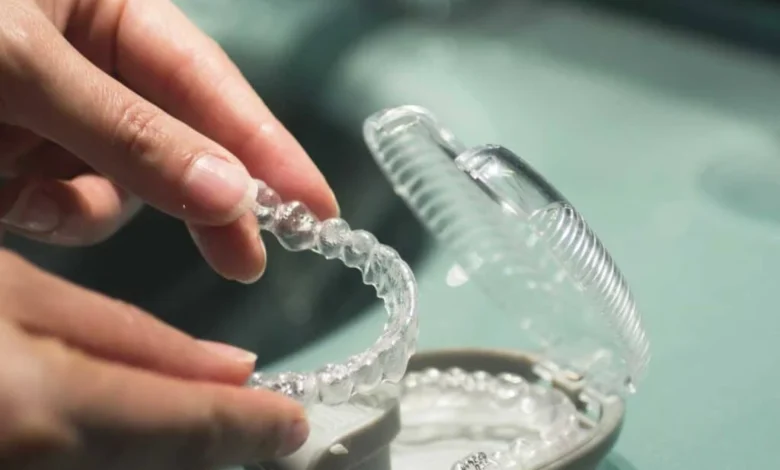
The landscape of modern orthodontics is undergoing a quiet, yet profound, industrial revolution. For decades, the fabrication of orthodontic appliances—from retainers to clear aligners—was the exclusive domain of external laboratories. Today, the rise of affordable, high-precision 3D printing technology has shifted the center of gravity back to the clinical office. However, as widespread adoption continues, a clear divide has emerged between practices that successfully integrate in-office manufacturing and those that treat the technology as a static asset.
The Evolution of In-Office Manufacturing
The shift toward in-house digital production is not a recent phenomenon, but rather the culmination of a decade-long decline in the cost of hardware and a simultaneous spike in software intuitiveness. In the early 2010s, 3D printers were largely experimental, cost-prohibitive, and technically demanding. By 2024, however, the barrier to entry has lowered significantly. According to research published in the American Journal of Orthodontics and Dentofacial Orthopedics, the adoption rate has accelerated because the digital pipeline—scanning, designing, printing, and post-processing—has become more reliable.
For practitioners like Tarek Elshebiny, DDS, MSD, a member of the American Association of Orthodontists’ Committee on Technology (CTech), the printer is merely a single link in a complex chain. The transition from outsourcing to in-house production requires a fundamental re-engineering of clinical operations. "The successful practices don’t only think about buying a printer; they think about building the workflow," Elshebiny notes. The process begins at the chairside with a digital scan and concludes with a finished appliance, with critical steps like resin washing, UV curing, and manual finishing occurring in between.
A Phased Chronology of Implementation
Orthodontists who have successfully scaled their in-office labs often follow a deliberate, phased implementation strategy. The most common entry point is the production of retainers. Because retainers are essential for post-treatment stability and often represent a significant source of "chair-time" management, they provide a low-risk, high-reward starting point for teams learning the digital ropes.
Lisa Alvetro, DDS, MSD, an orthodontist with 12 years of experience in in-house production, suggests that the learning curve for basic retainer fabrication can be as short as 48 hours. "You install the printer on Monday, you’re printing on Tuesday," she explains. Once a team masters the fundamentals of model printing and thermoforming, the natural progression leads to minor tooth movement cases, such as relapse management, followed by complex aligner cases and, eventually, indirect bonding trays.
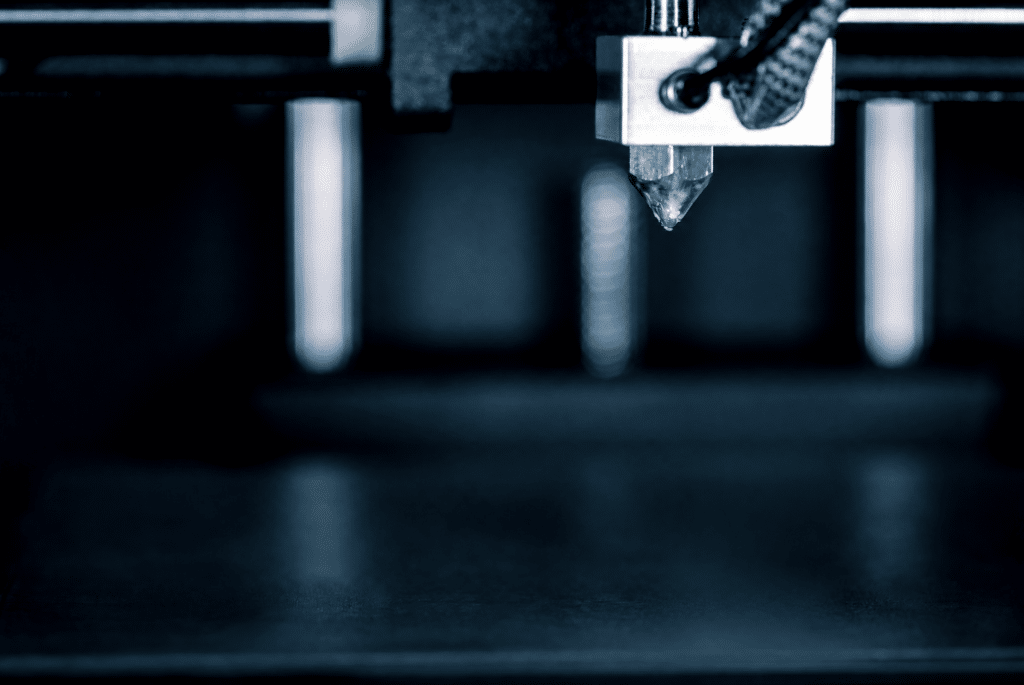
The inclusion of indirect bonding trays represents the final frontier of this progression. Unlike retainers, which are thermoformed over a printed model, indirect bonding trays are often printed directly and placed into the patient’s mouth. This requires a significantly higher degree of precision and quality control, which is why experts warn against attempting to jump straight to these advanced applications without years of foundational experience.
The Economics of Production: Balancing In-House vs. Outsourced
The decision to bring production in-house is rarely purely about cost-savings; it is about balancing three competing variables: time, cost, and quality. Bryan Lockhart, a practitioner in Charlotte, North Carolina, who manages four in-office printers, argues that the decision must be dynamic. His practice, which spans 4,000 square feet, utilizes a hybrid model.
In Lockhart’s practice, cases involving 20 aligners or fewer are produced in-house, while complex, long-duration cases—often exceeding 45 to 50 aligners—are outsourced to specialized manufacturers. This threshold is supported by data. Unpublished 2024 research from the Case Western Reserve School of Dental Medicine indicates that the economic viability of in-house aligner production tends to plateau after 45 sets. Beyond this volume, the labor costs and logistical overhead associated with in-office manufacturing begin to exceed the efficiency of external, industrial-scale facilities.
This calculus is subject to constant review. When market shifts in material costs or printer efficiency occur, practitioners must be prepared to adjust their strategy. For many, the true value of in-house production is not found in a spreadsheet but in the ability to deliver same-day service—a level of patient experience that is difficult to replicate when relying on the two-week turnaround times typical of external labs.
Staffing and the "One-Owner" Principle
Perhaps the most significant operational hurdle is staffing. The consensus among leading practitioners is that while one person should "own" the lab process to ensure accountability, the skill set must be cross-trained across the clinical team.
"If you have too many cooks in the kitchen, there’s a tendency for tasks to slip through the cracks," Lockhart observes. By cross-training clinical assistants, the practice mitigates the risk of downtime caused by staff absences or turnover. Furthermore, experts emphasize that the doctor must remain the primary expert in the workflow. If the doctor treats the lab as a "black box" that can be completely delegated without oversight, they lose the ability to troubleshoot technical failures or assess the efficacy of the production process.
Infrastructure and Risk Management
The physical environment of the lab is another area where practitioners often underestimate the requirements. An effective lab is not merely a corner of the office; it requires an intentional layout. Much like a hospital’s sterile processing department, an orthodontic lab must separate "dirty" zones (where resin is handled and printing occurs) from "clean" zones (where finished appliances are polished and packaged).
Ventilation is cited as a critical, non-negotiable safety feature. As orthodontic practices work with various resins, the need for proper air filtration and ventilation is paramount to protect staff and maintain a professional work environment.
Managing Workflow through Digital Tools
As production volume grows, manual tracking systems like Excel spreadsheets often fail. The transition to robust project management software is a hallmark of a mature in-office lab. Tools such as CAStrack or Smartsheet allow practices to visualize the lifecycle of a case, from the initial scan to the final delivery. This visibility is vital for front-desk coordination, ensuring that when a patient arrives for an appointment, the necessary appliance is already waiting for them.
Quality Control and Future Outlook
The final component of a successful lab is a rigorous approach to quality control. This involves routine maintenance, such as cleaning resin tanks and checking projector glass, as well as periodic calibration of the printers themselves. The goal is to move away from reactive troubleshooting and toward a proactive, standard-operating-procedure (SOP) based environment.
Looking forward, the impact of in-office production on the orthodontic industry is expected to grow. By bringing manufacturing under the same roof as clinical care, doctors are not only increasing their efficiency but also reclaiming the role of the orthodontist as the primary architect of the patient’s care. While the hardware—the 3D printers—will continue to get faster and more precise, the real competitive advantage for the next generation of orthodontic practices will remain the systems, the people, and the workflows that turn raw resin into patient outcomes.
Ultimately, the consensus among experts is clear: the technology is no longer the obstacle. The challenge for the modern practice is to stop viewing the 3D printer as a product to be bought and start viewing it as an infrastructure to be built. Those who succeed in building that culture will find themselves with a level of control, agility, and quality that was once impossible to achieve within the confines of a private practice.