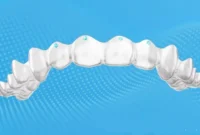
The Expert Behind Your New Smile: Understanding the Specialized Role of Orthodontists and Dentofacial Orthopedists in Modern Healthcare


Achieving a healthy, radiant smile involves far more than simple cosmetic dentistry; it requires the specialized medical and dental expertise of an orthodontist. While general dentists manage overall oral hygiene, routine cleanings, and restorative procedures like fillings and crowns, orthodontists undergo years of rigorous additional training to diagnose, prevent, and treat dental and facial irregularities. As the medical field continues to emphasize the profound connection between oral health and overall systemic well-being, the demand for specialized orthodontic and dentofacial orthopedic care has reached unprecedented levels. Modern orthodontic treatment goes beyond straightening visible teeth; it focuses heavily on optimizing bite functionality, mitigating chronic jaw pain, preventing long-term skeletal issues, and dramatically boosting patient self-esteem.
To understand the comprehensive nature of this specialized healthcare field, one must examine the extensive educational pathway required, the distinct differences between general dentistry and orthodontics, the sophisticated science of dentofacial orthopedics, and the critical importance of choosing certified professionals, such as members of the American Association of Orthodontists (AAO).
The Rigorous Educational Journey to Orthodontic Specialization
The path to becoming a certified orthodontist is among the most demanding and rigorous in the medical profession, typically requiring more than a decade of higher education, clinical training, and examinations. The journey begins at the undergraduate level, where aspiring orthodontists typically earn a bachelor’s degree with a heavy emphasis on science-intensive coursework, such as biology, chemistry, physics, and organic chemistry.
Following undergraduate studies, candidates must gain admission to an accredited dental school—a highly competitive process. Dental school typically requires four intensive years of study, culminating in a Doctor of Dental Surgery (DDS) or a Doctor of Medicine in Dentistry (DMD) degree. During this phase, students gain a comprehensive understanding of human anatomy, pathology, pharmacology, and general dental surgery.
However, graduating from dental school only qualifies an individual to practice general dentistry. To become a specialist in straightening teeth and aligning jaws, a dentist must apply to an accredited orthodontic residency program. These programs are exceptionally selective, often accepting only the top tier of dental school graduates. A standard orthodontic residency requires an additional two to three years of full-time, specialized study. This advanced training combines rigorous academic coursework in biomechanics, growth and development, and radiology with thousands of hours of supervised, hands-on clinical treatment of patients with complex dental and skeletal malocclusions. Only after successfully completing this multi-tiered educational pipeline is an individual officially recognized as a specialist orthodontist.
Orthodontist vs. General Dentist: Understanding the Distinction
A common point of confusion among patients is the difference between a general dentist and an orthodontist. While both professionals operate within the broader umbrella of oral healthcare, their scopes of practice, specialized training, and daily clinical focuses are distinct yet complementary.
General dentists serve as the primary care providers for a patient’s oral health. They perform routine check-ups, treat cavities, perform root canals, extract compromised teeth, and manage gum disease. They are trained to address a vast spectrum of immediate dental concerns for patients of all ages.
In contrast, orthodontists are dental specialists who limit their practice exclusively to the diagnosis, prevention, and correction of malpositioned teeth and jaws—collectively known as malocclusions. While a general dentist may offer basic alignment services, such as introductory clear aligner therapy for minor cosmetic adjustments, an orthodontist possesses the comprehensive, advanced training necessary to manage complex skeletal discrepancies, severe crowding, impacted teeth, and temporomandibular joint (TMJ) disorders.
Orthodontists utilize an array of sophisticated diagnostic records, including digital 3D scans, panoramic and cephalometric radiographs, and clinical photographs, to formulate customized treatment plans. They employ specialized appliances, ranging from traditional metal and ceramic braces to advanced clear aligners, rapid palatal expanders, and customized retainers. The collaborative relationship between general dentists and orthodontists ensures that patients receive holistic, coordinated care, where preventive maintenance and specialized alignment work hand in hand.
Unlocking the Science of Dentofacial Orthopedics
A crucial yet frequently misunderstood aspect of specialized orthodontic care is dentofacial orthopedics. While orthodontics primarily focuses on the movement and alignment of the teeth themselves, dentofacial orthopedics involves the guidance of facial growth and jaw development, which occurs predominantly during childhood and adolescence.
The bones of the upper and lower jaws grow at different rates and during distinct developmental windows. A dentofacial orthopedist is trained to evaluate these developmental trajectories and intervene when discrepancies arise. For example, if a young patient is developing a severe overbite, an underbite, or a narrow upper jaw that restricts breathing and dental alignment, specialized orthopedic appliances can be utilized to redirect bone growth.
By employing functional appliances, headgear, or palatal expanders during developmental years, orthodontists can correct skeletal disharmonies that would otherwise require invasive jaw surgery later in life. This early intervention not only optimizes facial symmetry and aesthetic balance but also ensures that the jaws function harmoniously during speaking, chewing, and breathing.
Historical Context and Evolution of Orthodontic Care
The practice of correcting dental irregularities has a surprisingly ancient history, with archaeological discoveries dating back to ancient Egypt, Greece, and Etruscan civilizations revealing crude bands and gold wires designed to close gaps and straighten teeth. However, modern orthodontics as a recognized medical specialty did not emerge until the late 19th and early 20th centuries.
Dr. Edward H. Angle, widely regarded as the "Father of Modern Orthodontics," revolutionized the field in the early 1900s by establishing the first school of orthodontics, founding the American Society of Orthodontists, and creating the first comprehensive classification system for malocclusions. Before Angle’s pioneering work, straightening teeth was considered a minor, unstandardized branch of dentistry. By establishing orthodontics as a distinct specialty, Angle laid the scientific foundation for modern biomechanics, diagnosis, and treatment planning.
Over the subsequent decades, technological advancements transformed the patient experience. The mid-20th century saw the widespread adoption of stainless steel, replacing gold and platinum in braces and reducing the cost and bulk of appliances. The introduction of the direct-bonding technique in the 1970s eliminated the need to wrap metal bands around every individual tooth, greatly improving patient comfort and oral hygiene.
In the 21st century, the digital revolution has redefined the specialty once again. The introduction of Computer-Aided Design and Computer-Aided Manufacturing (CAD/CAM) software, 3D printing, and removable clear aligner systems has shifted orthodontic care toward hyper-customized, highly aesthetic, and comfortable treatments. Today’s orthodontists utilize artificial intelligence and digital predictive software to show patients their expected treatment outcomes before a single bracket is placed or aligner is manufactured.
The Broader Implications: Health, Function, and Psychological Well-Being
The value of orthodontic treatment extends far beyond achieving a camera-ready aesthetic. Medical researchers and dental professionals emphasize that straight teeth are inherently healthier teeth.
Crowded, overlapping, or rotated teeth create hard-to-reach crevices that trap food particles and plaque. Over time, inadequate hygiene in these areas can lead to tooth decay, gingivitis, and advanced periodontal disease. Furthermore, a misaligned bite—or malocclusion—can place uneven stress on the teeth, jaw muscles, and temporomandibular joints. This abnormal wear and tear can result in chronic jaw pain, headaches, difficulty chewing, speech impediments, and premature erosion of tooth enamel.
Beyond physiological health, the psychological and social implications of a well-aligned smile are profound. Numerous psychological studies have demonstrated a direct correlation between dental aesthetics and an individual’s self-esteem, social confidence, and perceived professional competence. Adolescents and adults who undergo successful orthodontic treatment frequently report a significant boost in self-confidence, leading to more positive social interactions and enhanced quality of life. By correcting structural flaws early and effectively, orthodontists provide patients with a lifetime of functional comfort and uninhibited self-expression.
Why Professional Credentials Matter: Choosing an AAO Orthodontist
Given the complexity of moving teeth and reshaping facial structures, the choice of provider is paramount. Improperly administered orthodontic treatment—whether by under-qualified providers or direct-to-consumer mail-order aligner companies lacking direct clinical supervision—can lead to severe, irreversible complications, including root resorption, gum recession, tooth loss, and worsening skeletal malocclusions.
To ensure the highest standard of patient safety and clinical excellence, experts strongly recommend seeking treatment exclusively from specialists certified by the American Association of Orthodontists (AAO). Founded in 1900, the AAO is the world’s oldest and largest dental specialty organization, representing thousands of orthodontists in the United States, Canada, and abroad.
Membership in the AAO is restricted exclusively to individuals who have successfully completed an accredited orthodontic residency program following dental school. By selecting an AAO orthodontist, patients are guaranteed to receive care from an expert who possesses the comprehensive diagnostic skills, advanced technical training, and clinical judgment required to navigate complex dental structures safely and effectively.
Ultimately, investing in orthodontic treatment is an investment in long-term health, physical comfort, and personal confidence. By understanding the rigorous training behind the specialty, the distinction between dental professionals, and the profound science of dentofacial orthopedics, patients can make informed decisions that pave the way for a lifetime of healthy, functional, and beautiful smiles.