Early Orthodontic Evaluations: Why Children Don’t Need to Lose All Their Baby Teeth Before Seeing a Specialist

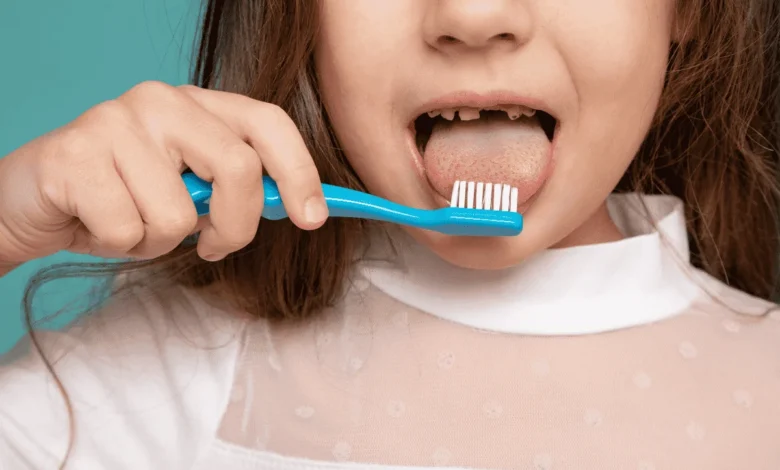
Parents navigating the complex landscape of pediatric dental health often grapple with a persistent misconception: the belief that a child must lose every single baby tooth before stepping foot into an orthodontist’s office. According to modern dental standards established by professional organizations such as the American Association of Orthodontists (AAO), this notion is entirely outdated. In fact, waiting until all primary teeth have fallen out can occasionally cause parents to miss critical windows for interceptive treatment, potentially complicating future dental corrections.
Contemporary pediatric orthodontics emphasizes proactive assessment rather than reactive intervention. Dental professionals increasingly advocate for early evaluations—specifically recommending that every child undergo their first orthodontic screening by the age of seven, or earlier if specific structural abnormalities become apparent. This investigative approach allows specialists to analyze the foundational architecture of a child’s mouth, observing how the jaw grows, how primary and permanent teeth interact, and how the upper and lower arches fit together long before the transition to an adult smile is complete.
The Evolution of Early Orthodontic Standards
Historically, orthodontic care was widely associated with teenagers sporting a mouthful of metal brackets during middle or high school. This traditional model was predicated on the idea that treatment should only begin once the permanent dentition was fully established. However, advancements in dental science, craniofacial biology, and orthodontic technology over the past few decades have reshaped this timeline.
Clinical research has demonstrated that certain developmental discrepancies—such as severe crossbites, skeletal asymmetries, underbites, and profound dental crowding—are managed much more effectively while a child is still experiencing active skeletal growth. During the elementary school years, a child’s jawbones are considerably more malleable than they will be post-puberty. By intervening during this dynamic developmental window, orthodontists can utilize orthopedic appliances, expanders, or limited functional devices to guide jaw growth and create adequate spatial pathways for incoming permanent teeth.
Consequently, the paradigm has shifted from waiting for problems to fully manifest to identifying and managing them proactively. This has given rise to the concept of "mixed dentition"—the transitional stage during which children possess a combination of primary (baby) teeth and newly emerged permanent teeth, typically spanning ages six through twelve.
Decoding the Mixed Dentition Stage
To understand why primary teeth do not need to be entirely absent before orthodontic intervention, one must examine the mechanics of mixed dentition. During this transitional era, a child’s mouth undergoes constant, rapid transformation. Molars erupt behind the primary teeth, incisors swap places, and the underlying jawbone expands to accommodate larger permanent structures.
An experienced orthodontist evaluating a patient during mixed dentition looks far beyond the mere visual aesthetic of straight front teeth. The evaluation encompasses several key clinical indicators:
- Skeletal and Dental Relationships: How the maxilla (upper jaw) and mandible (lower jaw) align horizontally and vertically.
- Eruption Pathways: Whether incoming permanent teeth have sufficient clearance or if they are deflected by retained primary roots.
- Functional Occlusion: How the teeth come together during chewing, speaking, and resting states, identifying abnormal contact points that could lead to premature enamel wear or temporomandibular joint (TMJ) strain.
- Ectopic Eruption and Impaction Risks: Detecting whether permanent teeth are trapped beneath the bone or primary teeth roots and taking preventative action.
Because primary teeth serve as natural placeholders for permanent successors, their premature loss—due to decay, trauma, or extraction—or their prolonged retention past their normal shedding window can severely disrupt dental alignment. For instance, if a primary molar is lost too early, adjacent
teeth may drift into the vacant space, blocking the path of the underlying permanent tooth and resulting in severe crowding. An orthodontist monitoring the mixed dentition stage can deploy space maintainers or other minor interventions to preserve arch integrity.
Phase 1 versus Phase 2 Orthodontics
Modern orthodontic treatment plans are frequently divided into distinct phases when early intervention is deemed necessary. Phase 1, formally known as early or interceptive orthodontics, occurs while the child still has a significant number of primary teeth.
The primary objective of Phase 1 treatment is not necessarily to achieve a lifetime of perfectly aligned, Hollywood-ready teeth at age eight. Instead, the goals are functional and orthopedic. Interceptive treatment aims to correct significant bite irregularities, modify the growth rate and direction of the jaw bones, improve facial symmetry, eliminate harmful oral habits (such as chronic thumb-sucking or tongue thrusting), and create a harmonious environment for the impending eruption of all permanent teeth.
Common modalities utilized during Phase 1 include:
- Palatal Expanders: Fixed or removable devices designed to widen a narrow upper jaw, effectively resolving posterior crossbites and creating room for crowded incisors.
- Partial Braces: Applying brackets and wires to a limited number of teeth—usually the front permanent teeth—to correct severe rotations, crossbites, or midline discrepancies.
- Functional Appliances: Specialized devices that harness the patient’s natural growth forces to encourage forward mandibular growth in children with significant overbites.
It is vital for parents to understand that Phase 1 treatment does not automatically eliminate the need for future care. In many cases, once all permanent teeth have erupted—usually in early adolescence—a second phase of treatment (Phase 2) is initiated. Phase 2 typically involves a full set of braces or clear aligners applied to all permanent teeth to fine-tune the final alignment, establish meticulous root positioning, and perfect the overall bite. However, patients who have undergone successful Phase 1 treatment often experience significantly shorter, less complex, and less invasive Phase 2 treatments, frequently avoiding the need for permanent tooth extractions or corrective jaw surgery later in life.
The Significance of the Age-Seven Benchmark
The American Association of Orthodontists recommends that a child’s initial professional evaluation take place no later than age seven. This specific age threshold is not selected arbitrarily; it represents a critical juncture in dental maturation. By age seven, most children have their first permanent molars erupting in the back, establishing the foundational posterior bite, and their permanent incisors are emerging in the front.
At this developmental stage, subtle bite anomalies and skeletal discrepancies become clinically apparent to a trained specialist, even if they remain completely imperceptible to parents or general pediatric dentists. Conditions such as skeletal crossbites, severe overjets (protruding front teeth), and anterior open bites are far easier to diagnose and treat during this active growth phase.
Crucially, an early check-up does not equate to an immediate prescription for braces. Statistical data from orthodontic practices nationwide indicate that a substantial percentage of children who undergo an evaluation at age seven require no immediate treatment whatsoever. For these patients, the initial visit establishes a baseline record. The orthodontist simply places the child on a periodic recall schedule—monitoring them every six to twelve months—to observe natural growth patterns and intervene precisely when the timing is optimal. This observational approach provides immense peace of mind to families while ensuring that developing issues are never overlooked.
Parental Observation and Direct Access to Care
While professional evaluation is indispensable, parents and primary caregivers remain the first line of defense in monitoring a child’s oral health. Parents are encouraged to look for visual or functional red flags that suggest an orthodontic consultation is warranted well before any administrative deadline.
Key warning signs that justify an early visit include:
- Early, delayed, or irregular loss of primary teeth.
- Difficulty or discomfort when chewing or biting food.
- Mouth breathing, persistent snoring, or chronic nighttime open-mouth posture.
- Crowded, misplaced, or blocked-out teeth in an otherwise growing arch.
- Jaws that shift, make sounds, or protrude noticeably forward or backward.
- Facial asymmetry or an unbalanced bite profile.
- Thumb, finger, or pacifier habits persisting past the age of five.
Importantly, parents do not need a formal referral from a general dentist to seek an orthodontic evaluation. Direct access to specialist care allows families to schedule consultations proactively whenever they harbor concerns about their child’s dental development. Orthodontists and pediatric dentists routinely collaborate as a cohesive medical team, sharing diagnostic records and coordinating comprehensive care strategies as a child’s smile matures.
Broader Implications for Long-Term Oral Health
The financial, physical, and psychological implications of timely orthodontic intervention extend far beyond cosmetic improvements. Malocclusions—improper bites—are not merely aesthetic imperfections. When teeth and jaws fail to fit together harmoniously, the resulting functional deficits can generate chronic health complications over time.
Uncorrected bite problems can accelerate localized enamel wear, strain the muscles of mastication, and place undue stress on the temporomandibular joints, potentially leading to chronic jaw pain and headaches in adolescence and adulthood. Furthermore, severely crowded or overlapping teeth present significant hygiene challenges, trapping plaque and food debris in inaccessible areas. This drastically increases the long-term risk of gingivitis, periodontal disease, and dental caries.
By demystifying the timeline of orthodontic care and dismantling the myth that all baby teeth must vanish before a specialist can intervene, parents are empowered to make informed, proactive decisions. Embracing early evaluations ensures that growing children receive the precise, individualized care they need at the exact biological moment it will be most effective, paving the way for a lifetime of healthy, functional, and confident smiles.