Most orthodontic practitioners view their professional mandate through the narrow lens of clinical excellence, diagnostic precision, and the biomechanical execution of tooth movement. For the majority of specialists, the role of a "motivator" is perceived as secondary—or even entirely irrelevant—to the technical requirements of the specialty. However, recent data from practice management consulting firms suggest that the operational success of a modern orthodontic practice is increasingly dependent on the leadership’s ability to cultivate a high-performance, motivated team culture. As administrative burdens and the demands of private practice management continue to escalate, the divide between clinical expertise and effective human capital management has become a critical point of failure for many offices.
The Evolution of the Orthodontic Practice Environment
The landscape of private orthodontic practice has undergone a seismic shift over the last two decades. The rise of private equity-backed dental service organizations (DSOs), the proliferation of direct-to-consumer aligner therapy, and the increasing complexity of insurance reimbursement models have transformed the orthodontic office into a high-pressure corporate environment. Historically, the orthodontist functioned as the sole proprietor and sole provider, with minimal emphasis on organizational psychology or team dynamics.
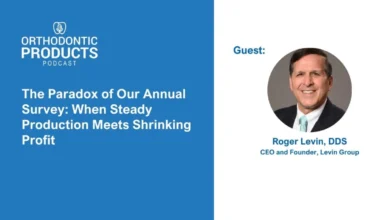
Today, the average practice must manage a multi-disciplinary staff, including treatment coordinators, clinical assistants, and insurance specialists. According to management metrics provided by the Levin Group, a practice’s total production is often more closely correlated with the efficiency and engagement of the staff than with the clinical speed of the doctor. When a doctor fails to provide intentional, structured motivation, the resulting vacuum is often filled by toxic behaviors, departmental silos, and internal conflict.
Chronology of Management Trends in Dentistry
The focus on "soft skills" in dentistry has moved from a peripheral interest to a central operational necessity. A timeline of this shift illustrates how the industry has matured:
- 1990s – 2005: The "clinical-first" era, where practice success was defined almost exclusively by the number of cases started and clinical output. Administrative roles were often secondary.
- 2006 – 2015: The "operational optimization" era. Practices began implementing standardized workflows and basic management consulting. The focus was on systems rather than human motivation.
- 2016 – 2022: The "culture-centric" era. Data began to show that high staff turnover rates were the single largest cost-driver for private practices, leading to a greater emphasis on retention and morale.
- 2023 – Present: The "leadership integration" era. There is now a widespread recognition that the orthodontist must act as the Chief Executive Officer of their practice, with psychological motivation serving as a core competency.
The Biological and Psychological Necessity of Motivation
Dr. Roger P. Levin, founder of the Levin Group, emphasizes that human motivation is not merely a "nice-to-have" executive perk, but a fundamental requirement for workplace stability. Psychological research in organizational behavior supports this: employees exhibit significantly higher levels of productivity when they feel a sense of purpose and appreciation. In an orthodontic setting, where clinical work is repetitive and high-stakes, the absence of motivation leads to burnout, which in turn leads to poor patient experience and lower conversion rates.
In terms of staff performance, the absence of active leadership manifests in specific, measurable ways:

- Stagnation of Conversion Rates: When a treatment coordinator is not motivated, they fail to connect with patients, resulting in lower case acceptance.
- Increased Friction: Unmotivated teams are prone to "factions," where departments—such as the front office and the clinic—cease to communicate effectively.
- High Turnover Costs: Replacing a trained orthodontic assistant can cost a practice up to 150% of the employee’s annual salary when factoring in recruitment, training, and lost productivity.
Strategies for the Practicing Orthodontist
For the clinician who finds the prospect of "motivation" daunting, experts suggest shifting the perspective from "cheerleading" to "strategic reinforcement." The following practices are consistently observed in top-tier, high-performing orthodontic offices:
The Daily "State of Mind" Reset
The doctor sets the tone for the entire office. Regardless of personal circumstances, the leader must arrive at the practice with a high-energy, positive, and focused demeanor. This "leadership presence" acts as an emotional stabilizer for the entire staff.
Structured Recognition Programs
Appreciation must be systematic rather than sporadic. Implementing a formal process for recognizing "a job well done"—whether it is a clinical assistant managing a difficult bracket placement or a front-desk coordinator de-escalating a billing dispute—reinforces positive behavior and creates a culture of achievement.
The Inspiration-Aspiration Loop
Leadership is not just about keeping employees happy; it is about keeping them hungry for professional growth. By consistently articulating a vision of excellence and helping staff members see their role as part of a high-achieving team, the orthodontist fosters "aspiration." When staff members aspire to be better, they naturally improve their performance metrics without the need for constant micromanagement.
Implications for Practice Longevity
The long-term success of an orthodontic practice is inherently linked to the stability of its human capital. As the market for orthodontic services becomes more competitive, the practices that will thrive are those that minimize turnover and maximize employee engagement.
Fact-based analysis suggests that the "traditional" orthodontist who refuses to engage in the management and motivational aspects of their practice faces a significant risk of diminished returns. As Dr. Levin notes, while a doctor may not define themselves as a "motivational speaker," they must accept that their team relies on them to be a source of consistent energy. Failing to meet this need is, in effect, a failure to manage the most expensive and volatile asset in the business: the team.
Conclusion
The evolution of the orthodontic profession demands a dual-competency approach. While the clinical mastery of wire-bending and digital treatment planning remains the baseline for entry, the ceiling for growth is determined by the orthodontist’s ability to lead. By embracing the role of a motivator, the doctor moves from being a practitioner to an architect of high-performing teams. This shift not only improves the internal health of the office but also directly impacts the patient experience, as a motivated team is almost invariably a more efficient, kinder, and more professional one. The evidence is clear: in the modern orthodontic landscape, the ability to inspire is just as critical as the ability to diagnose.
Related posts: