Understanding Palatal Expanders: A Comprehensive Guide to Correcting Malocclusions and Optimizing Jaw Development

Orthodontists employ a diverse array of specialized tools to address malocclusions, commonly known as bite problems, affecting individuals across all age groups from children to adults. Among these crucial instruments, the palatal expander stands out as a particularly effective yet frequently misunderstood appliance. Designed to gently and progressively widen the upper jaw, palatal expanders play a pivotal role in guiding craniofacial development, especially in younger patients, thereby proactively mitigating the emergence of significant transverse bite issues in later life. While not every orthodontic patient will necessitate an expander, its application represents a straightforward and common therapeutic step that merits a clear understanding rather than apprehension. The American Association of Orthodontists (AAO) consistently advocates for informed patient education, shedding light on the mechanics, indications, and expected outcomes associated with palatal expansion, a treatment with a well-established track record in modern orthodontics.
The Foundational Role of Palatal Expanders in Orthodontic Treatment
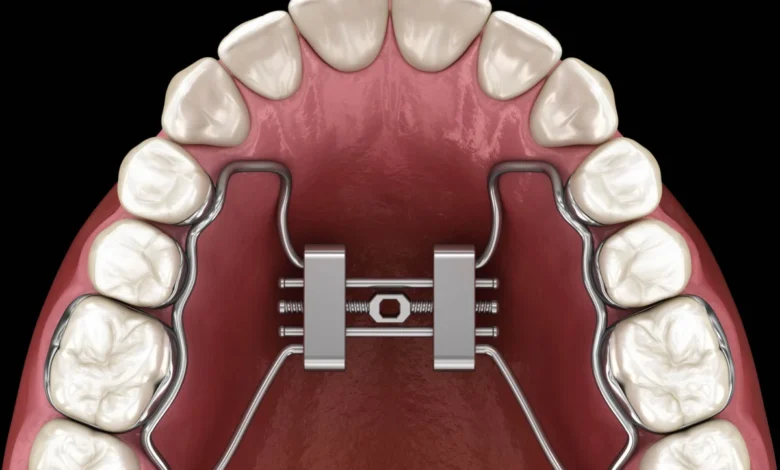
At its core, a palatal expander operates on principles akin to those governing braces, gradually applying controlled pressure to teeth and jaws to facilitate their movement into optimal positions. This specialized device is meticulously fitted across the roof of the mouth, known as the palate, and securely anchored to the upper back teeth. The underlying science behind its efficacy lies in the manipulation of the midpalatal suture, a cartilaginous junction that connects the two halves of the upper jaw (maxilla). In children and adolescents, this suture remains relatively pliable and responsive, allowing for biological adaptation and widening. As individuals age, this suture progressively fuses, becoming more rigid, which is why palatal expansion is most effective during periods of active growth.
The primary mechanism involves a central screw or spring system. Many expanders require periodic adjustment, often by turning a small key, which incrementally widens the device and, consequently, the upper jaw. Other contemporary designs incorporate built-in springs or wires that exert continuous, gentle pressure, negating the need for manual adjustments by the patient or caregiver. The precise type and design are determined by the orthodontist based on the patient’s specific anatomical needs and treatment objectives. This controlled expansion is critical for addressing discrepancies in jaw width, which can have far-reaching implications for dental health, facial aesthetics, and overall well-being.
Conditions Addressed by Palatal Expanders
While palatal expanders are a powerful orthodontic tool, their application is not universal. They are typically reserved for correcting specific, often severe, malocclusions or for proactively guiding jaw development to prevent the exacerbation of nascent issues. The prevalence of malocclusion, broadly defined, affects a significant portion of the global population, with estimates suggesting that between 60% to 75% of children and adolescents exhibit some form of bite irregularity. Among these, transverse discrepancies, where the upper jaw is too narrow relative to the lower jaw, represent a considerable subset.
The most common orthodontic issues effectively treated by palatal expanders include:
- Posterior Crossbite: This occurs when the upper back teeth bite inside the lower back teeth. A unilateral crossbite can lead to functional shifts of the lower jaw, potentially causing asymmetric jaw growth and temporomandibular joint (TMJ) problems over time. Bilateral crossbites result in a constricted upper arch, often forcing the lower jaw into an unnatural position. Early correction of crossbites is paramount to prevent long-term functional and skeletal imbalances.
- Crowding: A narrow upper jaw often lacks sufficient space for all permanent teeth to erupt correctly, leading to dental crowding. By expanding the palate, orthodontists can create more arch length, providing the necessary room for teeth to align naturally or with subsequent orthodontic treatment (like braces), potentially reducing or eliminating the need for tooth extractions.
- Impacted Teeth: When there isn’t enough space, certain teeth, most commonly canine teeth, may become impacted, meaning they are unable to erupt into their proper position. Palatal expansion can sometimes create the space needed to guide these impacted teeth into the dental arch, avoiding more invasive surgical exposures or extractions.
- Narrow Maxillary Arch: Beyond specific bite problems, an overall narrow upper jaw can compromise aesthetics, nasal breathing, and speech. Expansion aims to normalize the width, promoting better oral function and facial harmony.
- Airway Obstruction/Mouth Breathing: A constricted upper jaw can contribute to a narrow nasal airway, potentially leading to chronic mouth breathing, snoring, and even sleep-disordered breathing. While not a direct treatment for sleep apnea, palatal expansion can sometimes improve nasal airflow by widening the nasal cavity floor, which is the roof of the mouth. This physiological benefit underscores the comprehensive impact of orthodontic intervention beyond just dental alignment.
The Phased Approach to Palatal Expansion: A Chronology of Treatment
The application of a palatal expander follows a carefully structured, multi-phase process, meticulously monitored by the orthodontist to ensure optimal outcomes.
- Initial Assessment and Planning: The journey begins with a comprehensive orthodontic evaluation, typically recommended around age seven by the AAO, to identify potential malocclusions. This assessment includes clinical examination, dental impressions, and advanced imaging (X-rays, 3D scans) to precisely measure jaw dimensions, assess skeletal maturity, and pinpoint the midpalatal suture’s status. Based on this, the orthodontist formulates a personalized treatment plan, determining if an expander is indicated and selecting the most appropriate type.
- Appliance Placement: Once fabricated, the expander is custom-fitted and cemented onto the upper back teeth. The initial placement is generally straightforward, though patients may experience a sensation of fullness or mild pressure. The orthodontist provides detailed instructions on hygiene and, if applicable, the adjustment schedule.
- Active Expansion Phase: This is the core treatment period. The expander applies gentle, continuous, or intermittent pressure, depending on its design. For manually adjusted expanders, parents or patients (under supervision) follow a prescribed turning schedule, often once or twice daily for a few weeks. Each turn incrementally widens the jaw. The orthodontist monitors progress through regular appointments, ensuring the expansion is proceeding as planned and making any necessary adjustments to the schedule. This phase typically lasts between 2 to 4 weeks, depending on the required expansion. Patients often notice a gap appearing between their upper front teeth, which is a visible sign that the midpalatal suture is widening. This gap is temporary and will close naturally or with subsequent orthodontic treatment.
- Stabilization (Retention) Phase: Once the desired upper jaw width is achieved, the active turning ceases, but the expander remains in place. This critical stabilization phase, often lasting 3 to 6 months (or even longer), allows the newly formed bone to solidify in the expanded suture area. Without this retention, the jaw could relapse to its original, narrower dimension. This period ensures the long-term stability of the expansion.
- Post-Expansion Orthodontic Treatment: After the stabilization period, the expander is removed. This often marks the transition to the next stage of orthodontic treatment, which typically involves braces or clear aligners to refine tooth alignment and finalize the bite, integrating the newly expanded jaw into the overall occlusion.
Candidate Selection: The Critical Window of Growth
Palatal expanders are most commonly and effectively utilized in growing children and young teenagers. The success of expansion therapy is directly linked to the presence of a responsive midpalatal suture, which is optimally malleable before it fully ossifies (hardens). Orthodontists carefully consider several factors when determining a patient’s suitability, including chronological age, skeletal maturity (assessed through hand-wrist X-rays or cervical vertebral maturation analysis), and gender (girls typically complete their skeletal growth earlier than boys).
Early intervention, often around ages 7-10, can be highly advantageous. At this stage, the suture is still cartilaginous, allowing for orthopedic expansion – a true widening of the bone structure. In contrast, attempting expansion in fully grown adults often requires surgically assisted rapid palatal expansion (SARPE) or other orthognathic surgical procedures, as the fused suture cannot be predictably separated by orthodontic forces alone.
Appropriate and timely use of expansion therapy can yield significant benefits, including:
- Avoiding Tooth Extraction: Creating space proactively can often negate the need for removing permanent teeth to alleviate crowding.
- Preventing Tooth Impaction: By ensuring adequate arch space, the risk of canine or other teeth becoming impacted is substantially reduced.
- Minimizing Excessive Tooth Flaring: When teeth are pushed outwards to compensate for a narrow jaw, it can lead to instability and aesthetic concerns; expansion provides a more stable, skeletal solution.
Conversely, if transverse discrepancies are left uncorrected during the crucial growth phase, patients may face a cascade of problems, including asymmetric jaw development, abnormal tooth wear due to an imbalanced bite, increased risk of dental trauma (especially in cases of anterior crossbite), and chronic bite problems. These unaddressed issues often necessitate more invasive, complex, and costly treatments in adulthood, such as orthognathic surgery, which involves surgical repositioning of the jaw bones. The AAO strongly emphasizes the importance of an early orthodontic consultation to determine the optimal timing and treatment options.
Diverse Types of Palate Expanders
Orthodontic innovation has led to the development of several types of palatal expanders, each designed to address specific clinical scenarios and patient needs. The choice of expander is a critical decision made by the orthodontist based on the severity of the malocclusion, the patient’s age, and individual anatomical considerations.
- Rapid Palatal Expander (RPE): This is the most common type, characterized by a central screw that is turned periodically to rapidly widen the palate. RPEs are typically cemented to the posterior teeth via bands or bonded to the teeth. They are highly effective in growing patients where the midpalatal suture is still open.
- Hyrax Expander: A common design within the RPE category, the Hyrax expander features a threaded expansion screw and wire framework, often banded to molar teeth. It is known for its robust construction and direct application of force.
- Haas Expander: Similar to the Hyrax, the Haas expander incorporates acrylic pads that rest on the palatal tissue in addition to bands on the molars. This design distributes some of the expansion forces directly to the palatal bone, potentially enhancing skeletal expansion and reducing dental tipping.
- Bonded Expander: Instead of bands, this type is bonded directly to the chewing surfaces of the posterior teeth with a strong dental adhesive. This can offer advantages in certain cases, particularly for patients with compromised posterior teeth or specific eruption patterns.
- Slow Palatal Expander: In contrast to RPEs, slow expanders involve less frequent and smaller adjustments, leading to a more gradual expansion over a longer period. This approach may be chosen for milder discrepancies or when a slower, more controlled expansion is desired, though RPEs are generally favored for their efficiency in growing patients.
- Removable Palatal Expander: Less common for significant skeletal expansion, some removable appliances incorporate expansion screws. These are generally used for minor dental expansion or as part of a retention strategy. Their effectiveness relies heavily on patient compliance.
- Surgically Assisted Rapid Palatal Expander (SARPE): For adult patients where the midpalatal suture is fully fused, a surgical procedure is performed to strategically weaken or separate the maxilla, after which an expander (often a Hyrax-type) is used to achieve the desired widening. This is a more invasive approach reserved for mature skeletons.
- Micro-implant Assisted Rapid Palatal Expander (MARPE/MSE): A newer technique that uses temporary anchorage devices (TADs or micro-implants) placed directly into the palate alongside the expander. This method aims to achieve true skeletal expansion even in older adolescents and young adults by bypassing some of the dental tipping that can occur with conventional expanders and distributing forces more directly to the bone.
The Patient Experience: What to Expect with a Palatal Expander
Wearing a palatal expander introduces a new sensation and requires a period of adaptation. It is entirely normal for patients to report certain feelings and temporary changes, particularly during the initial days and immediately following an adjustment.
- Pressure and Fullness: The most common initial sensation is a feeling of pressure or "fullness" in the mouth, sometimes extending to the nose and cheekbones. This is a direct result of the gentle forces being applied to widen the jaw. Mild tenderness may also be present.
- Speech Changes: Many patients experience temporary alterations in speech, often a lisp, as the tongue adapts to the presence of the appliance on the roof of the mouth. This usually improves significantly within a few days to a week as the mouth becomes accustomed to the expander and the patient practices speaking.
- Increased Saliva: The mouth’s natural reaction to a new foreign object is often an increase in saliva production. This is a transient effect that typically normalizes as the patient adjusts.
- Gap Between Front Teeth: As mentioned, the appearance of a temporary gap (diastema) between the upper front teeth is a positive sign that the midpalatal suture is widening. This gap will typically close naturally or be addressed during subsequent orthodontic treatment.
- Discomfort vs. Pain: Most patients describe the sensation as pressure or mild soreness rather than sharp pain. If discomfort feels severe, persistent, or does not improve, contacting the orthodontist’s office is crucial for assessment. Over-the-counter pain relievers can often manage mild discomfort.
Eating and Cleaning with an Expander:
Maintaining oral hygiene and managing dietary choices are vital for the success and comfort of treatment with an expander.
- Dietary Adjustments: Patients are advised to avoid sticky, chewy, and hard foods that can dislodge or damage the expander, or get trapped in its mechanism. Examples include hard candies, chewing gum, taffy, nuts, and popcorn. Soft foods are recommended, especially after adjustments.
- Thorough Cleaning: Meticulous oral hygiene is paramount. Food particles can easily accumulate around the expander, particularly the screw mechanism. Patients should brush thoroughly after every meal, using a soft-bristled toothbrush. Special attention should be paid to cleaning around the bands and under the wires of the expander. An interdental brush or a water flosser can be particularly effective in dislodging debris from hard-to-reach areas. Regular rinsing with water or an antimicrobial mouthwash is also beneficial. Poor hygiene can lead to plaque buildup, gum inflammation, and potential decalcification of tooth enamel around the bands.
Frequently Asked Questions About Palatal Expanders
-
How long do you have to wear a palatal expander?
The total duration varies significantly based on individual patient needs and the specific treatment plan. The active expansion phase, where the expander is being adjusted, typically lasts only a few weeks (2-4 weeks). However, the expander then remains in place for a stabilization or retention period, usually 3 to 6 months, to allow the jaw bones to solidify in their new, wider position. Your orthodontist will provide a precise timeline tailored to your unique requirements. -
Does a rapid palatal expander hurt?
Most patients report feeling pressure or mild soreness rather than sharp pain, particularly during the first few days after placement and following each adjustment. This discomfort is generally manageable with over-the-counter pain relievers and subsides as the mouth adapts. If discomfort is severe or prolonged, it is important to contact your orthodontist. -
Will a palatal expander change speech?
Yes, it can temporarily affect speech patterns, often resulting in a lisp. This is because the tongue needs time to adjust to the new appliance occupying space on the roof of the mouth. Most patients notice significant improvement in their speech as they practice speaking and their mouth becomes accustomed to the expander, usually within a week or two. -
Can adults get palatal expansion?
While conventional palatal expansion is most effective in growing children due to the pliable midpalatal suture, adults can still undergo expansion. However, the treatment options differ. For adults with fused sutures, surgically assisted rapid palatal expansion (SARPE) or micro-implant assisted rapid palatal expansion (MARPE/MSE) are typically necessary. An orthodontist can thoroughly evaluate an adult’s jaw structure and treatment goals to determine if expansion is a viable option and explain the specific procedures involved. -
Are palatal expanders safe and effective?
Absolutely. Palatal expanders have been a cornerstone of orthodontic treatment for many decades and possess a robust safety and efficacy record, especially when administered under the careful supervision of a qualified orthodontic specialist. While some initial discomfort is common as the patient adjusts, it is typically minimal and transient. With diligent care, proper cleaning, and regular check-ups by an orthodontist, expanders are highly effective in achieving their intended therapeutic goals. They represent an invaluable tool in an orthodontist’s toolkit, often playing a critical role in intercepting and correcting complex orthodontic issues, thereby preventing more severe problems in the future.
Broader Impact and Implications of Palatal Expansion
The benefits of timely palatal expansion extend far beyond simply straightening teeth, encompassing functional, health, and psychological advantages.
- Improved Oral Function: A properly aligned bite enhances chewing efficiency, distributes forces evenly across teeth, and reduces the risk of abnormal tooth wear or fracture.
- Enhanced Nasal Breathing: By widening the maxilla, palatal expansion can increase the volume of the nasal cavity, potentially improving nasal airflow and reducing reliance on mouth breathing. This can positively impact sleep quality, reduce the incidence of respiratory infections, and contribute to healthier craniofacial development. Studies have shown that nasal breathing is crucial for proper facial growth, whereas chronic mouth breathing can lead to a long, narrow face, often termed "adenoid facies."
- Reduced Risk of TMJ Disorders: Correcting bite discrepancies and achieving harmonious jaw relationships can alleviate undue stress on the temporomandibular joints, potentially reducing the risk of developing painful TMJ disorders in later life.
- Aesthetic Improvements: A wider upper arch can contribute to a broader, more aesthetically pleasing smile, reducing "dark buccal corridors" (the dark spaces visible between the upper teeth and the corners of the mouth when smiling). It also contributes to overall facial balance and harmony.
- Psychological Benefits: For children and teenagers, addressing orthodontic issues early can significantly boost self-esteem and confidence. A healthy, attractive smile can have a profound positive impact on social interactions and overall well-being during formative years.
- Economic Considerations: While orthodontic treatment represents an investment, early intervention with palatal expanders can often be more cost-effective in the long run. By preventing the progression of severe malocclusions, it can reduce or eliminate the need for more expensive, complex, and invasive treatments, such as orthognathic surgery or extensive restorative dental work, in adulthood.
Consulting an AAO Orthodontist for Expert Guidance
Given the nuanced nature of orthodontic treatment and the critical importance of timing, the best initial step for anyone considering palatal expansion for themselves or their child is a comprehensive evaluation with a qualified orthodontist. These specialists possess the extensive education, training, and experience necessary to accurately diagnose complex bite problems, assess skeletal maturity, and formulate an individualized treatment plan. The American Association of Orthodontists (AAO) serves as a leading authority in the field, representing the highest standards of orthodontic care. Visiting an AAO-certified orthodontist ensures that patients receive evidence-based, high-quality treatment tailored to their specific needs. To initiate this process and learn if palatal expansion is the right solution, individuals are encouraged to utilize the AAO Orthodontist locator tool to find a qualified orthodontic specialist nearby and schedule a consultation. This proactive step can pave the way for a healthier, more functional, and aesthetically pleasing smile, with benefits that resonate throughout a lifetime.