The Strategic Imperative of Material Science in the Era of In-Office Clear Aligner Production

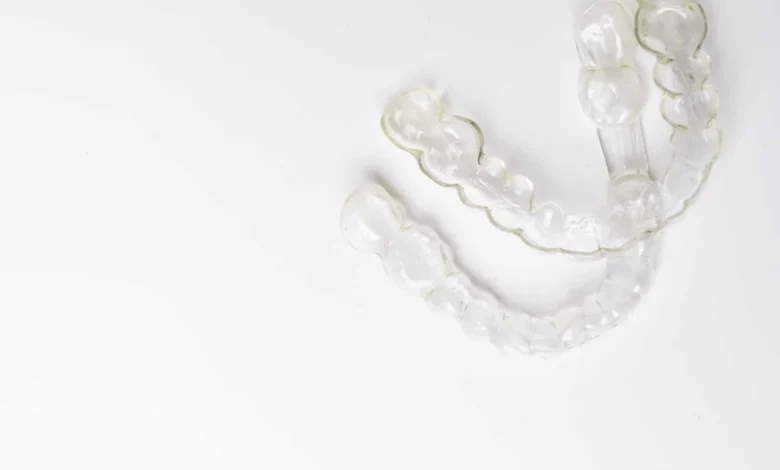
The landscape of modern orthodontics is undergoing a tectonic shift as private practices increasingly transition from outsourcing aligner production to bringing manufacturing workflows in-house. This transition represents more than a logistical change; it marks a fundamental evolution in the clinician’s role. Orthodontists are no longer merely prescribing a final tooth position; they are now responsible for the selection of the thermoplastic polymers that exert the mechanical forces required to achieve those clinical goals. As the market becomes flooded with various materials, the challenge for the modern practitioner is to discern true biomechanical performance from the marketing noise that often obscures technical specifications. To address this, a new white paper has been released, co-authored by clinical experts Rooz Khosravi, DMD, PhD, MSD, and Melissa Shotell, DMD, MS, in collaboration with polymer scientists from the Silicon Valley-based firm Bay Materials. This document serves as a critical guide for orthodontists to navigate the complexities of polymer chemistry and build a scientifically grounded material strategy.
The Evolution of In-Office Orthodontics: A Chronological Context
The history of clear aligner therapy began in the late 1990s, when the industry was defined by a centralized model. For decades, the majority of the market was dominated by large manufacturers that controlled the entire ecosystem, from the software used to plan tooth movement to the proprietary plastics used for the aligners. Orthodontists acted as conduits for these proprietary systems, rarely having the opportunity to choose the underlying material properties.
However, the late 2010s saw the convergence of several technological breakthroughs: high-resolution intraoral scanning, sophisticated CAD/CAM software for orthodontic treatment planning, and the democratization of high-precision 3D printing. These advancements allowed practices to bypass the centralized manufacturing model. By 2020, the onset of global supply chain disruptions further accelerated the interest in in-office production. Practices that had previously relied on external labs found themselves vulnerable to shipping delays and manufacturing backlogs. Consequently, the ability to print models and thermoform aligners in-house became not just a matter of clinical preference, but a business necessity.
Today, we are in the third wave of this movement, where the focus has shifted from the feasibility of manufacturing to the optimization of clinical outcomes. As practitioners take full control of the "printer-to-patient" pipeline, they are discovering that the quality of the final result is dictated as much by the material science as it is by the orthodontic planning software.
Demystifying Polymer Chemistry: Beyond Generic Labels
One of the central themes of the new white paper is the danger of relying on broad chemical categorizations. In the current market, materials are frequently marketed under generic labels such as "polyurethane" or "PETG" (Polyethylene Terephthalate Glycol). The authors argue that these terms are misleading because they describe broad families of polymers rather than specific performance profiles.
In the world of polymer science, the chemical composition of a material is only one variable. Factors such as molecular weight, cross-linking density, and the presence of additives significantly alter the physical properties of the final product. A "polyurethane" used for a packaging application, for instance, possesses vastly different mechanical characteristics than a medical-grade thermoplastic designed to exert constant, predictable forces on the periodontal ligament over a two-week period.
For the orthodontist, this means that selecting a material based solely on its general chemical classification is insufficient. Clinicians must instead focus on mechanical performance indicators, specifically force retention and tear resistance. Force retention refers to the material’s ability to maintain its original shape and exert a consistent level of pressure on the teeth as the aligner undergoes stress relaxation. If a material loses its force too quickly, the clinical efficacy of the aligner diminishes, potentially leading to tracking issues. Tear resistance is equally critical, particularly for patients with bruxism or for aligners that require complex attachments or hooks for inter-arch elastics.
Data-Driven Performance: The Zendura Portfolio
The white paper provides a deep dive into the Zendura portfolio, offering a practical framework for how different materials should be integrated into a comprehensive treatment strategy. The authors categorize materials based on their optimal clinical application, moving away from a "one-size-fits-all" plastic approach.
Zendura A, for instance, is highlighted for its high durability and stress relaxation resistance, making it an ideal candidate for long-term retention appliances. In contrast, the FLX and VIVA systems are engineered for the active phases of treatment. These multi-layer materials are designed to mimic the biomechanical requirements of tooth movement.
Supporting data cited in the research suggests that multi-layer systems—which typically feature a rigid core surrounded by more flexible outer layers—provide a more favorable force-delivery profile than monolithic materials. The rigid core maintains the structural integrity of the aligner, while the outer layers allow for better adaptation to the tooth morphology and attachment geometries. By strategically layering these materials, clinicians can optimize the transition between the initial alignment, the movement phase, and the final refinement, ultimately reducing the total number of aligners required to reach a clinical endpoint.
Economic Implications for the Modern Practice
The transition to in-office production is not merely a clinical decision; it is a significant economic lever. The white paper details how the strategic use of premium plastics can drastically improve practice economics. The primary cost driver in clear aligner therapy is not the plastic itself, but the labor associated with refinement appointments and the chair time required to address "non-tracking" aligners.
When an aligner fails to track properly, the clinician is forced to halt the treatment, perform an additional scan, and manufacture a new set of aligners. Each of these "refinements" carries a direct cost in materials and an even greater opportunity cost in chair time. By utilizing high-performance materials that provide more consistent force, practices can reduce the frequency of these mid-course corrections.
According to clinical analysis within the paper, a 15% reduction in refinement rate can lead to a substantial increase in annual revenue per chair, as the saved time can be redirected toward new patient consultations or more complex orthodontic procedures. Furthermore, the use of more durable, tear-resistant materials reduces the number of emergency appointments necessitated by fractured aligners, thereby enhancing patient satisfaction and reducing the administrative burden on the practice staff.
Clinical Perspectives: Insights from Dr. Khosravi and Dr. Shotell
Dr. Rooz Khosravi and Dr. Melissa Shotell bring a wealth of academic and clinical experience to the discussion. Their contributions emphasize that material science should be viewed as an extension of the clinician’s diagnostic toolkit. By understanding the biomechanical response of the thermoplastic, the orthodontist can better calibrate the software settings—such as the amount of overcorrection or the size and shape of attachments—to match the material’s performance.
In their clinical practice, Dr. Khosravi and Dr. Shotell advocate for a "Material-First" planning methodology. This involves selecting the aligner plastic at the same time the treatment plan is being finalized. By doing so, the clinician can tailor the movement increments to the stress-relaxation properties of the specific material being used. If a material is known to exhibit higher force decay, the clinician may choose to shorten the interval between aligner changes or reduce the distance of tooth movement per tray. This level of granular control, they argue, is the next frontier of orthodontic excellence.
Broader Impact and Future Outlook
The release of this white paper underscores the growing sophistication of the orthodontic community. As the industry matures, the "black box" approach—where the material and the mechanics are obscured by a third-party manufacturer—is rapidly losing favor. Orthodontists are increasingly demanding transparency in the manufacturing process, from the source of the raw resin to the thermoforming parameters.
The shift toward in-office production, supported by deeper knowledge of polymer science, is likely to result in more predictable treatment outcomes across the board. Furthermore, as more practitioners adopt these advanced materials, the collective data pool regarding which polymers perform best for specific malocclusions will grow, further refining the field of digital orthodontics.
However, the authors also caution that knowledge of material science is not a substitute for clinical judgment. The technology, while powerful, requires a high level of expertise to implement successfully. Practitioners must be prepared to invest in the education and training necessary to master the nuances of polymer behavior. The collaboration between clinical experts and material scientists, as demonstrated in this white paper, represents a vital bridge between the theoretical world of polymer chemistry and the practical realities of the orthodontic clinic.
As the market continues to evolve, the distinction between those who merely produce aligners and those who master the biomechanical properties of their materials will likely become a key competitive differentiator. For the modern practice, the path forward is clear: the integration of rigorous material science into the orthodontic workflow is no longer an optional advantage, but a foundational requirement for delivering high-quality, efficient, and cost-effective patient care.