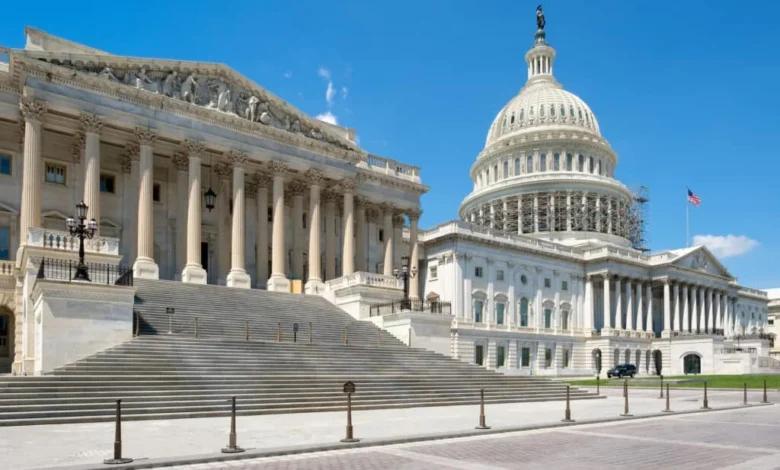
The American Dental Association (ADA) has officially signaled its intent to reshape the regulatory landscape of the dental insurance industry, marking a significant escalation in its advocacy efforts. In a comprehensive policy letter submitted to the House Judiciary Subcommittee on the Administrative State, Regulatory Reform, and Antitrust, the ADA articulated a series of grievances and legislative recommendations aimed at curbing what it characterizes as the unchecked dominance of large dental insurers. This submission, provided in advance of the subcommittee’s September 14 field hearing titled “Examining Healthcare Markets: Fraud and Competition,” underscores the growing tension between independent dental practitioners and the monolithic insurance corporations that dictate the terms of care delivery and reimbursement.
The Landscape of Market Concentration
At the heart of the ADA’s argument is the alarming degree of market concentration within the dental insurance sector. Drawing upon data from the U.S. Government Accountability Office (GAO), the association highlighted that the three largest stand-alone dental insurers command a staggering portion of the group market. In many states, this concentration is near-monopolistic, with the three largest carriers controlling between 38% and 97% of the market. In 11 states specifically, these entities hold at least 80% of the market share.
This level of consolidation creates a significant power imbalance. Independent dental practices, which often operate as small businesses with limited administrative resources, find themselves at a distinct disadvantage when negotiating reimbursement rates or disputing claim denials with national insurers that possess vast legal and actuarial departments. The ADA has urged federal regulators to intensify their oversight of mergers and vertical integration, arguing that such activity further restricts competition and reduces the leverage of local providers. Furthermore, the association has called for increased scrutiny of “patient steering”—a practice wherein insurers use their network structures to funnel patients toward specific providers or corporate-owned clinics, often at the expense of patient choice and established doctor-patient relationships.
The Complexities of Network Leasing
One of the most contentious issues highlighted in the ADA’s correspondence is the practice of network leasing. Under these arrangements, an insurer may “rent” its network of dentists to an outside entity, such as a third-party administrator or another insurance company, effectively extending a dentist’s negotiated rates to parties with whom the dentist never originally contracted.
While the association concedes that network sharing is not inherently fraudulent, it emphasizes that the lack of transparency is a critical failure. Dentists are frequently unaware that their fee schedules have been leased to third parties, leading to situations where both the provider and the patient are confused about the applicable fee schedule at the point of service. To address this, the ADA is advocating for a “mandatory opt-in” framework. Under this proposal, dentists would be required to provide affirmative consent before any network arrangement is extended to an outside entity. Additionally, the association is demanding advance notice of any material changes to contracts or fee schedules, ensuring that practitioners can make informed decisions about their participation in various plans.
The AI Frontier: Guardrails for Automated Claims
As the healthcare industry accelerates its adoption of artificial intelligence and machine learning, the dental sector is witnessing a rapid deployment of automated claim review tools. While insurers argue that these tools improve efficiency and reduce fraud, the ADA has raised significant concerns regarding the lack of accountability in AI-driven decision-making.
The association’s position is that AI should serve as an adjunct to, rather than a replacement for, clinical judgment. In its letter to the subcommittee, the ADA stated that payment suspensions and AI-driven claim denials must be subject to robust validation protocols. The association is explicitly calling for:
- Transparency: Insurers must disclose the logic and data sets used by AI systems to deny claims.
- Human Review: There must be a mandatory human-in-the-loop requirement for all denials and prior authorization decisions.
- Appellate Rights: Providers must have a clear, accessible pathway to appeal AI-generated denials, ensuring that clinical nuance is not sacrificed for algorithmic efficiency.
The ADA warns that if left unregulated, insurers may rely on AI as the “sole basis” for denying care, effectively turning complex clinical decisions into binary algorithmic outputs that prioritize cost-cutting over patient health outcomes.
Navigating ERISA and Medicare Advantage
The ADA also directed its attention toward the complexities of the Employee Retirement Income Security Act (ERISA) and the evolving Medicare Advantage (MA) program. Carriers have historically utilized ERISA preemption to circumvent state-level dental protections. The ADA is lobbying Congress to clarify that state laws governing the delivery and payment of dental care should remain enforceable even when a carrier is administering a self-funded plan. This clarification is seen as essential for maintaining a baseline of consumer and provider protection that currently varies wildly across state lines.
Regarding Medicare Advantage, the stakes are equally high. With 52% of MA enrollees selecting their plans specifically for the supplemental dental benefits, the current administrative burden is unsustainable. The ADA pointed out that the lack of standardized electronic eligibility and benefit verification forces dental office staff to perform manual, time-consuming checks across a fragmented landscape of plan designs. The association is pushing for standardized electronic verification systems and, crucially, for more rigorous reporting requirements regarding benefit design, utilization, network adequacy, and claims payment transparency within the MA program.
Avoiding Regulatory Overreach: The Hospital Distinction
A critical theme in the ADA’s testimony is the distinction between large hospital systems and small, independent dental practices. As Congress explores legislative remedies to address provider market power, the ADA expressed concern that regulations designed to curb the influence of massive, consolidated hospital networks could inadvertently harm independent dentistry.
The association’s message to the subcommittee was clear: “Independent dental practices are generally small businesses and should not be conflated with large, consolidated health systems.” By applying “hospital-grade” compliance regulations—such as complex reporting or massive infrastructure requirements—to a small dental office, lawmakers could trigger unintended consequences, including increased overhead costs that lead to higher prices for patients and the potential closure of smaller practices in rural or underserved areas.
Broader Implications and Outlook
The ADA’s outreach to the House Judiciary Subcommittee represents a strategic pivot toward federal advocacy. By framing their concerns around “antitrust” and “market competition,” the association is aligning itself with broader bipartisan efforts in Washington to address corporate consolidation.
The implications of these proposals are significant. If the subcommittee adopts the ADA’s recommendations, the dental insurance industry could face a new era of federal oversight. Legislative actions that mandate transparency in network leasing, enforce human oversight in AI claims processing, and provide state-level protections against ERISA preemption would fundamentally shift the power balance in the dental market.
From an industry perspective, these moves are a direct response to the frustration felt by practitioners who believe the current system rewards administrative opacity over clinical quality. As the hearing process continues, the dental industry will be watching closely to see if lawmakers prioritize the needs of small-business providers or if the lobbying power of the major insurance carriers succeeds in maintaining the status quo. The push for a more equitable relationship between insurers and providers appears to be gaining momentum, with the ADA positioning itself as the primary voice for the practitioners who serve on the front lines of oral healthcare. Whether these efforts culminate in substantive legislative reform remains a question for the coming congressional sessions, but the blueprint for change has been formally delivered to the halls of power.