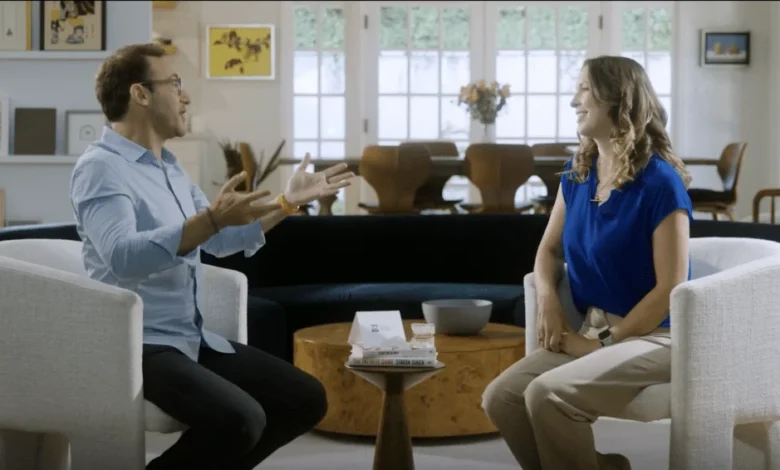
For decades, the standard curriculum for aspiring orthodontists has been anchored in the rigid, high-stakes domains of craniofacial biology, biomechanics, and clinical treatment planning. While these technical proficiencies are essential to patient care, the reality of contemporary practice management has shifted dramatically. Today’s orthodontists are no longer just practitioners; they are small business owners, human resource managers, and organizational leaders tasked with navigating the complexities of a multi-generational workforce. Recognizing this growing disparity between clinical training and the practical demands of private practice, the American Association of Orthodontists (AAO) launched a strategic partnership with renowned leadership expert and author Simon Sinek to bridge the gap.
A Curriculum Beyond the Chair
The Simon Sinek–AAO Inspiring Leadership program, an intensive six-module, self-paced online certification, represents a paradigm shift in how professional organizations approach continuing education. Rather than focusing on orthodontic hardware or billing software, the program centers on the "soft skills" that are increasingly identified as the primary drivers of long-term business success: conflict resolution, empathetic communication, and the cultivation of a resilient practice culture.
Since its launch in October 2024, the initiative has seen robust engagement, with over 600 orthodontists and 80 office managers completing the curriculum. The program’s design reflects a shift in the modern medical landscape, where staff retention and employee burnout have become as critical to business viability as patient intake numbers.
The Genesis of the Initiative: Addressing the Leadership Gap
The inception of the partnership can be traced back to a series of internal focus groups conducted by the AAO. Mindi Brothers, the association’s vice president of strategy and innovation, noted that while the initial outreach targeted younger, early-career orthodontists, the data revealed a universal pain point. Regardless of whether a practitioner was two years or twenty years into their career, the challenges of managing a diverse, modern workforce remained constant.
"Even though an orthodontist may have been in practice for 20-plus years, who they’re leading and who they’re managing is different," Brothers observed. The evolution of the workforce—characterized by changing expectations regarding work-life balance, transparency, and purpose—has rendered traditional, top-down management styles largely ineffective. The AAO program addresses this by integrating Sinek’s core philosophies—derived from his seminal works Start with WHY, Leaders Eat Last, and The Infinite Game—with specific, actionable strategies designed for the clinical environment.
The Chronology of Implementation and Expansion
- Early 2024: The AAO identifies a critical need for leadership training through member surveys and focus groups.
- October 2024: The Simon Sinek–AAO Inspiring Leadership program officially launches, marking the first time the association has collaborated with a non-clinical leadership expert of this profile.
- Late 2024–2025: The program gains momentum, with early participants sharing success stories regarding staff retention and improved office morale.
- January 28, 2027: The next cohort is scheduled to commence, reflecting a long-term commitment to the program’s institutional role.
Multi-Disciplinary Expert Collaboration
What distinguishes this program from generic business seminars is the inclusion of specialized guest instructors who translate theoretical leadership concepts into practical orthodontic applications. The curriculum features insights from retired Navy SEAL Rich Diviney, organizational psychologist Dr. Zach Mercurio, and renowned restaurateur Will Guidara.
Each module concludes with an "AAO-member segment," where practicing orthodontists analyze the lecture material and provide concrete examples of how to apply the principles to daily clinical workflows. Dr. Kaitrin Kramer, a craniofacial orthodontist at Nationwide Children’s Hospital and a program instructor, emphasizes that this "granular" approach is the program’s greatest strength. It allows practitioners to see how a abstract concept—such as "creating a safe environment"—manifests in the context of a high-pressure office environment where bracket failures or scheduling errors might otherwise spark interpersonal conflict.
Reconnecting with Purpose: The "Why" as a Business Strategy
A central pillar of the program is the concept of "finding your why," a term popularized by Sinek to define the intrinsic purpose that drives an individual’s professional life. For many practitioners, the daily grind of orthodontic production can lead to a sense of existential exhaustion. By defining a clear, mission-driven purpose, practitioners can move beyond the "transactional" nature of their work.
Dr. India Collier, a practitioner preparing to launch her own practice in Atlanta, noted that the process of drafting a personal "why" statement was a transformative, albeit challenging, experience. Her definition—"to empower others to rise through adversity"—has become the north star for her new practice’s hiring and culture-building strategies. Similarly, Dr. Nathan Hamman, who operates a practice in Southaven, Mississippi, found that articulating his purpose—creating a workplace where he and his team are genuinely happy—led to a measurable shift in office atmosphere.
From Theory to Operational Reality
The implications of the program extend into the nuts and bolts of office management. For Dr. Hamman, the most significant change occurred when he translated these abstract lessons into team-wide communication strategies. By involving his leadership team in a deep dive into the practice’s core values, he was able to reframe operational issues.
For instance, when addressing the perennial issue of bracket failures, Hamman no longer frames it as a simple error of performance. Instead, he links it to the practice’s broader vision of creating a stress-free environment for the staff and a better experience for the patients. This contextualization ensures that staff members understand the "why" behind the operational feedback, increasing buy-in and reducing the friction typically associated with performance management.
Furthermore, the program introduces concepts like "dynamic subordination," a military-inspired principle taught by Rich Diviney. This encourages a culture where employees feel empowered to make decisions and act as leaders in the absence of the practice owner. This transition is not instantaneous; as Hamman notes, it requires the owner to first confront their own past leadership failures and create an environment of psychological safety where mistakes are treated as learning opportunities rather than disciplinary triggers.
Broader Economic and Professional Implications
The success of this program signals a significant evolution in the professional development of dental specialists. In an era where corporate dentistry and private equity-backed practices are increasingly common, independent practitioners must differentiate themselves not just through clinical quality, but through the strength of their organizational culture.
Data from recent industry studies suggests that "culture" is the number one factor in employee retention within medical offices. By investing in leadership development, the AAO is effectively providing its members with a competitive advantage. The fact that veteran practitioners—those with over 20 years of experience—have enrolled at rates nearly matching those of early-career doctors suggests a systemic recognition that leadership is a perishable skill, one that requires constant cultivation in a rapidly changing labor market.
Looking Toward the Future
The AAO’s decision to continue the program into 2027 and beyond underscores a broader realization: the "soft skills" of yesterday are the "hard requirements" of today. For Dr. Kramer, the program serves as a reminder that professional development is not a static achievement but an ongoing investment. "See this as an investment in yourself, and don’t pass up an opportunity to invest in yourself," she advises.
As the industry continues to consolidate and the competition for talent intensifies, the ability to build a team that is not only competent but also committed to a shared purpose may well become the defining factor between practices that stagnate and those that thrive. Through the partnership with Simon Sinek, the AAO has moved the conversation beyond the mechanics of teeth and into the mechanics of human connection, setting a new benchmark for professional excellence in the orthodontic field. The program stands as a testament to the fact that when leaders are equipped with the right tools, the ripple effects—felt by staff, patients, and the practitioners themselves—can be profound and lasting.