
Trade Show ROI Rethink: Why Orthodontic Brands Must Shift From Conversion Machines to Consideration Engines

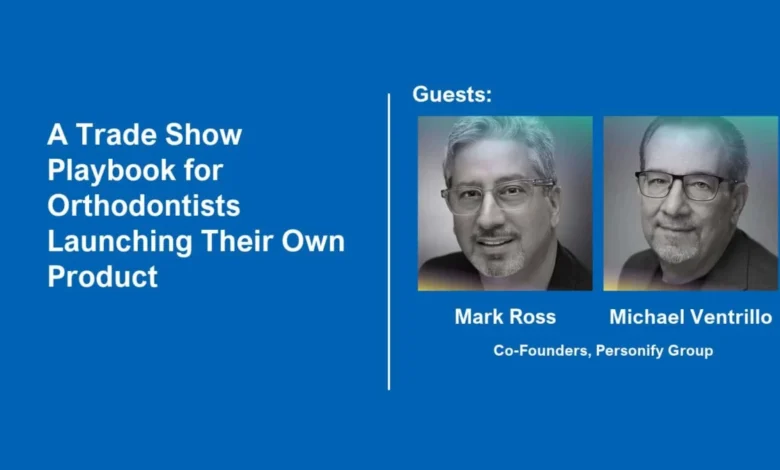
Trade shows have long been viewed by the orthodontic and dental industries as the primary battlegrounds for product conversion, yet a growing body of evidence and industry expertise suggests this traditional "booth-first" approach is fundamentally flawed. As the costs of physical presence at major dental conventions—including travel, logistics, booth construction, and staffing—continue to climb, companies are increasingly struggling to justify the return on investment (ROI). Mark Ross and Michael Ventriello, co-founders of the branding and commercialization firm Personify Group, argue that the industry must pivot toward viewing these events as "consideration engines" rather than immediate point-of-sale platforms.
The Psychology of the Show Floor
The primary obstacle for exhibitors is not necessarily the quality of their product, but the defensive instinct of the attendee. Industry data indicates that attendees at high-density medical trade shows—such as the American Association of Orthodontists (AAO) annual session—often operate in a state of cognitive overload. When walking the show floor, doctors and practice staff frequently adopt a guarded posture, a psychological phenomenon akin to a consumer walking into a retail environment and immediately signaling they are "just looking" to avoid sales pressure.
This defensive posture is a direct response to the aggressive, feature-based sales tactics often deployed by exhibitors. Ross notes that when companies attempt to initiate contact with generic inquiries or high-pressure sales pitches, they trigger a flight response in the attendee. For an exhibitor to break through this wall, they must move away from feature-heavy messaging and toward a benefit-based narrative that addresses specific practice workflows, patient outcomes, and profitability. The effectiveness of a booth, therefore, is not measured by the number of scanners or software licenses sold on the floor, but by the number of meaningful, long-term conversations initiated during the event.
The Anatomy of the Trade Show Relay
Successful commercialization at a trade show is best understood as a three-part relay race. The first leg begins months before the show opens. Without pre-show marketing—such as strategic email campaigns, digital advertising, or targeted public relations—a booth remains a passive entity that relies entirely on luck to attract traffic. By the time a doctor reaches the booth, their interest should have already been piqued by a pre-show press release, a white paper, or a peer-to-peer recommendation.
The second leg is the show itself, where the primary objective is to maintain credibility. In this phase, the booth acts as a destination rather than a trap. If a company can align itself with a Key Opinion Leader (KOL) or a respected practitioner who can speak to the product’s real-world efficacy, the booth effectively legitimizes its brand.
The final leg of the relay is the post-show follow-up. Data consistently shows that the conversion of a lead into a sale rarely occurs during the three days of the exhibition. Instead, the most successful firms use the show to capture qualified leads and then execute a structured, long-term follow-up process. Companies that fail to differentiate between a "popcorn-seeking" visitor and a qualified prospect often suffer from bloated lead lists that yield low conversion rates.
Measuring Financial Success: The ROI Calculator
The financial barrier to entry for a mid-sized orthodontic company can be significant, often ranging from tens of thousands to hundreds of thousands of dollars per event. Despite this, many companies measure success using anecdotal evidence or superficial metrics. Personify Group has recently introduced an interactive ROI calculator designed to bring analytical rigor to these decisions. By inputting granular costs—including booth space, shipping, drayage, travel, lodging, and staff time—companies can determine their "break-even" point.
This analytical approach reveals a harsh reality: many companies spend exorbitant sums for a marginal increase in visibility that does not translate to bottom-line growth. The tool emphasizes that if a company is merely trying to "stay relevant" by appearing at every major event, they are likely misallocating capital that could be better spent on digital infrastructure or targeted educational outreach.
Strategic Planning and Brand Foundations
For startups and orthodontists bringing their own innovations to market, the pressure to exhibit is immense. However, experts warn against rushing to the show floor without a robust brand foundation. A product that lacks a clearly defined unique selling proposition (USP) will struggle to gain traction in a crowded marketplace, regardless of the size or flashiness of its booth.
The recommended timeline for trade show success is long-term. Preparation should ideally begin at the conclusion of the previous year’s event. This includes:
- 12-24 Months Out: Securing speaking opportunities for company-affiliated KOLs.
- 6-9 Months Out: Establishing the core brand message and identifying target audience segments.
- 3-4 Months Out: Initiating pre-show marketing, including social media outreach and media relations.
- During the Show: Prioritizing educational interactions and workflow demonstrations over "show-only" pricing, which can dilute brand equity.
The Role of Education and Workflow Integration
A frequent mistake made by newer companies is the assumption that the sale ends at the purchase. In the orthodontic market, where consumables and long-term software support are key, the failure to provide adequate post-sale training is a significant risk. If a product is not effectively integrated into the practice’s workflow, it will sit idle, leading to a loss of the "consumable" revenue stream.
The trade show serves as a critical opportunity to demonstrate not just the device, but the process. Exhibitors who offer live, hands-on demonstrations that highlight ease-of-use and patient experience gain a significant competitive advantage. This educational approach serves the dual purpose of proving product value and building trust, which are the two pillars of long-term commercial success in dentistry.
The Future of Trade Show Strategy
As the industry moves toward 2027, the role of the traditional trade show is likely to evolve. Smaller, more intimate environments—such as table-top kiosks in "innovation zones"—are gaining popularity. These setups allow for focused, high-value interactions at a fraction of the cost of a full-scale island booth.
For the average orthodontic company, the path forward is clear: success requires a disciplined alignment between sales and marketing teams. The siloed approach—where marketing designs the booth and sales is left to "work the floor"—is outdated. Both departments must agree on the core message, the desired outcomes, and the metrics of success before a single crate is packed.
Ultimately, the trade show floor is not a place to force a conversion. It is a place to earn the right to continue the conversation. By treating these events as high-stakes engagement opportunities rather than temporary retail outlets, companies can foster the long-term relationships necessary to thrive in an increasingly competitive orthodontic landscape. Companies looking to refine their approach are encouraged to utilize objective planning tools, audit their historical performance, and prioritize the development of their brand story over the vanity of a large footprint. The goal is no longer just to be seen; it is to be remembered and, eventually, to be trusted.