August 2026 IAPD Global News Update: Early Bird Extensions, Scientific Advancements, and Preparations for the Barcelona Summit

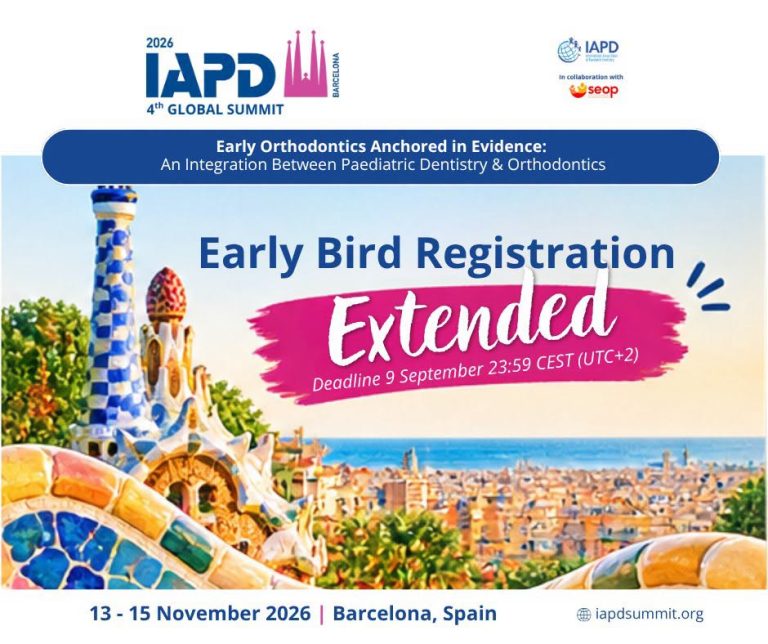
The International Association of Paediatric Dentistry (IAPD) has officially announced an extension for the early bird registration deadline for the 4th Global IAPD Summit, now set for September 9, 2026. This pivotal event, scheduled to take place in Barcelona, Spain, serves as a cornerstone for the global paediatric dentistry community, fostering an environment of scientific inquiry, clinical collaboration, and professional networking. As the countdown to the November summit intensifies, the IAPD has also released its latest consensus recommendations on restorative dentistry and updated its digital resources, ensuring that practitioners worldwide remain at the forefront of evidence-based care.
The 4th Global IAPD Summit: A Hub for Clinical Innovation
The 4th Global IAPD Summit represents a significant milestone in the organization’s ongoing mission to improve oral health outcomes for children globally. The summit is designed to bridge the gap between academic research and daily clinical practice. By convening the world’s leading experts, educators, and clinicians in Barcelona, the IAPD aims to address the rapidly evolving challenges of modern paediatric dentistry, including the rising incidence of early childhood caries, the integration of digital diagnostics, and the shifting landscape of minimally invasive treatment modalities.

The decision to extend the early bird registration period until September 9, 2026, reflects a commitment to inclusivity, allowing a broader spectrum of international delegates to participate at a reduced rate. This period is critical for the IAPD, as registration data currently suggests a high level of engagement from both academic institutions and private practice groups across Europe, North America, and the Asia-Pacific region.
Strategic Focus: The Consensus on Restorative Dentistry
A primary highlight of the IAPD’s current communications is the emphasis on the Consensus Recommendation on Restorative Dentistry in Children. As clinical paradigms shift toward preservation and preventive strategies, the IAPD’s latest guidance serves as a vital resource for practitioners navigating complex treatment decisions.
The consensus document moves beyond traditional restorative philosophies, advocating for a risk-based approach. The guidelines emphasize that restorative care must be tailored to the individual child’s caries risk profile, rather than a one-size-fits-all methodology. Key recommendations include:

- Minimally Invasive Techniques: A strong focus on atraumatic restorative treatment (ART) as a viable, evidence-based solution for specific patient populations.
- Material Selection: Guidance on the use of glass ionomer cements, preformed metal crowns, and the increasingly popular zirconia crowns, highlighting their respective indications and clinical longevity.
- Clinical Judgement: An emphasis on the balance between intervention and biological conservation, acknowledging that the best restoration is the one that avoids the need for further, more invasive procedures.
This shift toward evidence-based clinical practice is expected to influence not only individual treatment plans but also national health policy regarding paediatric oral health coverage and training standards for dental students and residents.
Educational Initiatives and Professional Development
To support its global membership, the IAPD continues to expand its digital learning infrastructure. The announcement of the upcoming webinar on September 27, 2026, featuring Dr. Teresa Giral on the topic of "Color changes in primary teeth after traumatic injuries," underscores the organization’s dedication to addressing specific, high-frequency clinical problems.
The IAPD’s digital transition is further evidenced by the September 2026 issue of the International Journal of Paediatric Dentistry (IJPD). By adopting a digital-first distribution model, the IAPD has increased the accessibility of peer-reviewed research, allowing practitioners to integrate the latest findings into their practice in real-time. This digital transformation is part of a broader strategy to ensure that geography is no longer a barrier to the dissemination of critical medical knowledge.
The "Fluoriders" Campaign: Community Engagement and Advocacy
Beyond the scientific sessions, the IAPD is leveraging its platform to promote public health advocacy through the "Fluoriders" initiative. This campaign, which focuses on the dual pillars of education and collective action, culminates in the "Barcelona Brushes Together" event on November 13, 2026.
The campaign utilizes the "Happy Teeth Song" and the "Fluoriders Dance Challenge" to engage children, parents, and educators. While the initiative incorporates elements of gamification, its underlying purpose is the promotion of daily oral hygiene habits and the importance of fluoride in caries prevention. The synchronized brushing event in November is intended to create a visual and digital representation of the global commitment to oral health, providing a unified message that resonates across cultural and linguistic divides.
Administrative Logistics and Global Participation
The IAPD has also provided essential guidance for international attendees regarding visa requirements. With the summit attracting delegates from diverse jurisdictions, the organization has streamlined the process for requesting official invitation letters. By urging attendees to initiate these requests well in advance of the November event, the IAPD is proactively addressing the logistical challenges associated with international medical conferencing.

Furthermore, the recent certification of IAPD Fellows who completed their examinations in 2025 serves as a testament to the rigorous standards upheld by the association. The call for applications for the 2027 examination period is now open, signaling a continuous pipeline of highly trained professionals entering the field. This credentialing process is essential for maintaining the standard of care expected by the public and ensures that the next generation of paediatric dentists is prepared to tackle the complexities of the profession.
Implications for the Future of Paediatric Dentistry
The collective efforts of the IAPD in late 2026 reflect a robust, multi-faceted approach to professional development and public health advocacy. By combining high-level scientific discourse, as seen in the consensus recommendations, with community-based advocacy like the Fluoriders initiative, the IAPD is positioning itself as a vital stakeholder in the global health landscape.
The upcoming summit in Barcelona will likely serve as a barometer for the health of the industry. As the profession navigates post-pandemic recovery and the integration of new technologies, the focus on collaborative learning and shared evidence-based guidelines becomes increasingly important.
For the individual practitioner, the value of IAPD membership has become increasingly tangible through access to the Video Lecture Centre, the IJPD, and the ability to contribute to international consensus building. As the September 9 early bird deadline approaches, the surge in interest among potential delegates highlights a widespread desire for in-person collaboration, particularly following the successful integration of hybrid learning models over the past several years.
Ultimately, the IAPD’s current trajectory suggests a future where paediatric dentistry is more interconnected, data-driven, and community-focused. The upcoming summit will not only provide a venue for the exchange of technical expertise but will also serve as a foundational moment for the association as it looks toward the next decade of challenges in child oral health. Attendees are encouraged to finalize their registrations and prepare for what is expected to be a landmark gathering of the world’s most dedicated paediatric dental professionals.
Related posts: