The Imperative of Leadership: Why Motivation is the Core Competency of the Modern Orthodontic Practice


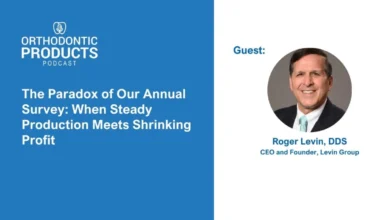
In the competitive landscape of modern dentistry, orthodontic practitioners are increasingly tasked with balancing clinical excellence with the rigors of business administration. For many, the primary identity remains anchored in patient care, diagnostics, and treatment planning. However, according to Dr. Roger P. Levin, CEO and founder of Levin Group, the long-term success of an orthodontic practice is inextricably linked to a skill set often overlooked in clinical training: leadership through intentional motivation. As the industry faces rising operational costs, staffing shortages, and evolving patient expectations, the ability of a doctor to cultivate a high-performing, enthusiastic team has transitioned from a "soft skill" to a fundamental business necessity.
The Evolution of Practice Management
The history of orthodontic practice management over the past three decades has seen a significant shift. In the 1990s and early 2000s, the focus was primarily on clinical efficiency and the adoption of new technologies like digital cephalometrics and early-stage 3D imaging. By the 2010s, the focus migrated toward marketing and patient acquisition as direct-to-consumer orthodontic products began to disrupt the traditional market.
Today, the primary challenge for the private practice owner is internal: the stabilization and optimization of the human element. The "Great Resignation" and the subsequent labor market tightening have left many healthcare practices struggling with high turnover rates and the erosion of office culture. Data from recent dental industry labor reports suggest that practices with high team-retention rates report 15% to 20% higher net profitability compared to those struggling with constant staffing churn. This variance is often attributed to the consistency of patient care and the efficiency of internal workflows, both of which are direct byproducts of a motivated team.
Analyzing the Motivation Gap
Many orthodontists view themselves as clinicians, not corporate executives. This mindset often creates a "motivation gap" within the practice. When a doctor views their role as limited to clinical oversight, the responsibility for staff morale often defaults to the office manager or is left entirely unaddressed.
Industry analysis indicates that in practices where the lead doctor takes an active, daily role in team engagement, key performance indicators (KPIs) such as new patient conversion rates and treatment acceptance show a marked upward trend. Conversely, in offices characterized by "siloed" leadership—where the doctor remains in the operatory and disconnected from the front-office culture—reports of inter-office friction, cliques, and toxic behaviors are significantly higher. The antidote, according to experts in practice management, is not merely better HR policy, but the consistent application of active, visible leadership.
Chronology of Cultural Decline in Healthcare
The decline in workplace morale within specialized medical fields often follows a predictable pattern, one that practice consultants like Dr. Levin have tracked for years:
- Phase One: The "Clinical-Only" Focus. The doctor retreats into clinical duties, delegating all personnel issues to managers. Communication becomes transactional rather than relational.
- Phase Two: The Erosion of Standards. Without a clear, enthusiastic leader setting the tone, team members begin to prioritize convenience over excellence. Small deviations from protocols are ignored to avoid conflict.
- Phase Three: Factionalism. In the absence of a unified cultural vision, staff members form cliques. The "us vs. them" mentality emerges between clinical and administrative staff.
- Phase Four: The Toxic Tipping Point. High-performing employees, frustrated by the lack of leadership and the negative environment, begin to leave. Productivity drops, and the cost of recruiting and training replacements creates a financial drag on the practice.
The Mechanics of Motivational Leadership
Motivation, in a professional context, is often misunderstood as a one-time event, such as an annual retreat or a speech. However, organizational psychology suggests that motivation is a daily process. For an orthodontic practice, this involves the systematic integration of positive reinforcement.
Effective leaders utilize a "3:1 ratio"—providing at least three pieces of positive feedback for every one constructive critique. This ensures that the team feels seen and valued for their contributions, rather than viewed solely through the lens of their errors. When the lead doctor initiates this, it sets a standard that ripples throughout the entire hierarchy.

Furthermore, inspiration is the catalyst for aspiration. When a team member understands the impact of their work—how they are helping a patient gain confidence through a healthier smile—they are more likely to strive for professional growth. This is where the transition from "employee" to "stakeholder" occurs.
Supporting Data and Industry Trends
Recent surveys conducted by the American Association of Orthodontists (AAO) and affiliated management groups highlight that the number one reason staff members cite for leaving a practice is "a lack of appreciation or recognition." In an era where dental assistants and administrative personnel have multiple career options, the culture of the office is a primary competitive advantage.
Practices that have successfully implemented structured "huddles" or morning meetings—which serve as both operational planning sessions and motivational touchpoints—report a 12% increase in staff satisfaction scores. These brief, 10-minute gatherings allow the doctor to set the tone for the day, acknowledge recent successes, and ensure that every team member understands their specific role in the day’s objectives.
Official Perspectives and Expert Consensus
Dr. Roger P. Levin, whose work with over 30,000 practices provides a massive dataset on what makes a practice successful, emphasizes that the reluctance to lead is the primary barrier to growth. "I have heard doctors say they aren’t ‘cheerleaders,’" notes Levin. "But being a leader is not about being a cheerleader. It is about being the architect of the environment in which your team operates. If the environment is toxic, the results will be mediocre. If the environment is aspirational, the results will be exceptional."
Management consultants argue that the "CEO mindset" is the missing link. In any other high-stakes industry, the leader of a company is expected to provide vision and energy. The orthodontic practice is a small business, and it is subject to the same laws of human behavior as a Fortune 500 company. The doctor, as the owner, is the primary source of that energy.
Broader Implications for the Field
The long-term health of the orthodontic profession depends on its ability to attract and retain top-tier talent. As the industry becomes increasingly consolidated—with the rise of Dental Support Organizations (DSOs)—the independent private practice must offer something that corporate structures often struggle to provide: a compelling, mission-driven culture.
When an orthodontist adopts the role of a motivator, they are not just improving daily office efficiency; they are building a brand. A team that feels motivated, appreciated, and inspired provides a higher quality of patient experience. Patients perceive the energy of the team, and that energy becomes a hallmark of the practice’s reputation in the community.
Conclusion: The Call to Action
The transition to becoming a motivator does not require a change in personality; it requires a change in discipline. It involves arriving at the office with a deliberate, positive mindset, regardless of personal circumstances. It requires the active recognition of the team’s efforts and the constant communication of the practice’s long-term vision.
For the modern orthodontist, the message is clear: clinical skill is the foundation of the practice, but leadership is the engine that drives it forward. By embracing the role of the motivator, practitioners can overcome the common frustrations of staff conflict and turnover, ultimately building a practice that is not only profitable but sustainable and rewarding for everyone involved. The future of the orthodontic practice lies in the hands of those who recognize that they are not just treating teeth—they are leading people.