
Why Orthodontic Practices Must Reevaluate the Division Between IT Support and Cybersecurity Oversight

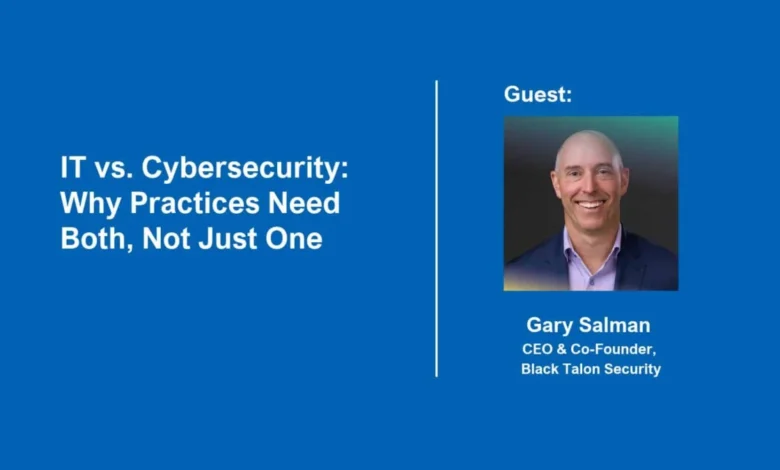
The digital infrastructure of modern healthcare is currently facing an unprecedented convergence of threats, driven by the rapid evolution of artificial intelligence and an increasing reliance on interconnected third-party vendors. For many orthodontic and dental practices, the prevailing strategy for network defense has been to outsource security responsibilities to their primary IT providers. However, industry experts are warning that this "trust-but-don’t-verify" model is creating dangerous blind spots. Cybersecurity professionals argue that the skill sets required to maintain a functional network—ensuring uptime, managing software updates, and troubleshooting hardware—are fundamentally different from the defensive engineering required to thwart sophisticated, AI-driven cyber intrusions.
The recent global IT outages involving Microsoft services and major financial institutions served as a sobering reminder of how interconnected and fragile modern systems have become. While these specific incidents were attributed to software configuration errors rather than malicious cyberattacks, they highlighted a critical vulnerability: when a central vendor fails, the ripple effect can paralyze a practice’s ability to communicate, process insurance claims, and access patient records.
The Fundamental Divergence of IT and Security
The core issue facing healthcare practices today is a misunderstanding of roles. An IT provider is generally tasked with operational efficiency—ensuring that computers connect to the internet, printers function, and the practice management software remains accessible. Cybersecurity, by contrast, is a specialized discipline centered on threat hunting, vulnerability management, and incident response.
Gary Salman, CEO and co-founder of Black Talon Security, emphasizes that when a practice owner asks their IT company if they are "covered," the answer is often a superficial affirmation. "It is like saying, ‘I put an upgraded door lock on my door so no one can break into my house,’" Salman explains. "It doesn’t address the reality that attackers are constantly probing for weaknesses in software, operating systems, and firewall configurations."
Data suggests that the disconnect is widespread. During security assessments conducted by Black Talon, approximately 60% of firewalls tested fail to meet basic security standards upon initial review. Common failures include outdated firmware, improper port configurations, and a lack of active monitoring. These defects act as open doors for threat actors, who can gain entry into a private network in a matter of minutes.
The Rise of AI-Driven Cyber Threats
The cybersecurity landscape has undergone a paradigm shift with the emergence of offensive artificial intelligence. According to warnings from federal agencies, including the FBI, threat actors are now leveraging large language models (LLMs) to automate the discovery and exploitation of network vulnerabilities.
Human defenders, working manually, are increasingly outpaced by AI-based agents capable of scouring thousands of networks simultaneously to identify unpatched software or misconfigured security protocols. The implication for medical practices is clear: traditional, once-a-month patching schedules are no longer sufficient. Security experts advocate for the adoption of AI-based defensive tools that provide continuous, real-time scanning—often as frequently as every four hours—to identify and mitigate threats before they can be leveraged by an adversary.
Chronology of Risk: From Indicators to Intrusion
Practices often miss the "pre-indicators" of a compromise because they lack a unified view of their network health. In many ransomware cases, there are subtle signs of unauthorized activity days or weeks before a full-scale encryption event occurs. These include:
- Unexplained System Behavior: Unexpected windows opening on workstations or programs running in the background.
- Performance Degradation: Unusual spikes in bandwidth usage, which may indicate that an attacker is exfiltrating large amounts of sensitive patient data.
- Failed Authentication Attempts: Repeated login attempts to cloud-based systems or email accounts that originate from outside the practice’s geographic location.
When these incidents occur in isolation, IT providers often treat them as routine technical glitches—rebooting a server or clearing a cache—rather than triangulating the events to identify a broader security pattern. This failure to correlate data is where many practices lose their window of opportunity to contain an intrusion.
Resilience and the Independent Oversight Model
For a practice to be truly resilient, it must separate the responsibilities of daily IT management from the specialized oversight of cybersecurity. This "two-legged" approach—where IT manages the infrastructure and a cybersecurity firm monitors the security posture—ensures accountability.
An effective independent security program should include several non-negotiable components:
- Vulnerability Scanning and Pen Testing: Regular, automated scans of the network, supplemented by ethical "penetration testing" where security experts attempt to breach the network to find exploitable weaknesses.
- AI-Based Email Security: As phishing remains the primary entry point for ransomware, tools that use AI to detect malicious links and attachments before they reach an inbox are essential.
- 24/7 Monitoring: Security threats do not respect business hours. The majority of ransomware attacks are launched on weekends or during holiday periods when office staff are absent. A security firm must have the capability to respond to a breach in real-time, 24/7.
- Actionable Dashboards: Practice owners should demand transparency. A digital dashboard that provides real-time visibility into the current risk status, patch levels, and recent threat interceptions allows the owner to hold their vendors accountable for the services they are being paid to provide.
The Cost of Inaction
The financial and legal implications of a breach extend far beyond the immediate cost of ransom payments or technical recovery. When patient data is exfiltrated, practices face the immediate threat of class-action lawsuits.
Legal firms specializing in data privacy are increasingly aggressive in monitoring public records and threat-intelligence forums. Once a practice is identified as a victim, they may find themselves the subject of targeted advertising campaigns aimed at patients, encouraging them to sign on to litigation for potential identity theft. For a practice owner, the damage to reputation and the administrative burden of regulatory compliance, including mandatory HIPAA reporting and patient notification, can be devastating.
Strategies for Immediate Improvement
To regain control of their security trajectory, practice owners should begin by having a frank conversation with their existing IT provider. This should include a request for documentation regarding the last three months of vulnerability scans and the results of the most recent penetration test. If a provider cannot produce this data, it is a clear indicator that the practice is lacking necessary security oversight.
Furthermore, building physical and digital resilience—such as maintaining offline, immutable backups and having pre-configured "emergency" hardware ready to deploy—can mean the difference between a minor disruption and a total loss of business operations. As the digital environment continues to grow in complexity, the ability to pivot from a passive reliance on vendors to an active, data-driven security strategy will be the defining factor in protecting the longevity of orthodontic practices.
In an era where technology is both the primary driver of patient care and the most significant vector for risk, the responsibility of the practice owner is to move beyond the comfort of "assuming it’s covered." By engaging specialized firms, demanding transparency, and implementing continuous monitoring, practices can mitigate the blast radius of inevitable technological failures and malicious attacks alike.
Related posts: