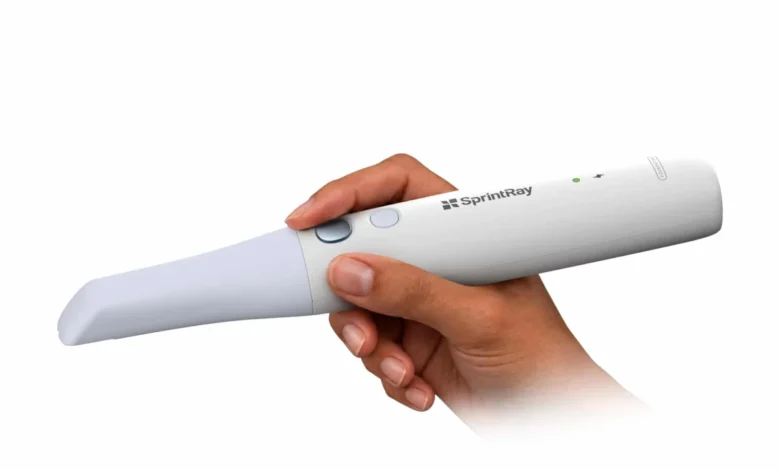
At the 3DNext 2026 summit in Miami Beach, SprintRay, a global leader in digital dentistry and specialized 3D printing solutions, unveiled a transformative suite of hardware and software integrations. This announcement marks a significant pivot in the company’s strategic roadmap, moving away from fragmented, third-party reliant digital workflows toward a unified, closed-loop ecosystem. By introducing the Foundation intraoral scanner, the compact Nano Series production suite, and a strategic material collaboration with GC Corporation, SprintRay is positioning itself to capture a larger share of the rapidly growing chairside dentistry market.
A New Era of Unified Dental Workflows
For many dental practitioners, the primary barrier to adopting digital workflows has historically been the "silo effect"—a phenomenon where intraoral scanners, design software, and 3D printers exist as disparate systems that require cumbersome manual file exports, cloud uploads, and constant re-verification. The launch of the Foundation scanner and the proprietary ScanOS software is a direct response to this industry-wide pain point.
The Foundation scanner is not merely a piece of hardware; it is the entry point into the newly developed ScanOS environment. By integrating the scanning interface directly into the cloud dashboard that powers the rest of the practice’s SprintRay ecosystem, the company is effectively eliminating the "export-import" bottleneck. Practitioners can now capture high-resolution, full-color impressions and immediately trigger a print job without leaving the native interface. This integration is designed to reduce the risk of data corruption, minimize the time between patient chair-time and appliance delivery, and lower the learning curve for clinical staff.
Chronology of Innovation: The Road to 3DNext 2026
The lead-up to the 3DNext 2026 event was characterized by a period of intense R&D focusing on user experience and efficiency. Over the past three years, SprintRay has meticulously analyzed data from over 20 million individual dental parts produced across its global user base. This extensive data set revealed a recurring trend: approximately 80% of all chairside dental 3D printing involves a single patient, single-case scenario.
Armed with this insight, the company spent the last 24 months developing the Nano Series. The objective was to miniaturize the production footprint while maintaining the industrial-grade accuracy required for restorative and orthodontic applications. The debut of these products in Miami Beach represents the culmination of this effort, moving from laboratory prototypes to a commercial launch scheduled for November 2026.
The Nano Series: Precision in a Compact Footprint
The Nano Series comprises three interconnected modules: NanoPrint, NanoWash, and NanoCure. Designed specifically for the modern dental office where real estate is at a premium, the entire workflow occupies less than 30 inches of counter space.
The centerpiece, NanoPrint, utilizes a 385 nm light engine, a wavelength choice that is increasingly becoming the gold standard for high-performance dental resins due to its superior curing characteristics and reduced risk of color instability in translucent materials. Beyond the hardware, the inclusion of "AutoPrint" and "Job Handoff" technology ensures that metadata regarding the patient and the case follows the physical part through the wash and cure cycle. This traceability is critical for clinical compliance and ensures that the wrong part is never associated with the wrong patient, a significant risk factor in busy, high-volume practices.
While the rollout is global, there are logistical nuances to the launch. In the United States, all components will be available starting in November 2026. Similar timelines apply to Australia, New Zealand, and the European Union, though the NanoWash module will be excluded from the initial Canadian launch—a decision that highlights the complexity of international regulatory compliance for medical device peripherals.
Strategic Collaboration: The GC GRADIA PREMi Integration
Hardware is only as effective as the materials it processes. SprintRay’s announcement included a high-profile partnership with GC Corporation, a titan in dental materials science. The result of this collaboration is GC GRADIA PREMi, a hybrid ceramic restorative resin.
This material is specifically engineered for the SprintRay Midas Digital Press, a workflow that allows for the creation of definitive restorations rather than just temporary prototypes. By integrating a proven material brand like GC into the digital workflow, SprintRay is addressing the skepticism some clinicians hold toward 3D-printed permanents. The validation of GC GRADIA PREMi ensures that dentists can offer long-term solutions—such as crowns and bridges—with the same confidence they would have using traditional milling or lab-fabricated materials.
Analysis: Market Implications and Competitive Landscape
The dental industry is currently in a state of rapid transition. Traditional milling machines are being challenged by 3D printing due to the latter’s lower waste profile, reduced noise, and ability to produce complex geometries that subtractive manufacturing simply cannot replicate.
SprintRay’s latest moves suggest a strategic "moat-building" effort. By providing a proprietary software layer (ScanOS) that locks in the workflow, the company is betting that the convenience of a "SprintRay-only" ecosystem will outweigh the desire for open-platform flexibility. This is a bold gamble in an industry that has traditionally favored open-architecture systems, but it is one that aligns with the needs of the modern, time-pressed dental clinician.
Industry analysts suggest that the emphasis on "chairside production" is a direct challenge to large-scale dental laboratories. As printers become faster, materials more durable, and workflows more integrated, the economic incentive for a practice to send work to an outside lab diminishes. The Nano Series, with its compact footprint, is essentially a "lab-in-a-box," designed to turn general practitioners into micro-manufacturers.
Official Perspectives and Future Outlook
Dr. Amir Mansouri, co-founder and CEO of SprintRay, emphasized that the shift is driven by the necessity of clinical efficiency. "For years, we connected scanning and printing through third-party integrations, but the experience still required practices to move between systems," Mansouri stated during the launch. "ScanOS makes scanning a native part of the SprintRay workflow."
This sentiment is echoed by the move toward greater material validation. Mansouri noted that while the industry often praises "openness," the reality is that clinicians require consistency. By working with partners like GC Corporation, SprintRay is providing a "validated open" approach—offering access to premium third-party materials that have been rigorously tested to perform within the company’s specific light-engine parameters.
As the industry moves toward 2027, the success of these new products will likely be measured by how quickly practitioners can adopt the ScanOS interface and whether the Nano Series can truly replace traditional chairside methods without requiring additional training hours. The integration of data-driven workflows suggests a future where the "digital impression" is merely the first step in a seamless, automated manufacturing cycle.
For the dental community, the message from Miami Beach is clear: the era of the "disconnected" digital office is coming to an end. SprintRay is setting the stage for a future where the scanner, the software, and the printer function as a single, cohesive medical device, potentially setting a new benchmark for speed, accuracy, and clinical integration in modern dentistry. With the rollout scheduled for the final quarter of 2026, the industry will soon see if the promise of a "Scan-to-Print" native workflow can translate into the widespread adoption that the company anticipates.
Related posts: