Strengthening Dental Safety Standards Following Canadian Patient Recall and Sterilization Lapses

The integrity of the modern dental practice rests upon an invisible foundation of rigorous infection control and sterilization protocols designed to protect both the patient and the practitioner. A recent public health investigation involving a Canadian dental practice has brought these critical safeguards into sharp focus, following a patient recall that underscores the profound implications of even minor deviations from established safety standards. After discovering a series of significant sterilization and disinfection lapses, public health authorities were compelled to advise nearly 900 former patients to undergo diagnostic testing for bloodborne pathogens, including hepatitis B, hepatitis C, and human immunodeficiency virus (HIV). While the immediate risk of transmission was categorized as low, the logistical, emotional, and reputational fallout of the incident serves as a cautionary tale for the global dental community.
The situation emphasizes that sterilization is not merely a matter of checking boxes for regulatory compliance; it is a fundamental pillar of patient safety and professional ethics. When lapses occur, the consequences extend far beyond the clinical setting, involving public health intervention, legal scrutiny, and a potential collapse of patient trust. To prevent such occurrences, dental professionals must look beyond basic instrument processing and embrace a comprehensive culture of safety that includes dedicated oversight, continuous education, and strict adherence to the standards set forth by the United States Centers for Disease Control and Prevention (CDC) and the Occupational Safety and Health Administration (OSHA).
Chronology of the Investigation and Patient Notification
The investigation into the Canadian practice typically follows a structured protocol common to North American public health agencies. In most instances, these investigations are triggered by a specific event, such as a whistleblower report from a staff member, a complaint from a patient, or a routine inspection that uncovers non-compliance with provincial or federal standards. In this specific case, the discovery of lapses in the sterilization process prompted an immediate and thorough review of the clinic’s historical practices.
Once the lapses were confirmed, public health officials began the arduous process of tracing former patients who may have been exposed to improperly processed instruments. The notification process involved sending letters to approximately 900 individuals who had received treatment at the facility during the window of concern. This "patient recall" advised individuals to seek blood testing to rule out the transmission of chronic infections.
The timeline of such events often reveals a gap between the onset of the sterilization failures and their eventual discovery. This lag period is what necessitates large-scale recalls, as officials must account for every patient treated during the period when equipment may not have been properly validated. In this instance, although no infections have been directly linked to the practice to date, the mandate for testing reflects a "better safe than sorry" approach intended to contain any potential public health risk before it can escalate into a community outbreak.
Understanding the Risks of Bloodborne Pathogen Transmission
The recommendation for hepatitis B, hepatitis C, and HIV testing is a standard response to sterilization failures because these pathogens are the most significant risks associated with the reuse of medical and dental instruments. While the risk of transmission in a dental setting is statistically low—thanks to the nature of most dental procedures and the fragility of these viruses outside the human body—the severity of the diseases they cause makes any level of exposure unacceptable.
Hepatitis B (HBV) is particularly resilient and can survive on environmental surfaces for at least seven days. It is highly infectious, meaning that even a microscopic amount of contaminated blood could potentially transmit the virus. Hepatitis C (HCV), while less resilient than HBV, remains a significant concern due to its ability to cause chronic liver disease often without immediate symptoms. HIV, though more fragile and less likely to survive outside a host, carries an immense psychological and social burden for patients who must undergo testing following a potential exposure.
The "low-risk" designation provided by health officials in this case refers to the probability of transmission, not the severity of the outcome. For the 900 patients involved, the low statistical probability does little to alleviate the anxiety of waiting for blood test results. This human element highlights why dental practices must treat every instrument as a potential vector for disease, regardless of the perceived "routine" nature of the procedure.
The Regulatory Framework: CDC and OSHA Standards
In the United States, and often mirrored in Canadian provincial guidelines, the dual framework of the CDC and OSHA provides the blueprint for dental safety. The CDC’s "Summary of Infection Prevention Practices in Dental Settings" outlines the clinical recommendations for patient safety, while OSHA’s Bloodborne Pathogens Standard (29 CFR 1910.1030) focuses on protecting the healthcare worker.
Effective sterilization requires a multi-step process that must be followed without deviation:
- Transport: Contaminated instruments must be moved to the sterilization area in leak-proof, puncture-resistant containers to prevent accidental sharps injuries.
- Cleaning: Before sterilization, instruments must be thoroughly cleaned to remove organic and inorganic debris. If debris remains, the sterilization agent (steam or chemical vapor) may not reach the surface of the instrument.
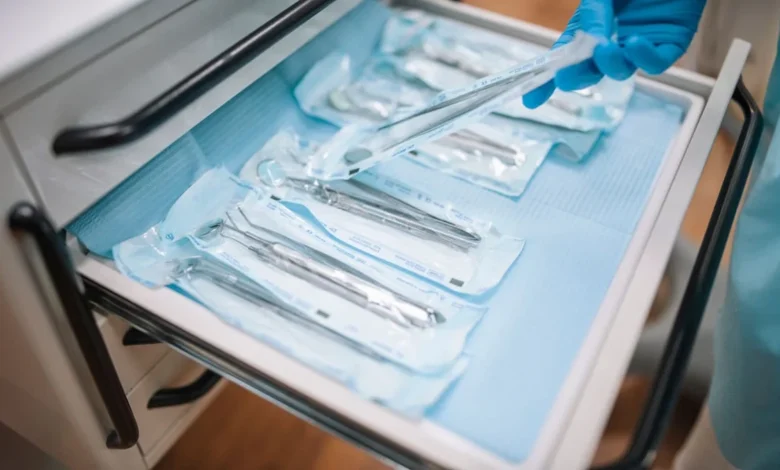
- Packaging: Cleaned instruments are placed in pouches or wrap with internal and external chemical indicators to ensure the sterilant has penetrated the packaging.
- Sterilization: The use of an FDA-cleared medical device, such as an autoclave, is required. This process uses heat, pressure, and time to kill all microbial life, including highly resistant bacterial spores.
- Storage: Sterilized packages must be stored in a way that maintains their integrity until the point of use.
The Canadian recall serves as a reminder that a failure at any one of these steps—such as overloading the sterilizer, failing to use chemical indicators, or neglecting to perform weekly biological monitoring (spore testing)—can invalidate the entire process.
The Case for a Dedicated Infection Control Coordinator
One of the most significant takeaways from recent sterilization failures is the need for centralized accountability. The CDC recommends that every dental practice designate at least one individual as the infection control coordinator. This is not merely an administrative title but a critical clinical oversight role.
The responsibilities of an infection control coordinator include:
- Developing Written Protocols: Creating a site-specific infection control manual that is updated annually.
- Staff Training: Ensuring that all team members, from dental assistants to front-office staff, receive initial and annual training on bloodborne pathogens and infection prevention.
- Monitoring and Documentation: Maintaining rigorous logs of sterilizer cycles, biological indicator results, and maintenance schedules.
- Audit and Oversight: Regularly observing the clinical team to ensure that protocols are being followed in real-time, rather than assuming compliance.
- Equipment Management: Acting as the primary point of contact for the maintenance and repair of autoclaves, ultrasonic cleaners, and dental unit waterlines.
By having a designated leader, a practice moves away from a "fragmented responsibility" model, where everyone assumes someone else has checked the spore test, to a "culture of safety" model where accountability is clear. This role is essential for identifying potential breakdowns in the workflow before they result in a patient notification event.
Broader Implications for the Dental Profession
The impact of a patient recall extends far beyond the specific clinic involved. Such events often lead to increased regulatory scrutiny for the entire profession. In the wake of high-profile lapses, provincial or state boards may implement more frequent unannounced inspections or stricter requirements for continuing education in infection control.
Furthermore, the financial and reputational damage to a practice can be terminal. The costs associated with a recall—including legal fees, the cost of providing testing for hundreds of patients, and the loss of revenue as patients flee to competitors—can easily lead to the closure of a private practice. In the age of social media and online reviews, news of a sterilization failure spreads rapidly, tarnishing the reputation of the practitioners involved for years to reach.
From a public health perspective, these incidents highlight the importance of "Infection Control Awareness Month" and other educational initiatives. They serve as a reminder that dental professionals are, first and foremost, healthcare providers who must prioritize the "do no harm" principle. The Canadian case is a stark illustration that "low risk" is not "no risk," and that the standard of care requires 100% compliance, 100% of the time.
Conclusion: Safeguarding Patient Trust through Diligence
The trust between a patient and their dental provider is sacred. Patients sit in the dental chair with the implicit understanding that the instruments being used in their mouths are sterile and that the environment is safe. When a practice fails to meet these expectations, it violates that trust and potentially endangers the community.
The lessons from the Canadian patient recall are clear: rigorous adherence to CDC and OSHA protocols is non-negotiable. Practices must invest in the necessary equipment, time, and personnel to ensure that sterilization processes are validated and documented. By appointing an infection control coordinator and conducting regular internal audits, dental teams can identify and rectify vulnerabilities.
Ultimately, the goal of infection control is to create a "fail-safe" environment where the health of the patient, the staff, and the practice is protected against the invisible threat of infectious disease. As the dental industry continues to evolve with new technologies and procedures, the timeless principles of sterilization and disinfection remain the most effective tools for ensuring the safety and longevity of the profession. Continuous vigilance is the price of safety, and it is a price that every dental professional must be willing to pay.
Related posts: