
Your 9 Minute Resistance Band Leg Workout
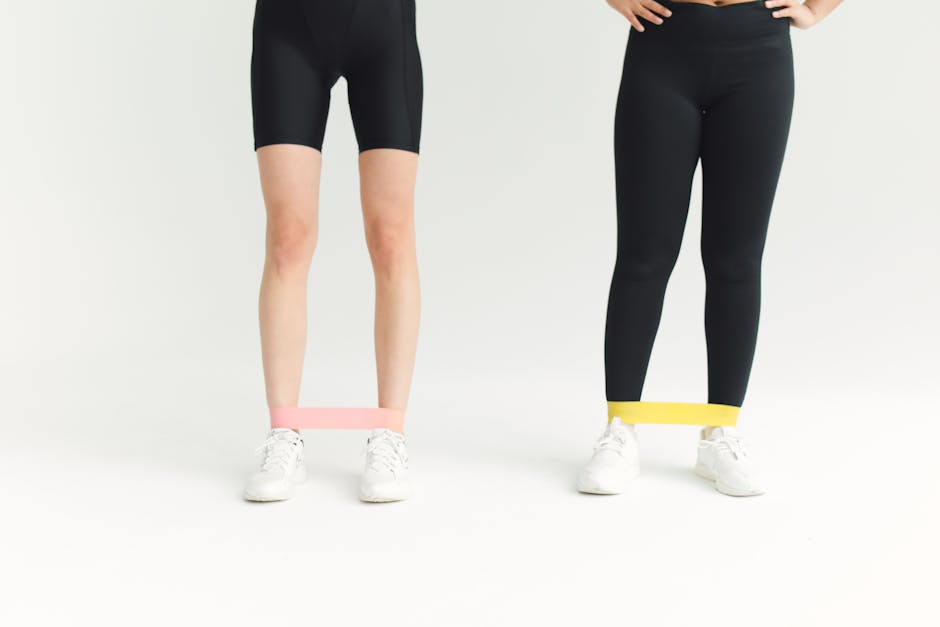
The 9-Minute Resistance Band Leg Workout: Sculpt Powerful Legs Anytime, Anywhere
This intensive 9-minute resistance band leg workout is meticulously designed to deliver maximum impact and efficiency, targeting all major leg muscle groups for enhanced strength, tone, and endurance. No gym needed, no complex equipment, just a set of resistance bands and nine focused minutes to transform your lower body. This routine is perfect for busy individuals seeking a potent, time-efficient lower body training solution, whether at home, in a hotel room, or even outdoors. By strategically incorporating compound movements and isolating exercises with the versatile resistance band, this workout maximizes muscle activation and calorie burn within a concise timeframe. The key to its effectiveness lies in controlled movements, progressive overload (increasing band tension or reps as you get stronger), and proper form to ensure safety and optimal results. Resistance bands offer a unique advantage by providing constant tension throughout the entire range of motion, engaging muscles more deeply than traditional free weights in many instances. Furthermore, their portability and affordability make them an accessible and practical tool for anyone looking to build a strong and resilient lower body. This workout prioritizes exercises that engage multiple muscle groups simultaneously, such as squats and lunges, promoting functional strength and calorie expenditure. It also includes targeted exercises to address specific muscle groups like hamstrings, glutes, and calves, ensuring a well-rounded development.
Resistance Band Squats: The Foundation of Lower Body Strength
The resistance band squat is the cornerstone of this workout, a fundamental compound exercise that engages the quadriceps, hamstrings, glutes, and even the core. To perform the resistance band squat, stand with your feet hip-width apart, or slightly wider, depending on your comfort and mobility. Place the resistance band around your thighs, just above your knees. This placement will create outward pressure, forcing your glutes to work harder to keep your knees tracking outwards. Hold the ends of the resistance band in each hand, extending your arms forward at shoulder height for balance, or cross them over your chest if that feels more stable. Begin the movement by hinging at your hips and bending your knees as if you are sitting back into a chair. Ensure your chest remains lifted, your back stays straight, and your core is engaged throughout the entire motion. Lower yourself until your thighs are parallel to the floor, or as low as your flexibility allows while maintaining proper form. Focus on pushing through your heels to return to the starting position, squeezing your glutes at the top. The resistance band adds an extra layer of challenge by forcing your gluteus medius and minimus muscles to work overtime to stabilize your knees and prevent them from caving inward. This increased stability work translates to stronger, more resilient knees and improved hip function. Perform 15-20 repetitions with controlled tempo, focusing on the mind-muscle connection to feel the engagement in your quads and glutes. Variations can include increasing the band tension by opting for a thicker band, slowing down the eccentric (lowering) phase for added time under tension, or adding a brief pause at the bottom of the squat to further challenge your muscles. The beauty of this exercise lies in its scalability; as you get stronger, you can simply progress to a heavier band or increase the number of repetitions.
Resistance Band Lunges: Sculpting the Quads and Glutes with Every Step
Resistance band lunges offer a dynamic way to target the quadriceps, hamstrings, and glutes, while also improving balance and coordination. To execute a proper resistance band lunge, stand with your feet hip-width apart and the resistance band looped around your thighs, just above your knees, similar to the squat setup. Step forward with one leg, lowering your hips until both knees are bent at approximately 90-degree angles. Your front knee should be directly over your ankle, and your back knee should hover just above the floor. Crucially, maintain an upright torso and keep your core engaged to prevent leaning forward or backward. The resistance band will actively work to pull your knees inward, so focus on actively pushing your knees outwards against the band to engage your glutes. Push off from your front foot to return to the starting position. Alternate legs for each repetition, aiming for 10-12 repetitions per leg. The instability created by the single-leg stance, combined with the added resistance of the band, significantly increases the activation of stabilizing muscles in the hips and ankles. This translates to improved functional strength, which is crucial for everyday activities like walking, running, and jumping. To increase the intensity, consider increasing the band tension, performing walking lunges where you step forward and immediately lunge with the opposite leg, or adding a brief pause at the bottom of each lunge. The focus here is on controlled descent and powerful ascent, ensuring that each lunge is a deliberate and effective movement. The constant tension provided by the band ensures that your muscles are working through the entire range of motion, preventing momentum from taking over and maximizing muscle stimulation.
Resistance Band Glute Bridges: Isolating and Activating Your Posterior Chain
The resistance band glute bridge is an exceptional exercise for isolating and activating the glutes, hamstrings, and lower back, crucial for hip extension and overall posterior chain strength. Lie on your back with your knees bent and your feet flat on the floor, hip-width apart. Place the resistance band around your thighs, just above your knees. Ensure your feet are positioned close enough to your glutes so that you can achieve a full range of motion. Press your palms into the floor for stability. Engage your core and squeeze your glutes to lift your hips off the floor, creating a straight line from your shoulders to your knees. As you lift, actively push your knees outward against the resistance band, intensifying the glute activation. Hold the peak contraction for a second or two, feeling the burn in your glutes. Slowly lower your hips back down to the starting position, resisting the pull of the band. Perform 15-20 repetitions with a focus on squeezing your glutes at the top of each movement. This exercise is particularly effective for individuals who spend a lot of time sitting, as it helps to counteract the effects of prolonged hip flexion and reactivate dormant glute muscles. The resistance band adds a significant challenge by forcing your gluteus maximus to work harder to achieve hip extension against the outward pull. To enhance the difficulty, you can use a thicker resistance band, increase the number of repetitions, or even elevate your feet on a stable surface to increase the range of motion. The mind-muscle connection is paramount here; visualize your glutes contracting and lifting your hips. This isolation exercise is a powerful tool for building a strong and toned backside, contributing to better posture and reduced risk of lower back pain.
Resistance Band Hamstring Curls: Targeting the Back of Your Legs
To effectively target the hamstrings, the unsung heroes of the posterior chain, the resistance band hamstring curl is an indispensable exercise. Lie face down on the floor with your legs extended. Loop the resistance band around your ankles. You can anchor one end of the band to a sturdy, immovable object (like a heavy piece of furniture or a securely fastened door anchor) or have a partner hold it firmly. If anchoring is not possible, you can perform a modified version by lying on your side and curling the leg with the band wrapped around your ankles. With the band anchored, begin the movement by bending your knees and curling your heels towards your glutes, squeezing your hamstrings. Control the movement as you return your legs to the starting position, resisting the pull of the band. Aim for 12-15 repetitions with a focus on feeling the contraction in your hamstrings. This exercise directly isolates the hamstrings, allowing for focused development and increased strength in this often-neglected muscle group. The constant tension of the resistance band ensures that your hamstrings are working throughout the entire range of motion, promoting muscle hypertrophy and improved power. To increase the intensity, you can opt for a stronger resistance band, increase the number of repetitions, or even try single-leg hamstring curls for an added challenge. Proper form is crucial to avoid straining your lower back; maintain a neutral spine and engage your core throughout the movement. This exercise is vital for overall leg balance and can contribute to improved performance in activities requiring explosive leg power, such as sprinting and jumping.
Resistance Band Calf Raises: Sculpting Lower Leg Definition
No leg workout is complete without addressing the calves, and the resistance band calf raise is a simple yet effective way to build definition and strength in your gastrocnemius and soleus muscles. Stand with your feet hip-width apart. Loop the resistance band around the balls of your feet, holding the ends firmly in your hands. You can also perform this exercise by standing on the edge of a step or a raised surface, holding the band securely. Rise up onto the balls of your feet, lifting your heels as high as possible. Squeeze your calf muscles at the top of the movement, holding for a moment to maximize contraction. Slowly lower your heels back down, controlling the descent and feeling a stretch in your calves. Perform 20-25 repetitions. The resistance band adds tension, forcing your calf muscles to work harder to achieve the full range of motion. This exercise is excellent for improving ankle stability and can contribute to better running mechanics and reduced risk of ankle injuries. To increase the intensity, use a thicker resistance band, increase the number of repetitions, or perform single-leg calf raises. The key is to focus on the squeeze at the top and a controlled eccentric movement to maximize muscle fiber recruitment. Even in a short workout, dedicating time to calf development is essential for a balanced and aesthetically pleasing physique.
The 9-Minute Protocol: Structure and Execution for Maximum Impact
This 9-minute resistance band leg workout is structured for maximum efficiency and effectiveness. Dedicate approximately 1.5 minutes to each exercise, including the transition time between them. Perform each exercise for the prescribed repetitions with controlled movements and proper form. The total workout time is precisely nine minutes, making it an ideal addition to any fitness routine. Here’s a suggested breakdown:
- Minute 0-1.5: Resistance Band Squats (15-20 reps)
- Minute 1.5-3: Resistance Band Lunges (10-12 reps per leg)
- Minute 3-4.5: Resistance Band Glute Bridges (15-20 reps)
- Minute 4.5-6: Resistance Band Hamstring Curls (12-15 reps)
- Minute 6-7.5: Resistance Band Calf Raises (20-25 reps)
- Minute 7.5-9: Perform a second round of Resistance Band Squats (15-20 reps) to re-emphasize this foundational movement and ensure maximum engagement within the allocated time.
The structured approach ensures that each muscle group receives adequate attention and that the workout flows seamlessly. The addition of a second set of squats at the end capitalizes on the foundational movement, ensuring it receives ample attention within the limited timeframe. It’s important to maintain a brisk pace between exercises to keep your heart rate elevated and maximize the calorie-burning potential of this short, yet potent, workout. Remember to choose resistance bands that provide a challenging yet manageable level of tension. As you get stronger, you can progress by increasing the number of repetitions, using thicker bands, or incorporating more advanced variations of these exercises. Consistency is key; aim to perform this workout 2-3 times per week for optimal results. Listen to your body and adjust the intensity as needed, always prioritizing proper form to prevent injuries. The beauty of this routine lies in its adaptability; it can be performed anywhere, anytime, making it a truly accessible solution for building strong, toned legs. By dedicating just nine minutes, you can achieve significant improvements in leg strength, muscle definition, and overall lower body power. This workout is not just about aesthetics; it’s about building functional strength that will benefit you in all aspects of your life.
Progression and Adaptation: Growing Stronger with Resistance Bands
To continue seeing results from this 9-minute resistance band leg workout, progression and adaptation are crucial. As your leg muscles become stronger, the resistance bands you are currently using may no longer provide sufficient challenge. The simplest way to progress is by increasing the tension of the resistance band. Resistance bands come in various strengths, from light to extra-heavy. Opt for a band that makes the last few repetitions of each exercise feel challenging but achievable with good form. Another effective progression method is to increase the number of repetitions for each exercise. If you were initially performing 15 squats, try aiming for 18 or 20. Similarly, for lunges, you could increase the reps per leg. Alternatively, you can slow down the tempo of your movements. Focusing on a slower eccentric (lowering) phase, holding the peak contraction for an extra second or two, or performing pauses at the bottom of movements like squats and lunges can significantly increase time under tension, leading to greater muscle hypertrophy. For more advanced users, consider incorporating unilateral (single-leg) variations of exercises like lunges and hamstring curls. Performing these on one leg significantly increases the load on the working leg and also challenges your balance and core stability. Adding plyometric elements, such as jump squats with the band around your thighs, can be incorporated for a power-focused progression. If you have access to multiple bands, you can combine them to create even greater resistance. Another advanced technique is to increase the range of motion. For calf raises, this can be achieved by standing on a raised surface like a step or a weight plate, allowing your heels to drop below the level of your toes, creating a deeper stretch. The key principle of progressive overload applies to resistance band training just as it does to weight training. Continuously challenge your muscles in new ways, and they will adapt and grow stronger. Don’t be afraid to experiment with different band combinations, repetition ranges, and tempo adjustments to keep your workouts effective and engaging. The versatility of resistance bands means that your 9-minute workout can evolve with you, ensuring that you continue to build powerful, sculpted legs for years to come.
