The transition from active orthodontic treatment—such as braces or clear aligners—to the retention phase marks a critical milestone in achieving a permanent, healthy smile. However, patients frequently encounter a common dilemma months or years down the road: a removable retainer that suddenly feels tight, uncomfortable, or refuses to fit entirely. According to recent guidance issued by the American Association of Orthodontists (AAO), understanding the underlying mechanics of tooth movement and appliance durability is essential for preserving oral health and protecting the financial investment of past orthodontic care.
Understanding the Retention Phase: Why Teeth Shift
To comprehend why a retainer might stop fitting, patients must first understand the biological nature of teeth. Human teeth are not rigidly fixed in the jawbone; instead, they are suspended within the alveolar bone by the periodontal ligament, a network of collagen fibers that act as shock absorbers. Following the removal of braces or aligners, these surrounding tissues require substantial time to reorganize and stabilize around the newly aligned tooth positions.
Historically, dental science operated under the assumption that teeth would eventually stabilize permanently after a few years of retention. Modern orthodontic research, however, confirms that natural physiological drift occurs throughout a person’s entire lifetime. Factors such as normal craniofacial aging, late mandibular growth, periodontal disease, and the daily forces exerted by chewing and facial musculature mean that teeth have a lifelong tendency to migrate back toward their original malocclusion. Consequently, consistent retainer wear remains the only reliable method to counteract this natural biological reversion.
The Critical Distinction Between Snugness and Poor Fit
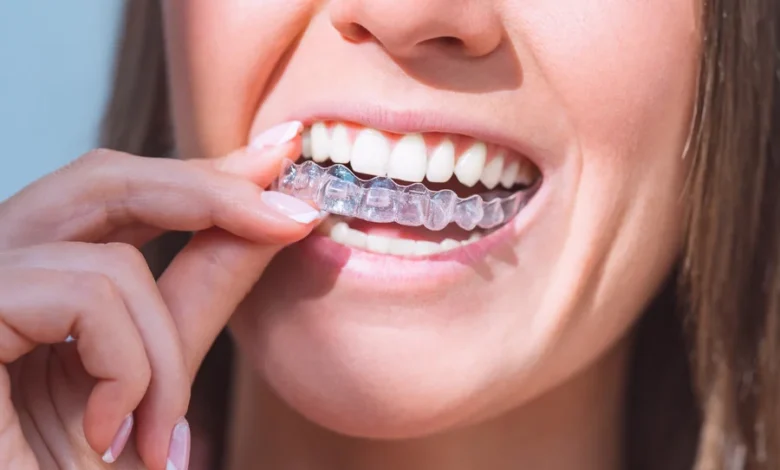
Orthodontic professionals emphasize that patients must differentiate between a retainer that feels slightly snug and one that genuinely no longer fits. A mildly snug appliance is frequently experienced by individuals who have lapsed in their wear schedule, missing a few days or weeks of nightly use. In these instances, the periodontal ligament responds to the brief interruption by allowing minor shifting. A mildly snug retainer should still seat completely over the dental arch, resting securely in its intended position without requiring excessive force or causing acute pain.
Conversely, a retainer that has suffered a structural mismatch will exhibit distinct warning signs. These include stopping partway down the crown of the teeth, creating visible gaps between the plastic and the incisal edges, popping out of place spontaneously, or generating sharp, localized pain upon insertion. Forcing an ill-fitting appliance over the dental arch is strongly discouraged by dental practitioners, as it initiates mechanical stress that can permanently warp the device or traumatize the periodontal structures.
Anatomy of Appliance Degradation: Why Retainers Change Shape
While shifting teeth are a primary culprit behind fit issues, the retainer itself is also susceptible to physical alterations over time. Removable retainers—whether traditional Hawley appliances featuring acrylic and stainless steel wires or modern vacuum-formed thermoplastic clear retainers—have finite lifespans.
Thermoplastic materials are particularly vulnerable to thermal distortion. Exposure to high temperatures, such as running a clear retainer under hot tap water, leaving it in a vehicle during summer months, or washing it in a residential dishwasher, can cause the medical-grade plastic to warp subtly. Even microscopic changes in the appliance’s contours will prevent it from seating accurately over the complex topography of the teeth. Furthermore, routine daily insertion, removal, masticatory stress during accidental teeth-grinding, and standard cleaning practices contribute to cumulative wear and tear, eventually manifesting as hairline cracks, weakened bonding points, or distorted wire alignments.
The Hazards of DIY Adjustments and Forcing Old Appliances
When individuals discover an old retainer tucked away in a drawer after months or years of non-use, the immediate temptation is often to force it onto the teeth in an attempt to reverse unwanted shifting without scheduling a professional visit. Orthodontists warn that this do-it-yourself approach carries significant clinical risks.
When a retainer is forced onto a dental arch that has significantly altered its alignment, the appliance exerts uncontrolled, unmonitored biomechanical forces. Unlike professionally planned orthodontic movements—which apply calibrated, light pressure to guide bone remodeling safely—forcing an old retainer can compress blood vessels within the periodontal ligament, cut off circulation, cause root resorption, or induce severe inflammation. Furthermore, the immense physical strain frequently shatters clear plastic retainers or snaps soldered joints on wire models, rendering the expensive appliance entirely useless.
Official Guidance and Professional Recommendations
The American Association of Orthodontists maintains strict guidelines regarding compromised orthodontic retainers. Patients are formally advised to schedule a professional evaluation whenever an appliance causes persistent discomfort, displays visible structural damage, or fails to seat comfortably.
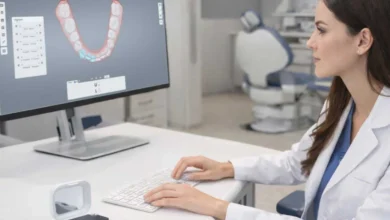
During an orthodontic evaluation, the practitioner conducts a comprehensive diagnostic assessment. This examination typically involves evaluating the current occlusion (bite), checking for wear facets on the teeth, inspecting the periodontal health of the gums, and analyzing the structural integrity of the existing retainer. If the evaluation reveals that the teeth have shifted beyond the corrective capacity of the current appliance, the orthodontist outlines a series of evidence-based intervention strategies.
Potential Clinical Solutions and Next Steps
Finding out that a retainer no longer fits does not automatically mean a patient must undergo a complete, multi-year course of traditional braces. Depending on the extent of the relapse and the patient’s individual anatomical needs, modern orthodontics offers a spectrum of tailored solutions:
- Appliance Adjustment and Repair: If a traditional Hawley retainer has experienced minor wire distortion, a skilled orthodontist or lab technician can often readjust the stainless steel components to restore proper function.
- Replacement Fabrication: If the original retainer is structurally sound in its geometry but has suffered material fatigue, a new digital scan or physical impression can be taken to fabricate a precise replacement matching the current, stable tooth positions.
- Limited Alignment Therapy: For moderate relapse where the patient desires to restore their previous alignment, short-term treatment options—such as a limited series of clear aligners or targeted sectional braces—can efficiently reposition the teeth before a new, permanent retention protocol is established.
- Permanent Bonded Retainers: In cases where patient compliance with removable retainers is a consistent challenge, orthodontists may evaluate the candidacy for fixed lingual retainers, which are permanently bonded to the inner surfaces of the front teeth.
Broader Implications for Long-Term Dental Health
The maintenance of post-treatment alignment extends far beyond aesthetic considerations. Properly aligned teeth are inherently easier to clean, reducing the long-term incidence of plaque accumulation, gingivitis, periodontal pocketing, and interproximal decay. Furthermore, a balanced occlusion distributes chewing forces evenly across the entire dental arch, minimizing premature enamel wear, fracture risks, and the development of temporomandibular joint (TMJ) disorders.
Public health analyses consistently demonstrate that patient education is the most effective tool in preventing costly orthodontic revisions. By recognizing the early warning signs of appliance degradation and seeking prompt professional intervention, patients can safeguard both their oral health and their financial investment.
Conclusion and Actionable Patient Takeaways
Ultimately, a retainer is a precision medical device engineered to exacting specifications. When it ceases to fit comfortably, it serves as a biological and mechanical indicator that something within the system has changed. Patients are urged to abandon home remedies, hot-water reshaping techniques, and aggressive physical forcing. By treating retainers with proper hygiene, storing them safely away from thermal hazards, and consulting an AAO-certified orthodontist at the first sign of structural compromise, individuals can ensure a lifetime of healthy, stable, and confident smiles.